Worker files charges against union alleging unfair practices
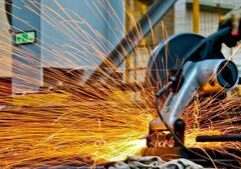
An employee is accusing union officials of illegally declaring a Michigan manufacturing plant a “closed shop” and compelling dues deductions.
Kristen Dickinson, an employee of fire sprinkler manufacturer The Viking Corp., filed the federal unfair labor practice charges with the National Labor Relations Board last week against the Steelworkers union.
“Steelworkers union bosses are just interested in gaining more power over us and our pocketbooks,” Dickinson said. “If they really believe they are doing right by us, they shouldn’t feel the need to force everybody to join or trick people into supporting the union’s politics, yet that’s exactly what they’re doing.”
Viking is located in Hastings. Dickinson is receiving free legal assistance from the National Right to Work Foundation, an anti-union nonprofit organization.
From 2012 until early 2024, Michigan had right to work laws, meaning unionized workplaces could not require employees to join the union. Under a Democratic legislature, those protections were removed.
National Right to Work Foundation President Mark Mix told The Center Square in an exclusive interview that, even though Michigan ended its right to work laws in 2024, there are still legal protections for Michigan workers.
“Michigan workers need to be on guard for their individual rights in this new legal environment without right to work,” Mix said. “No matter what union bosses or company managers in their workplaces might tell them, union officials can’t require any Michigander to become a formal union member as a condition of employment.”
Now, Mix explained that, even though union contracts can force employees to pay some union fees to stay employed, those fees are not supposed to go to fund union politics. Employees are also supposed to be given different options to pay those fees, instead of them just being deducted from their paychecks.
Dickinson says in her charges that, not only is Viking not a “closed shop” where formal union membership is required, the union is also mandating that dues are deducted directly from employees’ paychecks.
Mix said this is illegal.
“Established Supreme Court case law explicitly forbids what Steelworkers union bosses are attempting to do here,” he said. “The National Labor Relations Board needs to prosecute the union for its illegal demands, and foundation attorneys are prepared to do everything possible to ensure that happens.”
If the board rules in Dickinson’s favor, Viking and the Steelworkers union could be mandated to notify other employees that they cannot legally be required to be a union member, to pay full union dues, or have dues money automatically deducted from their paycheck.
Mix said that this case is an example of why right to work laws are important for all states to have.
“Federal law already gives union officials tremendous power over workers, and as Ms. Dickinson’s case shows, they will often simply disregard what limited protections wage earners have if it means more dues in their coffers,” he said. “Employees need more protection for their free association, not less, and right to work provides just that.”





Chance Showers And Thunderstorms
Latest News Stories
EEOC celebrates 200 days of protecting religious freedom under Trump

U.S. mining operations discarding rare minerals at center of trade talks
Duffy warns states to enforce English proficiency requirements for truckers

Illinois quick hits: Chicago businesses at 10-year low; school admin survey closes soon

Pritzker unveils Illinois LGBTQ hotline amid debate over transgender athletes

WATCH: Trump ends funding for cashless bail policies, hedges on Guard deployment to Chicago
Hochul pushes back on Trump’s cashless bail funding threat
Education Department finds GMU Violated Title VI
Redistricting opponents immediately appeal to CA voters
Former Transportation Secretary urges state taxpayer funding for Chicago transit

Illinois quick hits: Education tax benefits available; Giannoulias orders license plate reader to shut off access to CBP
WATCH: Trump order withholds funds over no-cash bail policies like Illinois’