
IL U.S. Senate candidates differ on Affordable Care Act tax credits
(The Center Square) – As Illinois Democrats call for an extension of federal tax credits to address higher Affordable Care Act premiums, an Illinois Republican says government subsidies have already led to higher prices.
Illinois U.S. Rep. Raja Krishnamoorthi, D-Schaumburg, is one of 10 Democrats seeking the seat being vacated by retiring Democratic U.S. Senator Dick Durbin, D-Springfield.
Krishnamoorthi said Congress may vote this week on a petition from House Minority Leader Hakeem Jeffries, D-N.Y., to extend the tax credits for three more years.
“And it’s likely to pass, because I think at least four Republicans signed that discharge petition, and joining with all Democrats, there will be enough votes to take it through the House,” Krishnamoorthi said. “Then it will be up to the Senate. At that point, I think the pressure will be on them to do something.”
The fifth-term congressman said the legislation could act retroactively to Jan. 1, but some people might let their coverage lapse.
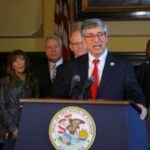
Krishnamoorthi spoke at a press conference with Cook County Board President Toni Preckwinkle and other officials in Chicago last week.
Krishnamoorthi said Affordable Care Act premiums would double if Congress doesn’t act.
“This year, 550,000 Illinoisans are enrolled in the ACA marketplace, an almost 20% increase over previous years,” Krishnamoorthi said. “That growth happened because the tax credits made coverage possible.”
Illinois Republican U.S. Senate candidate Pamela Denise Long said health insurance premiums have been skyrocketing for some time.
“It seems to me that the more the federal government subsidizes a program, be it child care—hello Minnesota—to health insurance, the more the prices tend to rise,” Long told The Center Square.
Long worked for years as an occupational therapist and said the federal government needs to reconfigure how health care is funded.
“I am a fan of subsidizing the people and not insurance companies,” Long explained. “I believe strongly in health savings accounts. I believe in increasing choice in health care.”
Long said the premium credits enacted during the COVID-19 pandemic were intended to be temporary.
“They were put in place during the COVID pandemic because it was a health care crisis and we wanted to make sure that people, including those who make 400 times the federal poverty level, were able to have some assistance with having health insurance,” Long added.
Long said federal officials over the years should have started a process to off-ramp from the subsidies.
The U.S. House passed the Republican “Lower Health Care Premiums for All Americans Act” Dec. 17. Supporters said House Resolution 6703 would deliver twice the cost reduction of COVID-era enhanced subsidies and bring costs down for all Americans and not just some.
Tax Foundation Chief Economist William McBride said the measure would reduce the cost of premium tax credits.
“Over $100 billion a year is what these premium tax credits cost,” McBride told The Center Square.
Catrina Barker contributed to this story.





Chance Showers And Thunderstorms
Latest News Stories

Bill to tax global profits from Illinois meets opposition protesting ‘double tax’

Analysis finds short-term stability, lack of long-term growth in state budget

WATCH: Let’s Go Washington launching initiative to repeal income tax
Ferguson first WA governor found in violation of ethics laws in over 30 years, state website shows

Court strikes tariff, Trump moves ahead with replacement

North Dakota Supreme Court sides with Energy Transfer in Greenpeace fight over Dutch lawsuit

SNAP cuts, Illinois payment errors spark fierce debate

Op-Ed: Keeping local leaders happy isn’t worth the housing cost

Apollo, Gemini sightings revealed in first UAP file drop

Norkus Shines in Pitcher’s Duel as Beecher Edges Ottawa 1-0

BREAKING: GOP turns to Congress after Minnesota Dems block Omar subpoena

U.S. economy adds 115,000 jobs in April