Governors seek delay on sharing cost of food stamp errors
State and local officials are asking Congress for a delay on sharing the cost of errors in the federal food assistance program, but said they are ready for accountability.
The National Governors Association joined with other organizations in a letter to Congressional leaders on Wednesday seeking the delay. They said states’ costs for the Supplemental Nutrition Assistance Program could increase if Congress doesn’t act.
The letter asks to delay the cost-sharing provision until fiscal year 2030 so all states have a uniform start date. The organizations also asked that the data collected during the federal government’s 43-day partial shutdown not be counted against them.
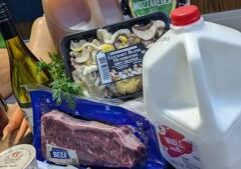
SNAP, formerly known as food stamps, is a federally funded food assistance program that helps low-income families supplement their grocery budgets. States administer the programs using federal funds. Congress recently said that states must share the cost of payment errors. States unable to reduce their payment error rates below the 6% threshold in time, must cover between 5% and 15% of the cost of SNAP benefits.
Payment errors occur in two ways. Either an applicant is determined eligible when they are not or an eligible participant is certified to receive either more or less benefits than they are entitled to. The United States Department of Agriculture, which oversees SNAP, said SNAP error rates reflect program waste, but not fraud.
Congress said it wants states to have skin in the game.
States and counties are “fully committed to administering SNAP accurately and to being held accountable for performance,” according to the letter.
“Unless Congress gives states more time to implement new requirements, states of all sizes will face massive budget impacts,” said Tiffany Waddell, NGA’s director of government relations. “There is a simple, bipartisan solution, and governors from both sides of the aisle urge Congress to work with them on shared goals of protecting taxpayer dollars and stabilizing SNAP.”
States want both provisions added to an anticipated continuing resolution in January that would fund the federal government.
The groups told legislative leaders that states’ annual SNAP expenditures could increase an average $218 million per state if payment error rate data collected during the shutdown period was not excluded from future cost-sharing calculations.
The coalition asked Congress to delay the SNAP benefit and administrative cost shares for all states until fiscal year 2030, using fiscal year 2027 quality control data and exclude October and November 2025 from the fiscal year 2026 quality control sample.
“These requests are limited in scope, temporary in nature, and designed to support accurate implementation of federal law while protecting program integrity and taxpayer dollars,” the coalition wrote in the letter. “They would allow states and counties to stabilize operations, continue investing in program integrity, and partner effectively with USDA to achieve shared goals.”
The governors were joined by the American Public Human Services Association, the National Association of Counties, the National Conference of State Legislatures, the National Association of County Human Services Administrators, the National League of Cities, the International County/City Management Association, the U.S. Conference of Mayors and the Council of State Governments.




Chance Showers And Thunderstorms
Latest News Stories

Trump says Iranian ceasefire on ‘life support’
Meeting Summary and Briefs: Will County Board Finance Committee for May 5, 2026
Trump proposes rule expanding IVF access

Committee Advances Nearly $212,000 in Road and Facility Contracts for Jackson Township and Monee

Will County Committee Hits Brakes on License Plate Reader Agreements Awaiting Privacy Policy Review
Meeting Summary and Briefs: Will County Board Capital Improvements & IT Committee for May 5, 2026

Pittsburgh nurses lead charge for paid leave, for everyone

Existing-home sales edge up in April as affordability improves
Accused correspondents’ dinner shooter pleads not guilty to all charges
Illinois Quick Hits: Diesel passes $6; unleaded price drops
U.S. Senate panel to examine fertilizer costs, food prices

Green Garden Solar Project Cleared to Implement Higher “Agrivoltaic” Standards

Everyday Economics: Stable but weak under the surface