Federal judge allows New York wind project to proceed
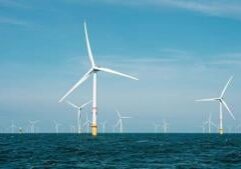
A federal judge has given a green light for construction to resume on New York’s largest offshore wind project that was abruptly shut down by the Trump administration last month.
In a ruling issued Thursday, U.S. District Court judge Carl Nichols granted Empire Offshore Wind LLC a preliminary injunction that allows construction activities to resume on the wind project while he considers the broader legal challenge by the company. It’s the second ruling in a week blocking the Trump administration’s effort to stop several offshore wind projects.
In a statement, Norway-based Equinor said it looks forward to resuming construction of the Empire Wind I project, which, when completed, will provide enough energy to power 500,000 homes and “deliver a critical new, near-term source of electricity for New York and bolster grid reliability at a time of rapidly growing demand.”
“Empire Wind will now focus on safely restarting construction activities that were halted during the suspension period,” the company said. “In addition, the project will continue to engage with the U.S. government to ensure the safe, secure and responsible execution of its operations.”
The Interior Department did not immediately respond to a request for comment.
In its legal challenge, Equinor said the Interior Department’s stop-work order is “unlawful” and threatens the progress of ongoing work with significant implications for the project, which is nearly 60% complete.
President Donald Trump has pledged to end federal support for wind and other clean energy projects as he focuses on boosting fossil fuel production as part of broader efforts to improve the nation’s energy independence. He and other Republicans argue that the higher energy costs paid by many in the Northeast are being driven in part by the embrace of clean energy policies.
In December, the Interior Department announced it is halting federal leases for Empire and other large-scale offshore wind projects currently under construction. Besides Empire, the halt included Sunrise Wind, Vineyard Wind 1, Revolution Wind off the New England coast and Coastal Virginia Offshore Wind.
Earlier this week, a federal judge allowed the Revolution Wind project to resume construction while a separate legal challenge filed by its developers is considered by the court.
Interior Secretary Doug Burgum cited unspecified national security risks posed by the offshore wind turbines in pausing federal permits for the projects, but said the move is aimed at “protecting” the American people.
But Nichols, a Trump appointee, said in his order that the federal government’s national security concerns didn’t outweigh the “irreparable harm” Empire Wind would suffer if Trump’s order is not paused.
Speaking at an event on Thursday, Hochul praised the ruling and renewed criticism of the Trump administration for issuing the stop-work order just before Christmas, impacting thousands of workers.
“I’m sick and tired of having to go to court time and time and time again to stop these decisions,” she said in remarks. “They’re designed to do nothing other than hurt workers, hurt our states, hurt our economy and hurt our energy future.”





Chance Showers And Thunderstorms
Latest News Stories

Illinois quick hits: Notices of affected flights; injunction issued over ICE force

Evers, Grisham fly to Brazil for climate change summit as government remains shut down

Upcoming mass flight cancellations worry U.S. air travelers

Pritzker watching redistricting debate as GOP grapples with filibuster

Trump administration finds SNAP fraud

WATCH: Trump says tariffs may cost Americans ‘something’ but keep U.S. safe

Chicago mayor: IL legislature has ‘more work to do’ on tax increases

Commission Grants Green Garden Solar Farm Project Variance Extension

Chicago pension, debt services costs among highest in country

WATCH: DCFS still looking for missing children numbers; Pritzker on elections results

Illinois quick hits: DHS ordered to address ICE facility conditions; Garcia explains retirement decision
Congressional Perks: Luxury cars and mileage result in big costs for taxpayers