Will County Finalizes 2025 Tax Levy at $159.5 Million, Limiting Rate Drops
Briefs: Will County Board Finance Committee Meeting | April 7, 2026
Article Summary: The Will County Finance Committee reviewed the final 2025 tax levy extension numbers, which came in slightly higher than estimated at $159.5 million, though the final limiting rate decreased from the previous year to 0.4834%.
Will County Tax Levy Key Points:
-
The final 2025 tax levy extension for Will County is $159,536,411, an increase of $756,421 from the initial estimate.
-
The increase is primarily driven by a $610,022 supplemental levy allowed under Public Act 102-0519 to recoup refunds from assessment reductions.
-
New property value in the county finalized at $510,089,040, significantly higher than the estimated $457.6 million.
-
The county’s final limiting rate is 0.4834%, a decrease from the previous year’s rate of 0.5145%.
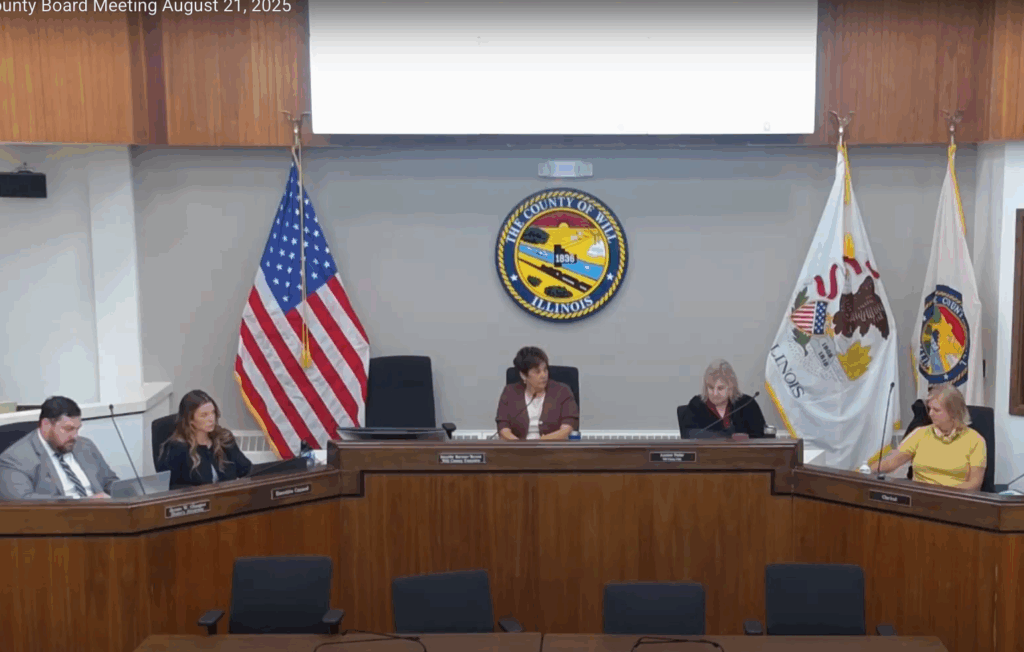
The Will County Board Finance Committee on Tuesday, April 7, 2026, reviewed the final 2025 tax levy extension numbers, locking in the financial figures that will dictate property tax bills across the county for the upcoming cycle.
Will County Chief Financial Officer and Budget Director ReShawn Howard presented the finalized data, explaining that the county’s final extended levy sits at $159,536,411. This represents an increase of $756,421 over the $158,779,990 that was estimated during the formulation of the 2026 budget.
According to Howard, the bulk of this difference comes from a $610,022 supplemental levy. Howard provided the committee with historical context, noting that under Public Act 102-0519 (Senate Bill 508), which went into effect for the 2021 levy year, taxing districts have the option to increase their levy extensions to recoup lost revenue from prior-year assessment reductions, such as Property Tax Appeal Board decisions or court-ordered refunds.
“We’ve been receiving that supplement since 2021,” Howard explained, noting that the final figures are slightly higher than anticipated but represent standard adjustments.
Despite the higher extension total, Howard highlighted that a surge in new property development helped drive down the county’s overall tax rate. New property value finalized at $510,089,040, an increase of more than $52 million over the initial estimates. Consequently, the county’s final limiting rate dropped to 0.4834%, which is lower than the previous year’s rate of 0.5145%.
Committee member Julie Berkowicz (R-Naperville) asked for clarification on whether the $159.5 million figure represents the exact amount the county will receive.
“That is the actual amount that we will expect to receive for our tax bills that are being mailed, and that’s the final amount that will be extended,” Berkowicz asked.
Howard clarified the distinction between an extension and actual collections. “It’s all based on what’s actually collected,” Howard said, acknowledging that the extended levy assumes 100% payment by property owners.
Howard also presented the final figures for the Community Mental Health Board. The board’s final extended levy is $10,000,975, representing a slight $975 increase over the estimate, with a final limiting rate of 0.0303%.




Chance Showers And Thunderstorms
Latest News Stories

Will County Board Approves New Fee Schedule for Recorder of Deeds
Will County Board Formally Opposes Heavier, Longer Trucks on National Roadways

Will County Board Approves Permits for Landscaping Business and Restaurant Liquor Service in Frankfort Area
Board Approves Engineering Contracts for Mokena Road Widening

Will County Awards $1.46 Million Contract for Kankakee Street Bridge Replacement in Manhattan Township
Crete Township Community Center to Get New Digital Sign
Will County Executive Proposes $791 Million Budget Focused on Stability Amidst Economic Uncertainty

WATCH: Detransitioner gets a second chance at medical malpractice lawsuit
WATCH: CA Democrats pass congressional redistricting plan

Pew: U.S. immigrant population declines for first time in nearly 60 years

WATCH: Illinois’ FY23 financial audit released amid criticism of tardy reports
European Union says U.S. consumers will end up paying tariffs