Multiple House Republicans defy proposed 3-year FISA Section 702 extension
After two attempts last week to reauthorize a controversial spy power of the federal government, House Speaker Mike Johnson, R-La., has unveiled the text of a three-year extension.
The new proposal, however, fails to include key privacy reforms that dozens of House Republicans are demanding to Section 702 of the Foreign Intelligence Surveillance Act, which expires April 30.
“The United States Constitution is NOT a suggestion – the Fourth Amendment is the law of the land,” Rep. Keith Self, R-Texas, posted on X after the bill text dropped Thursday. “Warrantless searches of American citizens are ongoing. We cannot allow this gross abuse of government overreach to continue.”
Self had voted with more than a dozen other House Republicans to tank both a five-year extension and an 18-month extension of FISA Section 702 last Friday.
On paper, FISA Section 702 allows federal intelligence agencies to conduct warrantless electronic surveillance on foreign nationals of suspicion.
But in practice, the electronic data of American citizens – including emails, text messages, and phone calls – are routinely collected as well.
The major controversy lies in the fact that federal intelligence agents will routinely search through that database without obtaining a warrant, which many critics view as a violation of Americans’ Fourth Amendment Rights.
As part of the overall pushback against warrantless surveillance, Reps. Thomas Massie, R-Ky., and Lauren Boebert, R-Colo., introduced the Surveillance Accountability Act on Thursday as well.
The bill would not only prohibit federal agencies from searching or obtaining Americans’ metadata without a warrant based on probable cause, but would also allow individuals to sue for damages if the federal government infringes on their Fourth Amendment rights.
“There’s been a lot of talk about FISA and [Section] 702 and warrants for the past few weeks now, but I don’t think that’s where the issue ultimately lies,” Boebert told reporters. “Sure, it is a problem when anyone, any American citizen is looked into without a warrant, but it doesn’t end under FISA, it doesn’t end under 702.”
Declassified government documents and oversight reports show that federal intelligence agencies have performed millions of these so-called “backdoor searches” since FISA Section 702 was created, including 57,000 in 2023 alone.
The House Rules Committee will meet Monday to mark up the three-year extension. Both Democrats and Republicans on the committee are expected to object to the bill in its current form.






Chance Showers And Thunderstorms
Latest News Stories

IL US Rep: Failing schools cost billions in ‘epidemic’ of poor proficiency

Plaintiffs weigh steps after appeals court upholds transit concealed carry ban
IL comptroller candidate touts experience, focuses on transparency

WATCH: Pritzker expects feds soon; appeals court affirms transit concealed carry ban

Illinois quick hits: Economic conditions show stability; EPA recruitment efforts

WATCH: Pritzker focuses on violence intervention; VP won’t confirm deployments
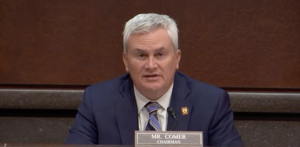
House committee investigating Dem governors for ‘illegal alien’ Medicaid spending
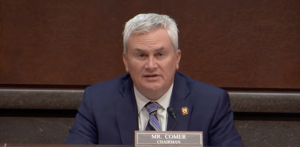
Illinois quick hits: House investigating Medicaid for illegal immigrants; transit concealed carry case decided by appeals court

WATCH: Chicago hearing addresses police workload; resident calls for federal help

Arrest of Mexican national for 2023 murder called ‘long overdue’ justice

Meeting Summary and Briefs: Beecher Board of Education for August 13, 2025

Meeting Summary and Briefs: Village of Beecher Board of Trustees for August 25, 2025
Beecher School Board Tables $14,000 High School Window Graphics Project