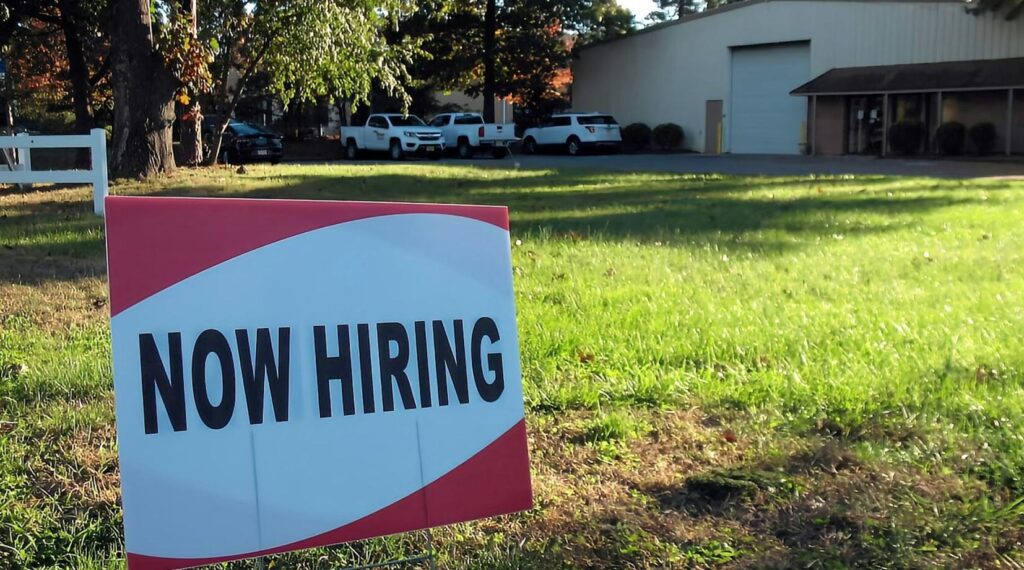
U.S. farmers struggling with high price of fuel, fertilizer as bankruptcies rise
As Congress continues working on the long-overdue federal farm bill, American farmers entering planting season are facing a grim financial landscape.
Due to the U.S.-Iran conflict and the Trump administration’s tariffs, American farmers are getting slapped with higher operational costs, which not only raise the cost of consumer goods but also threaten small farmers’ already fragile financial solvency.
The U.S. lost more than 156,000 farms between 2017 and 2025, according to 2026 U.S. Census data. From 2024 to 2025 alone, farm bankruptcy filings jumped by 46%, the Farm Bureau reported.
“Uncertainty around the availability and price of fertilizers and energy is already influencing decisions on input use, crop management, and investment, with direct consequences for yields and future supply,” the National Farmers Union warned in April.
“Fertilizer costs have risen sharply since the beginning of the crisis, while crop prices have remained largely stable – a combination that is squeezing farm margins at historically poor levels, leaving farmers with limited capacity to absorb further shocks.”
Before hostilities in Iran began, President Donald Trump’s tariffs on agricultural inputs including farm machinery, agricultural chemicals, and fertilizer squeezed the country’s agricultural sector, though the Trump administration did attempt to offset some of the consequences by distributing $12 billion in one-time bridge payments to American farmers.
The ongoing military hostilities in Iran are inflicting even more damage due to trade disruptions in the Strait of Hormuz, which have spiked the costs of fuel and fertilizer.
Diesel fuel prices have increased by roughly 45%, per data from Farm Bureau, while about 70% of farmers surveyed said they cannot afford the amount of fertilizer they need
According to news reports, the cost of doing business has risen 25% for some American farmers since the conflict began in February.
Unfortunately, recent forecasts from the U.S. Department of Agriculture do not offer much hope of relief.
Total farm debt is projected to break records in 2026, reaching roughly $625 billion, according to the department’s “U.S. farm sector financial indicators” report, while total production costs are projected to top $478 billion.
The actual numbers will likely be higher, as the USDA released its analysis before the Iran conflict began.
U.S. domestic policy over the past few decades has also contributed to the agricultural sector’s financial woes.
Due to the structure of federal subsidies for crop insurance, most insurance providers are incentivized to cater to large agribusinesses, rather than small and beginner farms.
A 208-page report commissioned by Farm Action in 2024 revealed that, between 2012 and 2019, the largest 10% of U.S. farms by crop sales received 56% of all crop insurance premium subsidies.
Meanwhile, the bottom 50% of U.S. farmers received less than 3% of all crop insurance premium subsidies during that same period.
“This concentration is not attributable to large farms simply insuring more acres,” the report notes. “Over the same period, the average amount of premium subsidies per acre received by farm operations in the top 2% by crop sales ($40.54) was almost double the benefit received by farms between the 50th and 80th percentile and over eight times the benefit received by farms in the bottom 50%.”
Congress has kept federal crop insurance policy mostly on autopilot since 2018, the last time it passed a federal farm bill.
Though supportive of some measures, advocacy groups for small and family-owned farms have criticized the upcoming farm bill, which recently passed the U.S. House, for not including adequate support or reforms.
“Instead of rebalancing the rules in favor of independent farmers and rural communities, this bill largely preserves a status quo that benefits the largest corporations,” Farm Action’s Research and Policy Director Sarah Carden said.
“[W]e will continue urging Congress to use this opportunity to restore competition to the food and agriculture system, rebuild local and regional supply chains, and support farmers in feeding their communities healthy food.”






Chance Showers And Thunderstorms
Latest News Stories

CA, Delaware attorneys general concerned about OpenAI

New York AG to appeal ruling tossing Trump’s $454M civil fraud penalty
Chevron petitons Supreme Court to move lawsuits to federal court

Business leaders eye immigration reform

Trump defends handling of Epstein controversy, says GOP doing ‘legendary’ job

In-home care rule change proposal generates more than 1,500 responses

Polis calls for return of Victims of Crime Act grant funding

Billions in investment, thousands of jobs coming to RGV from LNG facility, pipeline

Bessent says Federal Reserve ‘must change course’

Legislation to end cashless bail in D.C., nationwide introduced in Senate

Chicago ranks near bottom in survey of best and worst run cities

WATCH: Pritzker to sue ‘immediately’ if Trump sends guard; GOP AG candidate profile