No ruling; Florida judge hears arguments in redistricting litigation
A Florida judge on Friday heard arguments on a lawsuit to block a new congressional redistricting plan in Florida that could give Republicans a four-seat gain in the upcoming midterm elections.
Opponents are seeking a temporary injunction barring the state from using the new districts. They say the plan violates a state constitutional amendment approved by voters that prohibits using redistricting for partisan purposes.
Florida 2nd Judicial Circuit Judge Joshua Hawkes did not issue an immediate ruling.
Second-term Republican Gov. Ron DeSantis last month called a special session of the Legislature to approve his redrawn congressional districts, citing an upcoming U.S. Supreme Court decision. That ruling in a Louisiana case, was issued as the Legislature was debating the new maps. It limits the use of race in redistricting.
DeSantis said the ruling “compelled” Florida to draw new districts, in part to correct “racial gerrymandering” in a South Florida district.
Opponents of the plan say it violates a state constitutional amendment approved by voters in 2010. The Fair District Amendment that makes it illegal to use redistricting for partisan purposes.
“This case is unusual because the map drawer admitted on the public record that the districts were drawn with partisan data and without the need to comply with the Fair District Amendment,” Christina Ford, attorney for Equal Ground Education Fund, a nonprofit group and one of the group’s challenging Florida the new maps, told the judge Friday.
There is “staggering” evidence of partisan intent in the new lines, she said.
“Defendants do not meaningfully even attempt to rebut that evidence,” Ford said. “They do not defend how a single line was drawn.”
The case is also unusual because state leaders are not defending the Fair District Amendment of the Florida constitution.
Mohammed Jazil, an attorney for the secretary of state, said that the Fair District Amendment was modeled after Section 2 and Section 5 of the federal Voting Rights Act.
The groups challenging the recent Florida redistricting plan have suggested reverting back to the previous maps approved in 2022. The challengers have the burden of showing that the 2022 maps were constitutional in the way it used race as a factor, Jazil said.
“They are going to show that by saying that race either was or not a factor or that race was appropriately considered,” Jazil said.
He added that “there is no need to rush,” a decision in this case.
“There should be a trial, there should be a proper assessment of the facts, a testing of the evidence, a testing of the expert witnesses before another plan is imposed other than the one the Florida Legislature enacted,” the attorney told the judge.






Chance Showers And Thunderstorms
Latest News Stories
Will County Public Works Committee Unveils 25-Year Transportation Plan, Projects $258 Million Gap
Will County Animal Protection Services Seeks New Facility Amid “Gaping Wound” of Space Crisis
Board Confronts Animal Services Crowding, Explores Future Facility Options
Will County Board Members Demand Transparency in Cannabis Tax Fund Allocation
Homer Glenn Residents Push Back on 143rd Street Widening as Officials Signal “Tentative Agreement”
Will County Forges 2026 Federal Agenda Amid D.C. Policy Shifts, ‘Big Beautiful Bill’ Impacts
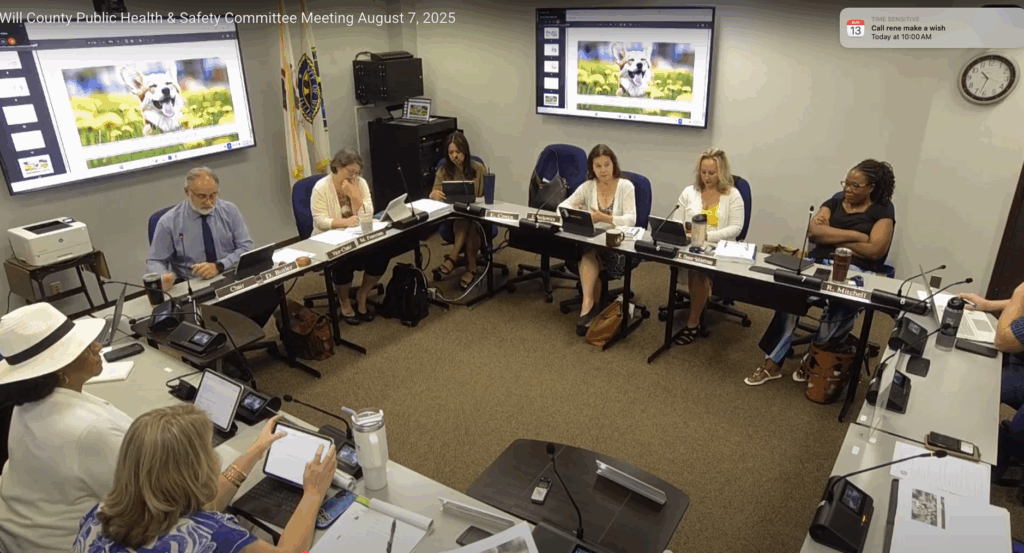
Health Department Seeks $1 Million Levy Increase to Prevent “Weakened System”
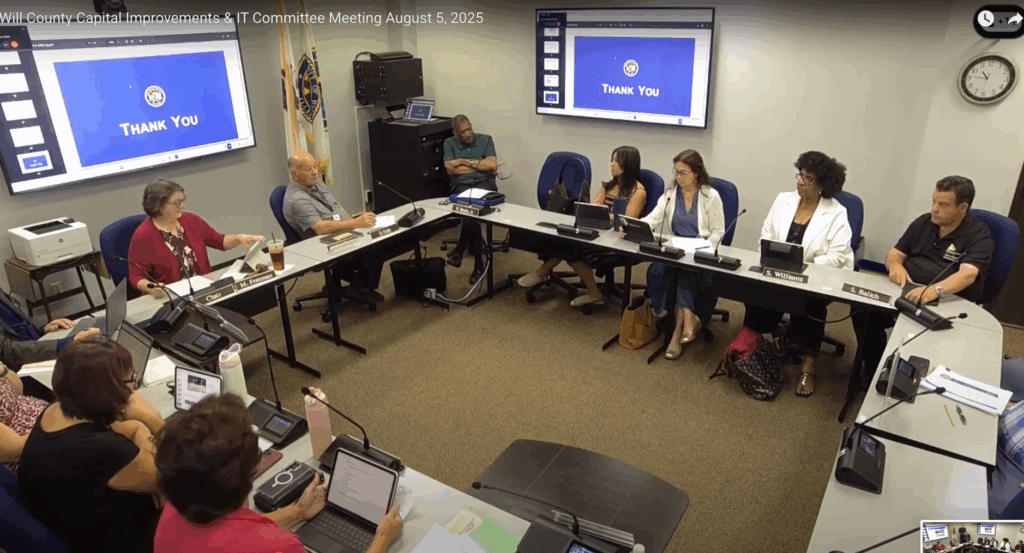
County Rolls Out New “OneMeeting” Software to Improve Public Access

Meeting Summary and Briefs: Will County Board Finance Committee for August 5, 2025
Will County PZC Approves Rezoning for Truck Repair Facility on Manhattan Road Amid Resident Concerns
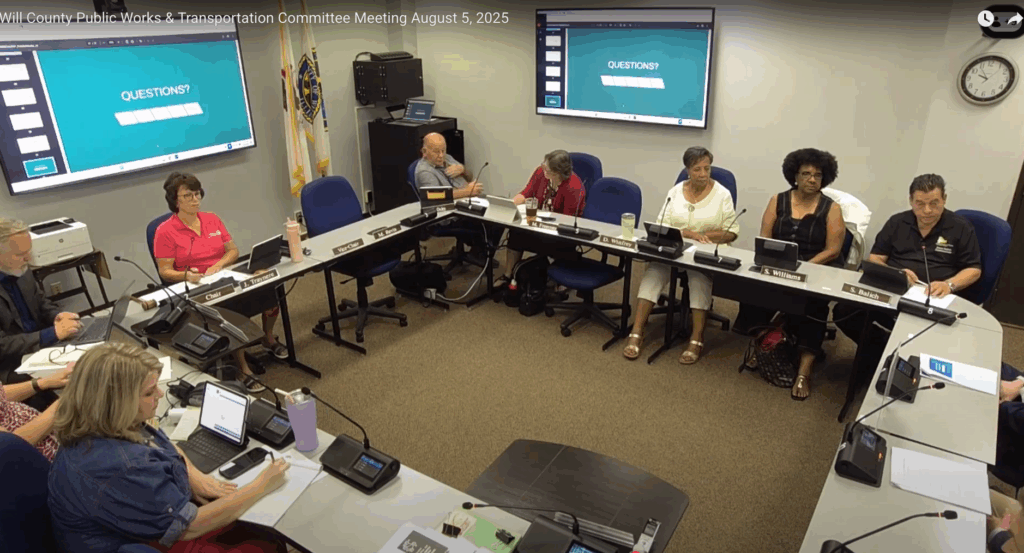
Key Stretch of Bell Road on Track for Thanksgiving Reopening, Committee Approves Additional Funds
Will County Leglislative Committee Opposes Federal Push for Heavier, Longer Trucks
Will County Reports Progress in Opioid Fight, Highlights New FDA Labeling Rules