Analysts: Redistricting to cost taxpayers, while slowly shifting election outcomes
As states engage in unprecedented mid-decade redistricting across the country, analysts predicted taxpayers will foot the bill while changes in representation will come slowly over time.
In Alabama, the state legislature moved to change its congressional maps following an April decision from the U.S. Supreme Court. The state will hold a special primary election Aug. 11 to determine partisan candidates in four congressional districts that have been altered. It will cost taxpayers an additional $4.45 million to hold August’s special election, according to Alabama’s legislative fiscal office.
Tennessee also enacted a new congressional map following the high court’s decision but did not announce a special primary election. So far, special elections have yet to be planned in other states with majority-minority congressional districts.
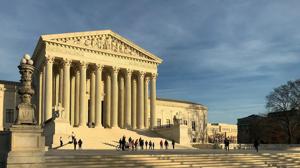
The U.S. Supreme Court narrowed section two of the Voting Rights Act in April, which had allowed state legislatures to create congressional districts where a majority of residents were of a minority racial or ethnic group.
In the case Louisiana v. Callais, the justices on the court found Louisiana’s congressional map improperly considered race when drawing two majority-black congressional districts in the state. The map was struck down, which led several other states across the country – particularly in the southeast – to consider redistricting efforts.
Kate McKnight, a partner at BakerHostetler law firm who has litigated redistricting cases in multiple states, said before the Supreme Court’s decision the Voting Rights Act provision led to state maps that allowed partisan goals to influence outcomes. She pointed to studies that found some redistricting efforts did not make a difference across racial lines, but rather partisan lines.
“We were seeing situations where districts did not need to be drawn at a majority-minority level in order to elect that minority’s candidate of choice,” McKnight said. “It couldn’t discern between partisan voting and racial voting.”
However, other analysts disagree. Kevin Morris, a senior research fellow at the Brennan Center for Justice, said the Voting Rights Act allowed for greater minority representation in local offices like school boards and city councils.
“The civil rights law was incredibly effective in blocking discriminatory policies in counties and towns that might otherwise escape media attention,” Morris said.
Molly DiRago, a partner at Troutman Pepper Locke, said parts of the political redistricting process will occur naturally. She said traditionally Democratic voters will pack themselves into urban areas, while Republican voters will favor rural geographic areas.
“I think it is going to make partisan gerrymandering or map drawing easier,” DiRago said.
McKnight said the high court’s decision allowed congressional districts to remain on equal footing across the nation.
“If you go along with this theory that whenever you live in a district that doesn’t elect your candidate of choice, you are disenfranchised or cracked or diluted, well, that’s a good portion of the entire country that lives in districts that do not elect their candidate of choice,” McKnight said.
McKnight also said natural moving patterns tend to favor Republicans when it comes to redistricting. She pointed to the proposed redistricting map from Virginia, which attempted to alter four congressional districts to favor Democrats in the state.
“A Democrat gerrymander looks like a gerrymander. It looks like a bunch of salamanders,” McKnight said. “They have to pie out the tightly-knit Democratic support in cities to pick up all the rural areas.”
Overall, McKnight rebuffed criticisms of the Supreme Court’s decision and its effect on redistricting. She said redistricting tends to sort itself out over time in a way that is fair for all parties involved.
She said parties in power will typically end up either spreading their voters too thin or concentrate their voters too tightly.
“This forces parties to go out there and run good candidates who have compelling campaigns and draw voters and draw support in those purple districts where the support is drawn too thin,” McKnight said.





Chance Showers And Thunderstorms then Slight Chance Showers And Thunderstorms
Latest News Stories

Trump hosts small business owners at White House, touting business-friendly policies
DeSantis signs new congressional map into law

South Carolinian facing charges for threatening Trump will stay jailed

Iran testing fragile ceasefire, fires on Navy, commercial ships

Small businesses expected to feel pinch as diesel hits $6 a gallon
GOP senators renew calls to nuke filibuster after voter ID bill languishes

Illinois Quick Hits: Four charged in alleged pharmacy burglary conspiracy

LA City Council member seeks to allow noncitizens to vote
Chicago loses 2,100 restaurant jobs as industry fights mandated wage hikes

State Senator, ‘angel parent’ want to let police to work with ICE
U.S. Supreme Court temporarily allows mail-order abortion pills
U.S. Supreme Court declines to hear Washington COVID-19 speech case