
Ceasefire in question as U.S. accuses Iran of violations
The future of the ceasefire between the U.S. and Iran has come into question following the second exchange of fire between the countries in less than a week.
U.S. Central Command described the launch of Iranian ballistic missiles toward Kuwait as an “egregious ceasefire violation,” following the launch of five “one-way attack drones” near the Strait of Hormuz by the Islamic Republic.
CENTCOM says the missiles were “successfully” intercepted by Kuwait and the drones were all intercepted by the U.S. In addition to the five drones, a sixth Iranian drone was launched from a “ground control site in Bandar Abbas.”
The Islamic Revolutionary Guard Corps claims an American base was the intended target in response to the strike near Bandar Abbas.
Saudi Arabia and Qatar released statements Thursday condemning the attempted attacks on Kuwait.
The latest attacks come on the heels of the U.S. and Iran exchanging fire over the weekend, just as the two countries engaged in talks to reach a tentative peace deal.
The Trump administration described the weekend strikes as defensive, targeting Iranian boats that were reportedly laying mines in the Strait of Hormuz. Iran responded by launching missiles towards U.S. aircraft, leading to American forces attacking the launchers.
President Donald Trump continues to reiterate that Iran cannot have a nuclear weapon, demanding the Islamic Republic turn over its enriched uranium, or “nuclear dust” as the president called it.
The president quashed the idea of another country, such as Russia or China, taking possession of the nuclear material.
Trump posted on Truth Social that the material should be “immediately turned over” to the U.S. to be destroyed or to offer an alternative for Iran to destroy it “in place or, at another acceptable location, with the Atomic Energy Commission, or its equivalent, being witness to this process and event.”
While the president is pushing hard for a deal to be made, he maintains that time is on the side of the U.S.
U.S. Secretary of State Marco Rubio warned that it may take several more days to finalize a draft, though he underscored that “it’s either going to be a good deal, or there isn’t going to be one.”
Iran’s supreme leader, Ayatollah Mojtaba Khamenei, who was thought to be seriously injured in the strikes that killed his father, Ayatollah Ali Khamenei, released an statement Monday, bringing any deal between the U.S. and Iran into question.
Khamenei renewed calls for “death to America” and “death to Israel,” saying they will become a “slogan” of the “Islamic nation and the oppressed of the world.”
As of Thursday morning, the White House remained tight-lipped on the status of the ceasefire as the president maintains Iran wants to make a deal.






Showers And Thunderstorms Likely
Latest News Stories

Fitzpatrick says pro-union bill dealing with contracts will pass U.S. House

Feds investigate LA schools for sexual misconduct allegations

Advocates criticize bipartisan housing bill
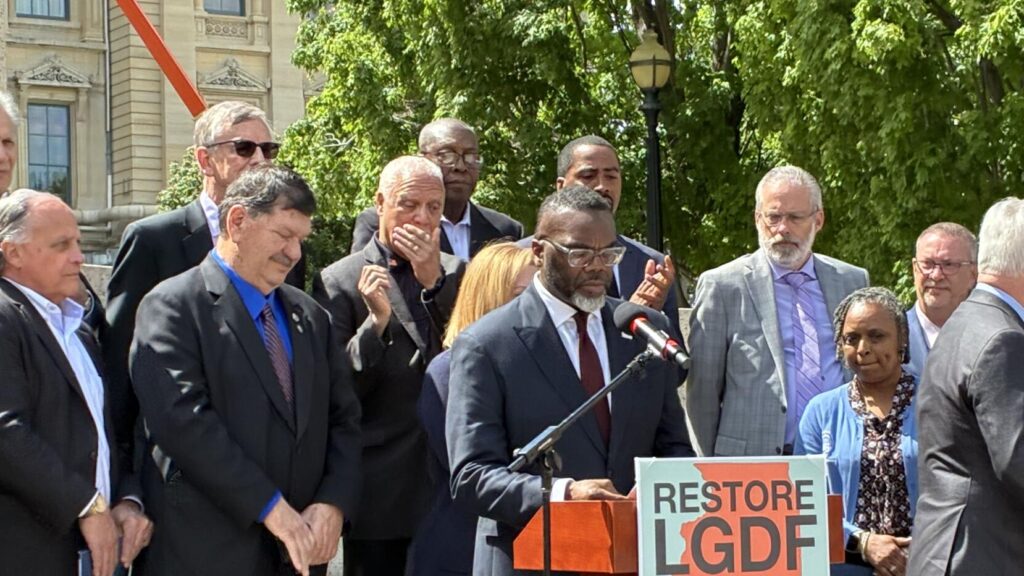
Johnson, municipal leaders statewide clash with Pritzker over local funding cuts

WATCH: Report: Washington high schools rank near bottom in personal finance literacy

Citizen Voting Amendment may avoid partisan SAVE Act pitfalls

Democrats ‘Red to Blue’ targets 18 seats in 12 states in November

Illinois bill would force employers to pay employees regular wages for jury duty

VA suicide screening doubles after watchdog found mass failures

Trump says Iran agrees to no nuclear weapon, claims deal is close

Late-Inning Surge and Dominant Relief Lift Beecher Past Bloom 12-5

Democrats call on Lutnick to resign over Epstein ties