U.S., Iran may be on the cusp of tentative ceasefire extension
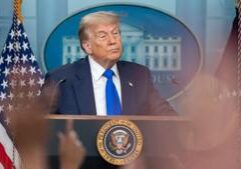
A memorandum of understanding has been reached between U.S. and Iranian negotiators, pending approval from President Donald Trump and Iranian leadership, according to reports.
The MOU, as first reported by Axios, would extend the ceasefire for 60 days and reopen the Strait of Hormuz immediately.
The tentative deal reportedly would lift the U.S. blockade on Iranian ports and during the 60 days the two countries would enter negotiations over the future of Iran’s nuclear program.
Trump has said repeatedly Iran “cannot have a nuclear weapon,” demanding the Islamic Republic hand over its “nuclear dust.”
The president has also made it clear that Iran, along with Oman, would not be allowed to toll the Strait of Hormuz.
Trump has reportedly asked for some time before giving his final approval on the MOU.
Many questions remain, including the grounds for ending a ceasefire that has come under strain in recent days.
On Thursday, U.S. Central Command described the most recent launch of Iranian ballistic missiles toward Kuwait as an “egregious ceasefire violation,” following the launch of five “one-way attack drones” near the Strait of Hormuz by the Islamic Republic.
CENTCOM says the missiles were “successfully” intercepted by Kuwait and the drones were all intercepted by the U.S. In addition to the five drones, a sixth Iranian drone was launched from a “ground control site in Bandar Abbas.”
The Islamic Revolutionary Guard Corps claims an American base was the intended target in response to the strike near Bandar Abbas.
Saudi Arabia and Qatar released statements Thursday condemning the attempted attacks on Kuwait.
The latest attacks come on the heels of the U.S. and Iran exchanging fire over the weekend.
The Trump administration described the weekend strikes as defensive, targeting Iranian boats that were reportedly laying mines in the Strait of Hormuz. Iran responded by launching missiles towards U.S. aircraft, leading to American forces attacking the launchers.
The president quashed the idea of another country, such as Russia or China, taking possession of the nuclear material.
Trump posted on Truth Social that the material should be “immediately turned over” to the U.S. to be destroyed or to offer an alternative for Iran to destroy it “in place or, at another acceptable location, with the Atomic Energy Commission, or its equivalent, being witness to this process and event.”
While the president is pushing hard for a deal to be made, he maintains that time is on the side of the U.S.
U.S. Secretary of State Marco Rubio warned that it may take several more days to finalize a draft, though he underscored that “it’s either going to be a good deal, or there isn’t going to be one.”
Iran’s supreme leader, Ayatollah Mojtaba Khamenei, who was thought to be seriously injured in the strikes that killed his father, Ayatollah Ali Khamenei, released a statement Monday, bringing any deal between the U.S. and Iran into question.
Khamenei renewed calls for “death to America” and “death to Israel,” saying they will become a “slogan” of the “Islamic nation and the oppressed of the world.”






Slight Chance Rain Showers then Slight Chance Showers And Thunderstorms
Latest News Stories

Senate rejects both Republican and Democrat govt funding stopgaps, risking a shutdown

Human remains found near Leavenworth believed to be Travis Decker

House passes government funding patch, sending over to Senate

Illinois quick hits: ICE protests in Broadview; Edgar funeral services this weekend

WATCH: Pritzker’s office ‘troubled’ by ‘peacekeeper’ photo; 2 years of cashless bail

Will GOP act on $124B in Medicare insurance fraud?
What a terrorist designation could mean for Antifa

WATCH: Report says national student debt is over $1.6 trillion

DOJ sues health plan that got almost $3.5 billion from Feds

Bill blocks Federal Reserve members’ dual appointments

Lawmakers call for changes to cashless bail as Illinois faces federal funding loss

WATCH: House committee debates D.C. crime after Trump emergency order