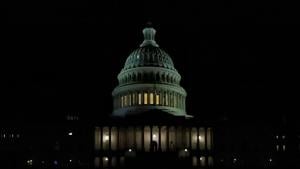
Supreme Court sets oral arguments in tariff case
The Supreme Court said Thursday it will hear arguments Nov. 5. in a case critical to a wide swath of President Donald Trump’s economic agenda.
The nation’s highest court will hear oral arguments in a case challenging Trump’s tariff authority long before Congress can weigh in on the president’s rapid reordering of the global trade market in favor of American businesses.
A group of Democrat-led states, five small businesses, and two private companies took Trump to court saying the president overstepped his authority by hitting every U.S. trading partner with tariffs not seen in nearly a a century.
Trump has made tariffs the centerpiece of his economic agenda. Trump used a 1977 law that doesn’t mention tariffs to reorder global trade in a matter of months through tariffs to try to give U.S. businesses an advantage in the world market. Using tariffs under the International Emergency Economic Powers Act, Trump put import duties of at least 10% on every nation that does business with the U.S.
The challengers argue that Congress, not the president, retains the power to tax. Trump says he has the authority and that his deals around the world are to benefit of all Americans.
Trump’s new tariffs raised $80.3 billion in revenue between January 2025 and July 2025 before accounting for income and payroll tax offsets, according to an analysis of federal data from the Penn Wharton Budget Model.
The Congressional Budget Office estimated that Trump’s tariffs could bring in $4 trillion over the next decade, but would raise consumer prices and reduce the purchasing power of U.S. families.
In August, the U.S. Court of Appeals for the Federal Circuit affirmed a previous lower court ruling, but said Trump’s tariffs could remain in place while the administration appeals to the U.S. Supreme Court.
In the 7-4 decision, the majority of the Federal Circuit said that tariff authority rests with Congress. It used that same language: “We discern no clear congressional authorization by IEEPA for tariffs of the magnitude of the Reciprocal Tariffs and Trafficking Tariffs. Reading the phrase ‘regulate … importation’ to include imposing these tariffs is ‘a wafer-thin reed on which to rest such sweeping power.'”
Trump has said he wants to use tariffs to restore manufacturing jobs lost to lower-wage countries in decades past, shift the tax burden away from U.S. families, and pay down the national debt.
A tariff is a tax on imported goods that the importer pays, not the producer. The importer pays the cost of the duties directly to U.S. Customs and Border Protection, a federal agency.
Latest News Stories
Will County Awards $10.4 Million Contract for Bell Road Widening Project

Regional Office of Education Highlights School Safety, New Learning Programs in Update
New Lenox Solar Farm Proposal Advances with Conditions, Following Village and Forest Preserve Input

Meeting Summary and Briefs: Will County Board for October 16, 2025

Will County Board Approves New 30 MPH Speed Limit for Frankfort Township Road

Will County Committee Grapples with $8.9 Million Budget Gap After Contentious 0% Tax Levy Vote
Frankfort Township Board Objects, but County Commission Recommends Bar with Video Gaming
Senior Shared Housing Facility Recommended for Approval in Crete Township
Crete Township ‘Tiny Home’ Owner Appeals Permit Denial

Will County Finance Committee Forwards 1.75% Compromise Property Tax Levy to Full Board

WATCH: Trump calls Pritzker a ‘fat slob,’ Illinois governor blasts president

Illinois business group warns of ‘backbreaking’ progressive income tax