Will County Board Approves Controversial Drug Recovery Retreat in Crete Township
Article Summary: The Will County Board has approved a special use permit for The Second Story Foundation to operate a long-term residential recovery program for men on a 68-acre horse farm in Crete Township. The 17-2 vote came after extensive debate and testimony from residents and township officials who raised concerns about safety, property values, and the project’s compatibility with the rural area.
Second Story Recovery Ranch Key Points:
-
Project: The Second Story Ranch will be a long-term residential program for up to 15 men recovering from substance abuse, homelessness, and addiction.
-
Location: The program will operate at a 68-acre equine training facility at 2400 Bemes Road in Crete Township.
-
Vote: The Will County Board approved the special use permit with a 17-2 vote, with members Daniel J. Butler and Sherry Newquist dissenting and Jim Richmond absent.
-
Opposition: Crete Township, the Ridgefield Improvement Association, and Green Garden Township officially opposed the project, citing safety concerns and incompatibility with the agricultural zoning.
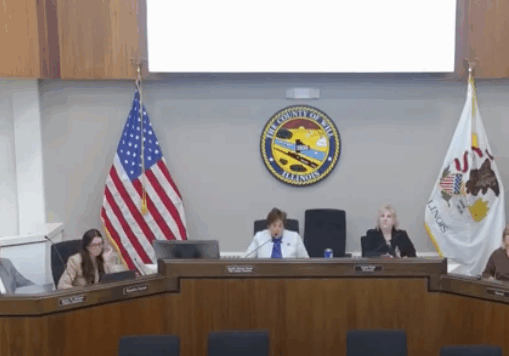
CRETE TOWNSHIP — The Will County Board voted 17-2 on Thursday to approve a special use permit for The Second Story Foundation, allowing the nonprofit to establish a long-term residential recovery program for men on a 68-acre horse farm in unincorporated Crete Township.
The project, known as the Second Story Ranch, will operate at 2400 Bemes Road, formerly the Double Dakota Ranch. It is designed as a therapeutic rural retreat for up to 15 men overcoming addiction and homelessness, where they will live for six to 18 months while working on the farm and engaging in structured recovery programming.
The decision followed lengthy discussion at the board meeting and previous committee hearings where local officials and residents voiced strong opposition. Both Crete Township and the neighboring Ridgefield Improvement Association submitted letters formally objecting to the plan, citing concerns about community safety, a potential decrease in property values, and a belief that a “group home” is incompatible with the area’s agricultural and residential character.
Nathaniel Washburn, an attorney representing the foundation, addressed the board, emphasizing the program’s rigorous screening process for participants. He explained that candidates are referred, undergo extensive interviews, and are subject to thorough background checks that exclude anyone with a history of violent or sexual crimes.
“He only wants people that are fully invested in their recovery, not people that are half in and half out that may quickly relapse,” Washburn said of James O’Connor, the foundation’s executive director. Washburn noted O’Connor was in Washington, D.C., meeting with the Department of Health and Human Services to secure federal funding for the ranch’s capital improvements.
The project was framed not as a clinical treatment facility but as a post-treatment living arrangement on a functioning horse farm. “The best way to package this was it’s already zoned A1 on a large property. It is similar and compatible to a rural retreat,” Washburn argued.
Several board members voiced support, highlighting the county’s need for more recovery options. Board member Judy Ogalla of Monee, whose district previously included the area, called it a “unique situation that we are lucky to have come to us here in Will County.”
“It offers them a retreat for a period of time to get themselves back on their own two feet before coming back to society, which is very difficult to do,” Ogalla said. She pushed back against concerns linking the facility to problems with other agritourism venues, stating those issues stem from unpermitted events, not organized programs like the one proposed.
Member Herbert Brooks Jr. of Joliet compared the local concerns to those raised about similar facilities in his district, none of which materialized. “You would never know that Dr. Sharma operate three facilities in my district,” he said. “People have not called me… about any of those concerns.”
However, members Daniel J. Butler and Sherry Newquist voted against the measure, siding with local opponents. Butler noted the strong opposition from the township. Newquist, while calling the program “excellent,” expressed concern that labeling it as similar to agritourism “opens the door wide open for people to essentially game the system.”
The approval comes with seven conditions, including compliance with the Will County Health Department and the Crete Township Fire Protection District. The site is limited to six total dwelling structures, and any changes to existing buildings will require new permits.




Mostly Sunny then Showers And Thunderstorms Likely
Latest News Stories

Fitzpatrick says pro-union bill dealing with contracts will pass U.S. House

Feds investigate LA schools for sexual misconduct allegations

Advocates criticize bipartisan housing bill

Johnson, municipal leaders statewide clash with Pritzker over local funding cuts

WATCH: Report: Washington high schools rank near bottom in personal finance literacy

Citizen Voting Amendment may avoid partisan SAVE Act pitfalls

Democrats ‘Red to Blue’ targets 18 seats in 12 states in November

Illinois bill would force employers to pay employees regular wages for jury duty

VA suicide screening doubles after watchdog found mass failures

Trump says Iran agrees to no nuclear weapon, claims deal is close

Late-Inning Surge and Dominant Relief Lift Beecher Past Bloom 12-5

Democrats call on Lutnick to resign over Epstein ties