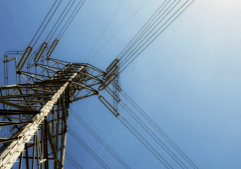
Estimated power demand will outstrip supply by 2032
(The Center Square) – The impact on electricity demand from a growing number of data centers is a recurring point of concern among energy leaders who warn that, without swift policy reform, unchecked growth could drive up costs and threaten reliability.
A recent briefing hosted by nonprofit consumer watchdog Citizens Utility Board of Illinois, or CUB, explored the issues facing the PJM region.
Panelists from CUB and the Natural Resources Defense Council, or NRDC, suggested potential solutions that would protect consumers and acknowledged an urgent need for coordinated action, they say, to contain costs and safeguard reliability.
CUB’s Jim Chillsen noted that consumers are often unaware their electric bills include capacity charges – payments that cover the power they use, but also the cost of maintaining extra generation for times of peak demand.
He highlighted that after years of flat consumption demand, PJM estimates that by 2031 data centers could add 22-30 GW of new demand, or enough electricity for more than 10 million homes, while expecting only 6-12 GW of new supply, or enough to power as many as 2.6 million homes. This imbalance, he said, has led to record-high capacity prices for which consumers will be paying for through at least May 2027 – something the panelists fear will become a “new normal.”
Without reforms, the NRDC estimates cumulative capacity costs could reach $163 billion from 2027 through 2033.
Claire Lang-Ree, NRDC clean energy advocate, stated that average utility bills have already increased by $20-$30 due to the price increase in the grid’s last auction, and it will get worse through the coming decade if nothing is done. “We’re estimating that average bills could increase by another $70 per month,” she added.
Panelists found fault with PJM’s Critical Issue Fast Path, or CIFP – an initiative launched in August to fast-track discussions and policy decisions aimed at managing rapid growth of large load customers like data centers.
The current proposal, they say, does not require data centers to reduce energy consumption during peak demand; rather, it is voluntary, which increases the risk of rolling blackouts.
They were also critical of the proposed 10-month fast track for new data center-related resources that would allow them to jump ahead in the interconnection queue, which is dominated by clean energy projects – some that have been waiting years for approval.
A better approach stressed Clara Summers, CUB’s Consumers for a Better Grid campaign manager, would require data centers to cover their own costs and bring their own capacity.
Lang-Ree added that by removing large loads out of the capacity market until they bring their own supply may bring capacity prices back down to historic levels of around $60 billion versus the $163 billion projected.
Other measures proposed include implementation of reforms such as separate tariffs, the need for accurate load forecasting, and incentives for new, fast-to-build, clean energy supply.
Stressing that accurate load forecasting is essential to controlling costs and maintaining reliability, she warned that many projects never get built, but their projected demand is used in pricing – driving up capacity pricing for everyone.
By requiring stricter standards such as financial commitments and proof of constructability from developers, consumers won’t be forced to pay for power that is never used, she said.
Summers also highlighted that battery storage is the fastest source to build. Citing analysis by Brattle, she said battery storage can be built in about 20 months or less, as opposed to a gas fired power plant which could take 44 to 50 months. She added that the batteries can store power from today’s resource mix to handle peak capacity needs and are just as reliable as a new gas plant.
Governors of PJM states are among the grid operator’s critics. They recently attended a summit convened by Gov. Josh Shapiro to discuss reforms and having a larger voice in PJM’s governance.
According to PJM, as of August, a total of 46,000 MW of new generation has signed interconnection agreements and are ready to construct, which once operational, could supply as many as 46 million homes. Many of the projects, however, are hampered by factors outside of their control – such as siting and permitting challenges, supply chain backlogs, and financial dynamics.
PJM’s stakeholders are scheduled to vote on a final proposal regarding the allocation of costs for new electric infrastructure on November 19.
Latest News Stories
Executive Committee Considers $12,000 Strategic Planning Initiative with University of St. Francis
Executive Committee Members Decry Roadside Litter, Call for Action Against Garbage Haulers

Will County Updates Solid Waste Ordinance, Increases Fines and Reporting to Landfill Committee

Citing Liability Concerns, Will County Committee Postpones Vote on Septic System Ordinance

Will County Moves to Repeal Obsolete 1972 Fire Hydrant Ordinance
Will County Board Gets Back to Basics with Robert’s Rules of Order Training
Executive Committee Approves Amended Houbolt Bridge Agreement to Settle Litigation

Meeting Summary and Briefs: Will County Board Committee of the Whole for August 12, 2025
Meeting Summary and Briefs: Will County Ad-Hoc Ordinance Review Committee for August 12, 2025

Will County Receives Detailed Update on Landfill Expansion Investigation

Report Finding Few Trucks Littering Sparks Debate on Cleanup Responsibility
Meeting Summary and Briefs: Will County Landfill Committee for August 7, 2025