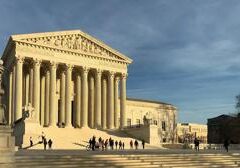
SCOTUS issues stay in Texas redistricting case
Texas Attorney General Ken Paxton filed an emergency application with the U.S. Supreme Court requesting it to stay a federal district court ruling in a lawsuit filed over Texas’ new redistricting law. Within hours, Justice Samuel Alito granted his request Friday evening.
The two-sentence order granted an administrative stay pending appeal and required the parties involved to provide responses to the court by Monday, Nov. 24.
In response, Paxton said the ruling temporarily stopped the district court’s injunction against the new law. “We look forward to continuing to press forward in our case on the merits,” he said.
When filing the application, Paxton said, “Radical left-wing activists are abusing the judicial system to derail the Republican agenda and steal the US House for Democrats. I am fighting to stop this blatant attempt to upend our political system.”
It was filed after two judges on an El Paso district court ruled against the new congressional maps and ordered Texas to use a 2021 redistricting map for the 2026 midterm election.
They did so without the dissenting judge, Judge Jerry Smith, who issued a blistering rebuke on Thursday. Not only was the ruling unlawful but the senior judge, Jeffrey Brown, engaged in “judicial misbehavior” and “judicial activism,” Smith argued.
Gov. Greg Abbott said the district court’s ruling was “clearly erroneous and undermines the authority the U.S. Constitution assigns to the Texas Legislature by imposing a different map by judicial edict. The State of Texas will swiftly appeal to the United States Supreme Court.”
He also highlighted Smith’s dissent, noting that he used “more than 100 pages to detail the errors with Brown’s opinion and the flaws in his legal analysis.”
Democrats, and those suing, argue the new law is discriminatory.
Abbott and Republican members of the legislature, who hold the majority, argue the new law and 2025 congressional redistricting map is legal and better reflects the will of the voters. Texas voters have overwhelmingly increased voting Republican in the last two elections, including Hispanic-majority districts, they argue.
“The Legislature redrew our congressional maps to better reflect Texans’ conservative voting preferences – and for no other reason,” Abbott said. “Any claim that these maps are discriminatory is absurd and unsupported by the testimony offered during ten days of hearings.”
Earlier this year, the legislature redrew 37 of Texas’ 38 congressional districts after Texas reported record population increases and Republicans made record gains with Hispanic and Black voters in the last two elections, The Center Square reported. The new maps potentially could flip up to five seats held by Democrats to Republican.






Partly Sunny then Chance Showers And Thunderstorms
Latest News Stories

Meeting Summary and Briefs: Will County Board Legislative Committee for January 6, 2026
Beecher School Board Approves $283,000 Elementary Window Project and New Bus

Firms team up with states to scrutinize health care spending

St. Paul students marked absent after protests against ICE

Poll: Trump’s approval rating falls 16% in Arizona

SCOTUS to consider second election law case

Medical device manufacturer invests $110M to expand Nebraska plant, boost drug supply

WATCH: U.S.ambassadors stress Greenland’s importance

Chicago council considers ‘not a tax’ surcharge on hotels

Govt. funding process advances as three more bills to become law; six remain
Bankers push back on Trump’s plan to reduce swipe fees, cap interest rates
State lawmaker calls for hearings on banning Sharia law in Texas