
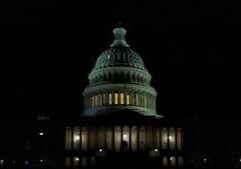
Congress moves to restore federal union powers, critics warn of higher costs
(The Center Square) – The U.S. Congress is set to vote on House Resolution 2550, a bill that would restore federal employee collective bargaining powers limited under Trump-era executive orders.
The measure, backed by House Democrats and some Republicans, advanced through a discharge petition. Critics warn it could boost union power while raising costs and reducing government efficiency.
Maxford Nelsen, director of research and government affairs at the Freedom Foundation, said the 218th signature was Michael Lawler’s, a New York Republican. Five Republicans overall signed the discharge petition.
“Unions derive their revenue from dues paid by members, so they want government employees to be as numerous as possible,” said Nelsen. “They support creating new government programs because those programs require more employees, expanding the union membership pool.”
Jon Zumkehr, president of American Federation of Government Employees 4070, emphasized the critical role of union protections for correctional officers.
“Federal correctional officers are law enforcement. To take these protections away is a huge deal,” Zumkehr said.
He highlighted long-standing issues at the Federal Correctional Institution in Thomson, Illinois including staffing shortages and dangerous exposure to fentanyl delivered through the mail, which has hospitalized officers.
“The Bureau of Prisons lost a law enforcement officer last year at USP Atwater, Marc Fischer, due to fentanyl coming through the mail,” Zumkehr said. “The Bureau has done nothing about it and simply moved on. That’s why the union is so important.”
Zumkehr cited past efforts where union advocacy led to concrete safety improvements, including legislation for pepper spray vests after the deaths of officers Jose Rivera and Eric Williams.
Zumkehr credited U.S. Sen. Chuck Grassley, R-Iowa, for helping secure funding for staffing and infrastructure at federal prisons.
“Senator Grassley got $3 billion for us for staffing, $2 billion for infrastructure,” he said. “That came because of union advocacy, because the federal government cannot lobby Congress.”
Nelsen notes that concerns about public-sector collective bargaining stretch back to President Franklin D. Roosevelt. He explains that allowing private interest groups to negotiate with the government gives them outsized influence over costs, operations, and the size of government, often holding services “hostage” through strikes or work stoppages.
“But for political reasons, the left embraced it to build a key constituency, leading to an explosion of public-sector collective bargaining in the 1960s and ’70s, and we’re still dealing with the consequences today,” said Nelsen.
Nelsen said H.R. 2550 likely won’t advance past the Senate or survive a presidential veto.
“The authority of the president to exempt national security-related positions from collective bargaining is clearly provided in statute, and it’s not controversial in theory. Every president since [Jimmy] Carter has used that authority,” Nelsen said. “But President [Donald] Trump’s executive orders used that authority far more expansively than before.”
Nelsen said a number of lawsuits have been filed by unions challenging the scope of the orders, and those cases are working their way through the federal courts.
“The unions likely see them as complementary strategies, seeking practical relief through litigation while also trying to bolster their political power in Congress,” he said.
Zumkehr explained that the Council of Prison Locals filed a lawsuit last week challenging the director.
“The director said he was removing the contract because the union was a ‘roadblock.’ That’s what we’re challenging because it effectively removes the union from discussions about how everything is run,” said Zumkehr. “When the director announced that he’s removing the union rights from the Bureau of Prisons, not once did he ever cite national security in his statement.”
###




Partly Sunny then Slight Chance Showers And Thunderstorms
Latest News Stories

Hochul weighs AI regulations as Trump sets federal rules

EXCLUSIVE: First Nation police chiefs want to participate in border security efforts
Justice Department sues Fulton County over election records

USPS electric fleet push sparks cost, security and job concerns

WATCH: Use of Guard debated; Trump singles out Pritzker on AI; Property tax ruling

Illinois quick hits: Chicago Fed president explains vote; Treasurer encourages Bright Start gifts

EXCLUSIVE: Canadian groups, First Nation police support stronger border security

More than 9,500 commercial truckers taken off U.S. roads nationwide

Meeting Summary and Briefs: Beecher Public Library District for October 2025

New Lenox Used Car Dealership Approved by Land Use & Development Committee

Resident Raises Safety Concerns Over Stalled Foundation on Orchard Lane

Land Use Committee: Monee Solar Projects Granted Extensions; Battery Storage Plans Dropped

P&Z Commission: New Women’s Recovery Center Proposed for Patterson Road Receives Support
