Debate over AI heats up as GOP scraps moratorium in annual Defense bill
Lawmakers are becoming increasingly concerned about the rapid expansion of AI technology and its impacts on cybersecurity, the power grid, and online safety.
While the Trump administration and some congressional Republicans like U.S. Sen. Ted Cruz, R-Texas, and Rep. Brett Guthrie, R-Ky., are pushing for a federal moratorium on state AI regulations, most other members of Congress are calling for a more prudential approach.
Democrats on the House Energy and Commerce committee asked the Federal Energy Regulatory Commission in a Friday letter to ensure that AI data center growth does not raise Americans’ energy bills.
The lawmakers urged FERC “to prioritize holding American families harmless from the costs imposed upon the nation’s grid by large loads, including data centers,” as the commission considers rulemaking proposals addressing the impact of increased electricity demand on the power grid.
“Ensuring that the buildout of a 21st century grid is fundamentally fair will take many stakeholders: Congress, the federal government, and state regulators,” the lawmakers noted.
“But we appreciate the need for expeditious FERC action in this case, which could help prevent a “race to the bottom” where data center developers would be incentivized to build in jurisdictions with the weakest regulations, and not in the best places to minimize the costs they impose upon the grid.”
Multiple states are attempting to lure data center developers with massive tax breaks, even as the majority of American voters don’t want energy-sucking data centers in their communities.
Communities with data centers often shoulder increased energy costs as electricity demand soars and utilities force American taxpayers to fund discounted rates for data centers, a recent study by Harvard Law School found.
As data centers nevertheless continue to pop up around the country, the Trump administration’s push for nationwide AI regulatory uniformity is meant to further both data center construction and AI innovation in general.
One federal AI standard – which the “One Big Beautiful Bill” initially included before senators stripped it – could prevent states from enacting AI-related online safety laws, zoning restrictions, taxation rules, and other regulations, depending on what form it takes.
Pro-AI moratorium Republicans tried again to insert a 10-year AI moratorium into legislation, this time within the 2026 National Defense Authorization Act, the annual must-pass Defense bill that will drop next week.
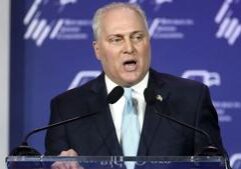
But due to strong pushback from both Democrats and Republicans alike, House Majority Leader Steve Scalise, R-La., indicated this week that a moratorium won’t be included in the NDAA, explaining that the must-pass bill “wasn’t the best place for this to fit.”
“Good. This is a terrible provision and should remain OUT,” Sen. Josh Hawley, R-Mo., responded on social media.
Scalise added, however, that “we’re still looking at other places, because there’s still an interest.”


Partly Sunny
Latest News Stories

Beecher Holds Off Iroquois West in High-Scoring 12-10 Thriller

Illinois Quick Hits: University of Chicago to offer free tuition

Human capabilities focused in student, teacher artificial intelligence guide

U.S. House to vote on bills targeting fraudulent, foreign election donations
Responses due in Virginia redistricting appeal
Pentagon seeks record budget despite failing every audit

GOP oversight report: Democrats created ‘culture of fraud’

Illinois Republicans blame taxes, lawsuits after Morton Salt exits Chicago

Data center regulations weighed; some worry over jobs, energy, taxes
Supreme Court affirms court authority in discrimination suit

Illinois ranks 46th out of 50 states for financial transparency

Solutions differ for Chicago Public Schools’ potential $1B deficit