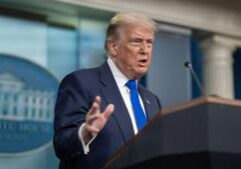
U.S. Supreme Court to decide birthright citizenship case
The U.S. Supreme Court on Friday agreed to decide a case challenging President Donald Trump’s plan to end birthright citizenship.
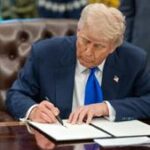
On the first day of his second term, Trump signed an executive order directing federal agencies to refuse to recognize U.S. citizenship for children born in the U.S. to mothers who are in the country illegally or are here legally on visas if the father is not a U.S. citizen or lawful permanent resident. The order also called for denying U.S. citizenship to those children born in the U.S. if at least one parent isn’t an American citizen or green card holder.
A U.S. Supreme Court ruling more than a century ago held that children born in the U.S. to foreign parents are U.S. citizens under the 14th Amendment. However, the Trump administration said the 14th Amendment has “never been interpreted” to give universal citizenship to everyone born in the country.
Section 1 of the 14th Amendment states: “All persons born or naturalized in the United States, and subject to the jurisdiction thereof, are citizens of the United States and of the State wherein they reside.”
Several lower federal court judges blocked Trump’s attempts to end birthright citizenship in response to lawsuits filed by state attorneys general, mothers and others.
The Supreme Court already has heard arguments related to nationwide injunctions issued as a result of the legal challenges. Now it will decide the merits of Trump’s executive order.
A decision will is expected in 2026.
• Brett Rowland contributed to this report.




Showers And Thunderstorms Likely
Latest News Stories
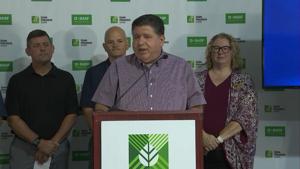
WATCH: Policy questions loom as Pritzker announces ag investment, tax credits

Report: Claims that preserving coal plants will cost $6B based on unlikely assumptions
Federal officials confirm case of New World screwworm

Colorado committed to increasing housing supply

Stock market weathers Fed governor’s attempted firing well

WATCH: Police officer, legislator: Seize opportunity to reform Illinois’ cashless bail
Trump proposes returning death penalty to D.C.

WATCH: IL Hospital Association: $50B rural hospital fund ‘woefully inadequate’

Arizona, Nevada pay less at the pump than California
EEOC celebrates 200 days of protecting religious freedom under Trump

U.S. mining operations discarding rare minerals at center of trade talks

Duffy warns states to enforce English proficiency requirements for truckers