Powerful Japan earthquake triggers tsunami warning
A magnitude 7.6 earthquake centered in the Pacific Ocean some 45 miles west of Misawa, Japan, shook the northern region of the archipelago around 11:26 p.m. local time.
Japan’s government issued a tsunami warning covering parts of the eastern coast with waves up to 9 feet in height for some prefectures closest to the epicenter.
But more than an hour after the initial quake, initial reports indicated waves were not as high as anticipated, according to Harold Tobin, director of the Pacific Northwest Seismic Network and Washington State Seismologist.
Tobin told The Center Square quakes of that magnitude, while very large, are not unusual for that region.
“That is one of the most active places on the entire planet and the same region off the coast of Northern Japan where the 2011 magnitude nine quake was. This was a subduction zone quake, that typically will trigger a tsunami, but I don’t see anything bad at this point,” said Tobin. “I’m relatively optimistic that damage won’t be high in Japan, but it’s early.”
The 2011 quake in Japan claimed nearly 20,000 lives.
Lilly Johnson lives just off the Misawa Air Base in Misawa City, approximately 400 miles north of Tokyo, on the northeastern part of the main island of Honshu. She said an alert went off on her phone and three seconds later the violent shaking began.
“Everything started shaking and going blurry. It was pretty violent and would almost come in waves where like the bottom would shake and then the top would shake and my feet were vibrating,” said Johnson in a phone interview with The Center Square about an hour after the quake. “I was crying and kind of freaking out, but my husband is like Superman so he was just making sure I was okay.”
Johnson said the area experienced several aftershocks measuring 5.6 and 3.6 in magnitude since the first shaking, which lasted about 30 seconds.
“We were able to see the fan moving back and forth, the blinds were shaking and our bathroom mirror opened and things fell out,” she said.
Johnson said she and her husband do not live near the coast, so any tsunami would not impact them.
Tobin said the Japan earthquake is another reminder for those who live in the Pacific Northwest that they live in earthquake territory.
“It just is another example of what can happen here [in the Northwest] and what will happen here at some point in the future and so we need to use this as a reminder to be prepared, both personally and as a government,” said Tobin. “I think it’s just another wakeup call of what will at some point happen here.”
Japanese Prime Minister Sanae Takaichi issued instructions for her cabinet following the quake:
“1. Provide timely and accurate information to the public regarding the tsunami, evacuation, etc., and take thorough measures to prevent damage, such as the evacuation of residents.
“2. Assess the state of affairs regarding damage as soon as possible.
“3. Act in close coordination with local governments and, under the principle of prioritizing human life above all else, spare no effort in our emergency disaster responses, including saving lives and rescuing disaster victims, with the Government working as one.”




Showers And Thunderstorms Likely
Latest News Stories

Tennessee congressman files articles of impeachment against Roberts

Illinois Quick Hits: Chicagoland chamber opposes ditigal ad tax
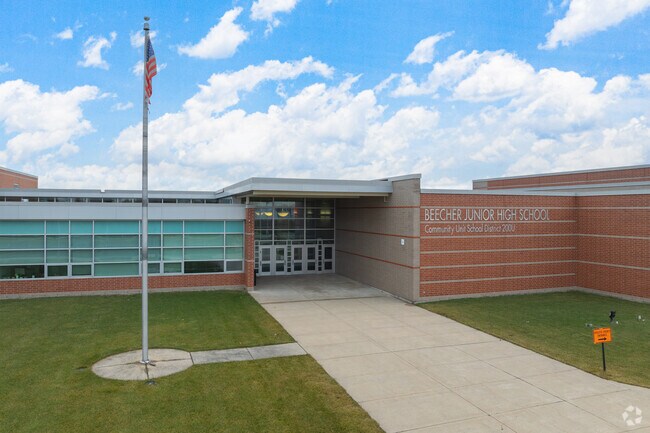
Beecher 200U Approves $93,200 Chromebook Purchase from Technology Plus
Board suspends Camp Mystic co-owner’s nursing license

Meeting Summary and Briefs: Village of Beecher for April 27, 2026

Illinois bill banning ‘easily convertible’ handguns could pass this session
Deadline approaches for $1 million school choice award

Biometrics privacy law’s territorial reach limited, appeals court says

Watchdog says Biden Education Department defied court order on Title IX enforcement
Congress skips town without passing $72B immigration enforcement bill
EPA slashes regulations on refrigerants finalized during Biden-era
Illinois Quick Hits: State unemployment rate still more than 5%