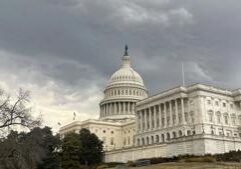
U.S. House vote on employee bargaining met with ‘political theater’ criticism
)The Center Square) – An Illinois congressman praised a vote to restore collective bargaining for over one million federal workers while critics say the U.S. Senate won’t pass the Protect American Workers Act.
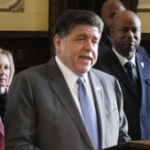
In a video posted to social media, Illinois U.S. Rep. Eric Sorensen, D-Rockford, said the House approved a measure that would rescind President Donald Trump’s executive order affecting more than one million federal workers, including employees at the Rock Island Arsenal in western Illinois.
“Republicans crossed the aisle to vote with Democrats on this important issue,” Sorensen said. “We both realized that the president’s order was a slap in the face to public servants who deserve to have their voices heard. It cut right at the fundamental right for workers to organize for fair wages and safe working conditions.”
Critics say the “worker rights” rhetoric masks the real issue, whether unions should have mandatory bargaining power over federal agencies, with Freedom Foundation researcher Maxford Nelsen arguing supporters rely on generic talking points that misrepresent federal labor law.
“What you see under the status quo is mandatory collective bargaining in the federal workforce, which is incredibly inefficient and far less protective of employee rights than many people realize,” Nelsen said. “For example, wages generally are not subject to collective bargaining in the federal government. The power of the purse belongs to Congress, which, despite its many flaws, is a better steward of the nation’s financial resources than government unions would be.”
Nelsen said the measure’s prospects in the Senate are slim.
“I think it’s extremely unlikely that the legislation is considered or receives a full vote in the Senate, much less passes,” he said, citing the 60-vote threshold needed to overcome a filibuster. He added that even if the bill reached the White House, a presidential veto would be likely.
Nelsen also suggested that some Republican support reflected political calculation rather than policy agreement.
“These are generally Republicans who are either personally pro-union or come from union-dense areas,” Nelsen said. “This is a relatively low-cost way to signal their pro-labor bona fides back home without risking too much, because they know the legislation isn’t going to become law anyway.”
Sorensen framed the vote as consistent with his long-standing support for organized labor, saying unions helped build the country and strengthen the middle class.
“The people of our district will always be able to count on me to fight for the working men and women to have a voice on the job,” said Sorensen.
According to Nelsen, the central issue is not union membership but compulsory collective bargaining.
“The real question is whether such organizations should have a legal right to have special access and special say over how federal agencies operate through mandatory collective bargaining,” he said. “And that’s really the issue.”
Nelsen said federal employees had advocacy groups before collective bargaining was mandated in the 1970s, lobbying lawmakers like other interest groups.
“But they view that as insufficient,” Nelsen said. “What they want is this legal protection that allows them to force federal agencies to sit down with them at the negotiating table for months or years and ultimately write hundreds of pages of legally binding contracts dictating minute details of agency operations.”




Partly Sunny then Slight Chance Showers And Thunderstorms
Latest News Stories
Congressional Republicans support Venezuela strikes, Maduro capture

With Maduro, wife in custody, Bondi says they will be tried on U.S. soil

Library Secures Snow Removal Contract for Winter Season
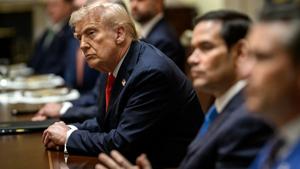
‘Large scale strike’ carried out against Venezuela; Maduro captured
Congress faces govt. shutdown date, health care bills, Epstein on return
U.S. Senate races will decide balance of Congress in 2026

9th Circuit rules against ban on open carry of firearms in most California counties

Trump: ‘Illinois is worse’ as HHS enforces verification for child care funding

Illinois quick hits: 700,000 customers’ health information potentially exposed

Trump vetoes bill easing repayment for Colorado pipeline

Islamic civil rights group says nothing about civil unrest in Iran

Ohio debate over potential child care facility fraud heats up