Even with new rule, Illinois lawmakers could restrict inmate mail scanning
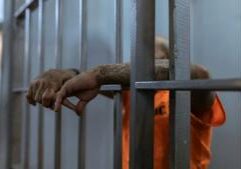
(The Center Square) – The Illinois Department of Corrections (IDOC) has a permanent rule in place for electronic mail processing, but state lawmakers could move to restrict the agency’s authority.
IDOC utilized an emergency rule to begin electronic scanning in September, after corrections facilities experienced a surge of contraband and incidents of violence.
The Joint Committee on Administrative Rules (JCAR) reviewed and approved IDOC’s revised rule in Chicago Friday, one day before a 150-day emergency rule was set to expire.
IDOC Chief Compliance Officer Michael Crum said the agency listened to the public and modified the mail-scanning rule.
“The department added language related to information and data security, specifically related to banning the collection and storage of biometric identifiers,” Crum said.
Crum said IDOC’s modified rule would allow physical photographs, printouts and some used publications.
State Rep. Ryan Spain, R-Peoria, addressed IDOC Director Latoya Hughes.
“I think our committee wants to make it crystal clear that the further use of emergency rules for these types of occasions needs to be ended,” Spain said.
Hughes cited a memorandum of understanding with the American Federation of State, County and Municipal Employees (AFSCME) union.
Spain urged IDOC officials to use the permanent rule-making process going forward.
“And don’t expect that the indulgence of an emergency that you created through a (Memorandum of Understanding) date that was determined outside of our committee will be acceptable in the future,” Spain said.
State Rep. Bill Cunningham, D-Chicago, said “ditto” to Spain’s comments on emergency rule making.
“I think you’ve heard from a lot of us here on the committee that we’re uncomfortable with that, and hopefully it is not employed in a similar way again,” Cunningham said.
The Chicago Democrat urged IDOC officials to stay engaged.
“But I don’t know that this is the final word on this matter. As you know, there are a number of people in the state who are just philosophically opposed to this,” Cunningham said.
Cunningham said members of the General Assembly might propose legislation with a “different” position.
The John Howard Association (JHA) said in a document submitted to JCAR that IDOC’s changes to incoming mail processing negatively impact people in custody and their loved ones “with no data or evidence to support the Agency’s contention that mail scanning and other restrictions to incoming printed materials will address the issue of drug contraband inside prisons.”
JHA said it has been shown in other U.S. jurisdictions that drugs mostly enter prisons through people.
“Efforts to stop incoming contraband should focus on the entryways into the facilities and those who enter and leave regularly, not on the mail,” the statement continued.
JHA said electronic mail scanning this approach hurts people inside correctional facilities by denying them a meaningful connection to their outside supports.
At a public hearing in October, IDOC workers reported benefits they were seeing from mail scanning while several inmate advocates expressed opposition.





Mostly Sunny then Showers And Thunderstorms Likely
Latest News Stories

Meeting Summary and Briefs: Will County Board Land Use & Development Committee for March 26, 2026

Dwight Overcomes Seven Errors to Stun Beecher 13-12 in Walk-Off Thriller

Green Garden and New Lenox Road Projects Approved in $2.5 Million Public Works Package

Trump endorses Hilton in California gubernatorial primary

Feds award $1M for Rose Bowl upgrade ahead of Olympics
Trump defends Section 122 in latest tariff legal challenge
Education department rescinds Title IX resolution agreements
Illinois gun owners plan rally in wake of Supreme Court order

Artemis II mission breaks records Monday as astronauts observe far side of the moon
Illinois quick hits: Illinois House speaker’s son to attend private school; AFSCME workers set strike date at Illinois State University; IDOT urges public to avoid distracted driving
Federal-state showdown looms over regulation of prediction markets
No-knock warrant legislation brings Chicago victim, Illinois gun group together