WATCH: Advocates urge action on trans sports ban
While justices in the U.S. Supreme Court heard arguments Tuesday over whether state laws banning transgender people from participating in women’s sports were unconstitutional, advocates on both sides urged lawmakers to act.
The justices heard arguments in Hecox v. Little and B.P.J. v. West Virginia, two cases that challenge state laws preventing transgender people from participating in girls and women’s sports.
Carrie Peters and her daughter, Taylor, came to the U.S. Supreme Court from Wyoming to advocate for Idaho and West Virginia’s laws. Carrie Peters said she has worked to implement similar laws in Wyoming.
“I want her spaces to be protected,” Carrie Peters said about her daughter. “The issue is so much bigger than sports it’s just something we’re both incredibly passionate about.”
Taylor Peters, a high school tennis player, said she has seen her teammates compete against transgender athletes.
“It’s hard to watch; their opportunities are being taken away,” Taylor Peters said. “There needs to be some protections put in place for women’s sports and spaces.”
One of the cases before the court, B.P.J. v. West Virginia, focuses on 15-year-old Becky Pepper-Jackson, who has identified as transgender for the majority of the teenager’s life.
Pelecanos, a fellow at Lambda Legal, said Pepper-Jackson never went through endogenous puberty and has limited competitive advantages over other athletes.
“Becky went through the same female hormonal puberty as all of her peers,” Pelecanos said. “She doesn’t have advantages that our opposition is claiming she has.”
Stacey Scheffelein, chair of the America First Policy Institute’s America First Women’s Initiative, said there are differences beyond hormones between transgender and cisgender people.
“Men on average have greater muscle mass, stronger bones, larger hearts and lungs, and higher red blood cell counts,” Schieffelin said. “Those differences create undeniable advantages in speed, strength, and endurance. This is not ideology, it’s biology”
A portion of the legal arguments justices of the court heard focused on how Title IX, a federal policy prohibiting sex-based discrimination, should be applied. Schieffelin said using Title IX protections to include transgender people in sports misunderstands the law.
“Protecting women’s sports is exactly what title nine requires,” Schieffelin said. “For the first time, we see our courts standing up for what is right.”
Advocates for Pepper-Jackson said Title IX is designed to give all students, including those who are transgender, equal access to educational opportunities.
“For her to play in sports like all of her peers is for her to be able to get the same education as her peers,” Pelecanos said about Pepper-Jackson.
Evelyn Ullman came to the U.S. Supreme Court’s steps to represent the group, Democrats for an Informed Approach to Gender. While a supporter of Democrat causes, Ullman said transgender inclusion in sports is not aligned with the women’s rights movement.
“If you just create this nebulous term where gender identity is what should determine what category you play in, there is no more definition of women,” Ullman said. “How can you protect women’s rights when you cannot actually define what a woman is?”
Ullman said political coalitions in the Democrat party have stirred up intense party infighting over transgender issues. She said a minority of Democrats support allowing transgender people to participate in women’s sports.
“It’s a minority of Democrats who actually believe that but they’re a very vocal and outspoken minority,” Ullman said. “They’ll do everything they can to make your life a living hell if you have a different opinion from them.”
“I see some of our opposition really trying to push this idea that women are weak and need protection, and I’m sad to see that because that just doesn’t feel representative of the girls and young women I know,” Pelecanos said. “So I’m hoping since we share that value of fairness that we can all come together and lift women up.”






Showers And Thunderstorms Likely
Latest News Stories
Will County Considers First Update to Wastewater Ordinance Since 2016
IDOT Plans to Invest Over $1.3 Billion in Will County Roads Through 2031
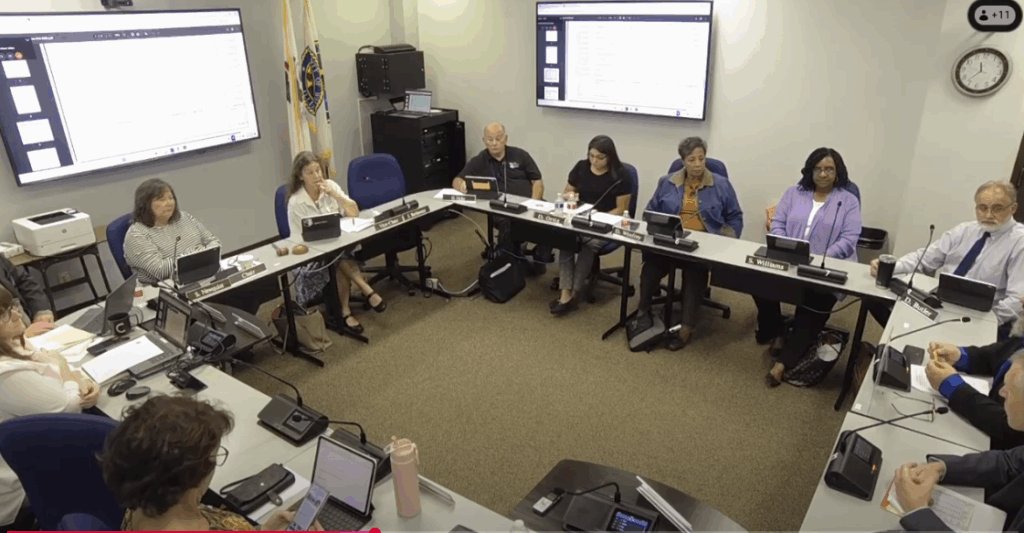
Committee Advances 50% Increase in Mental Health Levy on 4-3 Vote
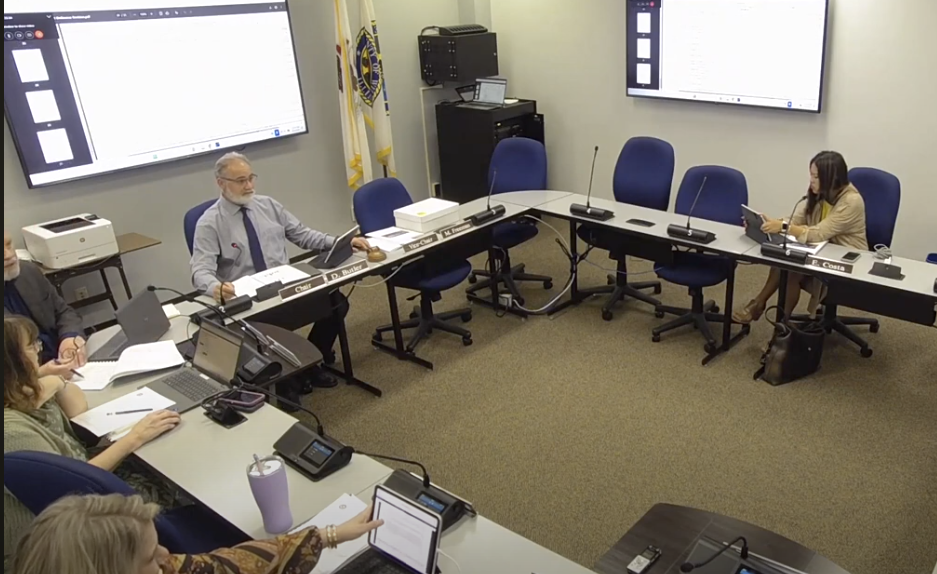
Will County Poised to Launch Major Mental Health Initiative Based on Joliet Program’s Success
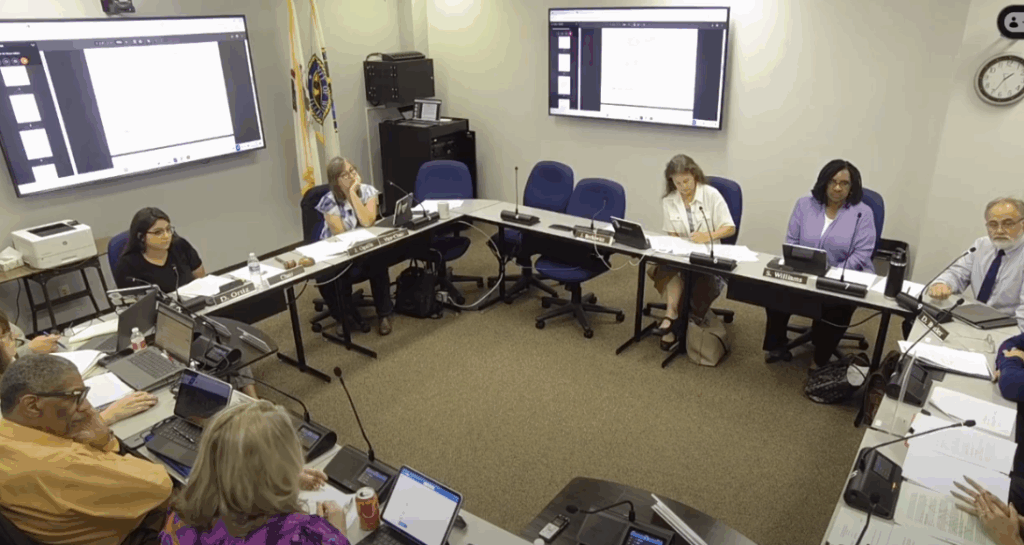
Looming State Energy Bill Threatens to Further Limit County Control Over Solar and Wind Projects
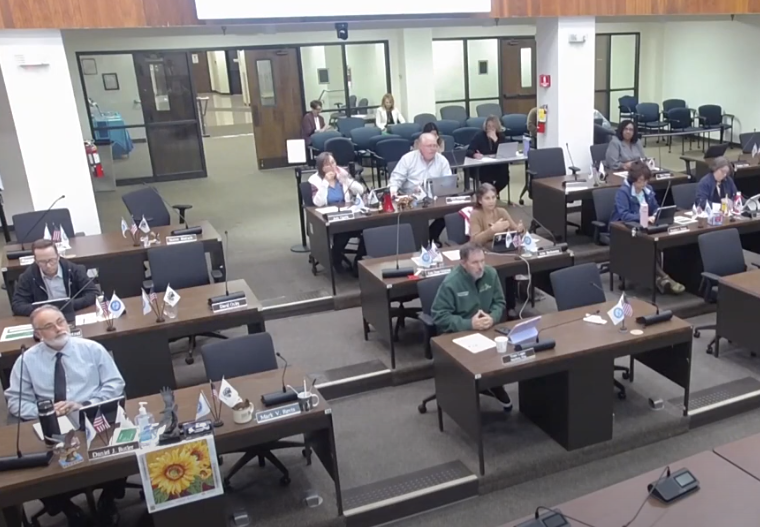
Controversial Immigrant Rights Resolution Postponed by Will County Board After Heated Debate
Will County’s Gas-to-Energy Plant Reports Nearly $460,000 Net Loss Amid Operational Setbacks
Will County to Draft First-Ever Policy on Artificial Intelligence Use
Will County Sees 50% Drop in Opioid Deaths, But Alarming Rise in Suicides
Will County Board Backs Effort to Rename ‘Stigmatizing’ Chicago Sanitary and Ship Canal
Access Will County Dial-a-Ride on Track for Full County-Wide Service in 2026
Will County Reverses Zoning on Peotone Farmland to Facilitate 10-Acre Sale