Trump orders new mediation for New York rail contract dispute
President Donald Trump on Wednesday ordered new mediation for stalled contract talks between New York’s Metropolitan Transportation Authority and union leaders in a last-ditch bid to avoid a potentially crippling strike.
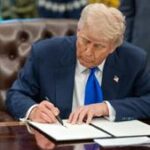
Trump signed an executive order establishing a second “emergency” board to review the contract negotiations between Long Island Rail Road Company workers — represented by five labor unions — and the transit agency to determine if both sides are negotiating in good faith toward a resolution. The new panel would also have the power to recommend a resolution to the dispute, which entered mediation more than a year ago.
Trump’s order said the yet-to-be-appointed board will be composed of a chair and two other members, all appointed by the president “to investigate and report on these disputes” between labor leaders and the transit agency.
“No member shall be pecuniarily or otherwise interested in any organization of railroad employees or any carrier,” the order states. “The Board shall perform its functions subject to the availability of funds.”
The White House’s intervention — which had been requested by labor leaders — gives both sides another 120 days to work out a resolution before workers potentially go on strike. Both sides have agreed to hold off on any job actions until May if the talks resume. The Federal Railway Labor Act requires a review before a strike or lockout can happen.
A previous Presidential Emergency Board, which disbanded in September, had recommended a 14% raise over four years, among other provisions. But the MTA turned it down, instead recommending a 9.5% raise over three years. The agency noted that some unions had agreed to the proposal. Neither side has met since July, according to union officials, who hope the White House will help broker a deal.
“We felt compelled to request a second PEB because of LIRR and the MTA’s refusal to bargain in good faith,” Gilman Lang, general chairman for the Brotherhood of Locomotive Engineers and Trainmen at the LIRR, said in a statement earlier this week. “During this entire process the employer has chosen delay, obstruction and political maneuvering over meaningful negotiation and resolution.”
When the new panel convenes, it will have 60 days to make its non-binding recommendations, followed by a 60-day “cooling-off” period allowing more negotiations. If there is no deal after 120 days, a strike or lockout could begin.
Democratic Gov. Kathy Hochul has previously accused the five unions of refusing to negotiate in good faith and rejected binding arbitration, putting the more than 300,000 riders who use Long Island railroad at risk of an unnecessary strike. She has called on both sides to return to negotiations “and keep working around the clock until this is resolved.”
But Hochul has also accused the Trump administration’s National Mediation Board and Long Island Republicans of pushing the contract dispute “toward a strike instead of keeping talks on track” and had also called on Trump to appoint a second emergency board to mediate a resolution.
“A strike would hurt not only the riders who rely on the LIRR, but also many hardworking LIRR employees and their families, who will be left without pay because of unrealistic demands and their union leadership’s refusal to negotiate,” she said previously.
There was no immediate comment from the Hochul administration late Thursday about Trump’s executive order.




Showers And Thunderstorms Likely
Latest News Stories
Will County Considers First Update to Wastewater Ordinance Since 2016
IDOT Plans to Invest Over $1.3 Billion in Will County Roads Through 2031
Committee Advances 50% Increase in Mental Health Levy on 4-3 Vote
Will County Poised to Launch Major Mental Health Initiative Based on Joliet Program’s Success
Looming State Energy Bill Threatens to Further Limit County Control Over Solar and Wind Projects
Controversial Immigrant Rights Resolution Postponed by Will County Board After Heated Debate
Will County’s Gas-to-Energy Plant Reports Nearly $460,000 Net Loss Amid Operational Setbacks
Will County to Draft First-Ever Policy on Artificial Intelligence Use
Will County Sees 50% Drop in Opioid Deaths, But Alarming Rise in Suicides
Will County Board Backs Effort to Rename ‘Stigmatizing’ Chicago Sanitary and Ship Canal
Access Will County Dial-a-Ride on Track for Full County-Wide Service in 2026
Will County Reverses Zoning on Peotone Farmland to Facilitate 10-Acre Sale