U.S. Supreme Court allows IL rep to sue over late ballots
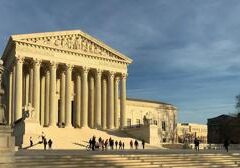
The U.S. Supreme Court, in a 7-2 decision, said an Illinois congressman has the right to sue the state over counting federal election ballots beyond Election Day.
U.S. Rep. Mike Bost, R-Murphysboro, filed a lawsuit against the state in 2022 for counting ballots postmarked on Election Day up to two weeks later. The court affirmed Bost had legal standing to sue without addressing whether states could allow mail-in ballots received after Election Day to be counted.
Chief Justice John Roberts, in a majority opinion for the court, said individuals who sue must display a personal stake in a case to have standing. As a candidate for office, Roberts said, Bost had that standing.
“A candidate has a personal stake in the rules that govern the counting of votes in his election,” Roberts wrote.
A candidate who expends additional resources or undergoes reputational harm will be affected by unlawful election rules, Roberts said. He argued candidates also have an interest in fair election laws.
“Candidates are not common competitors in the economic marketplace. They seek to represent the people,” Roberts wrote. “And their interest in that prize cannot be severed from their interest in the electoral process.”
In their dissent, Justices Sonia Sotomayor and Ketanji Brown Jackson took issue with Roberts’ claim that candidates have a special interest in the fair elections process which gives special standing to sue.
“In a democratic society like ours, the interest in a fair electoral process is common to all members of the voting public,” Jackson wrote. “The Court thus ignores a core constitutional requirement while unnecessarily thrusting the Judiciary into the political arena.”
The Supreme Court did not rule on the merits of Bost’s challenge to mail-in ballot counting laws. However, the high court will hear Watson v. Republican National Committee, a challenge to state laws allowing mail-in ballots to be counted after Election Day.
The case comes from Mississippi, one of 16 states and the District of Columbia that accept mail-in ballots after Election Day. Jason Snead, executive director of the Honest Elections Project, celebrated the court’s decision to hear the case.
“The Supreme Court now has the chance to set the record straight: Federal law clearly says that ballots must be received by Election Day,” Snead toldTCS. “Despite this, some states continue to allow absentee ballots to pour in days or even weeks late.”
“This case gives the Supreme Court the chance to resolve that question once and for all,” Snead said.


Mostly Sunny then Showers And Thunderstorms Likely
Latest News Stories

Foxx: Prosecutors’ ‘silence’ on murder exonerations doesn’t mean ‘innocent’

Illinois Quick Hits: ISU union workers reach deal, return to work
Trump’s Iran objective moves from ‘surrender’ to nuclear deal

Democrats demand answers from Trump on consumer costs of Iran conflict

Illinois Dems eye $7B from new tax proposals, push ‘Billionaire Wealth Tax’
Plan would have state taxpayers provide $50M for ICE-impacted businesses

Homan threatens crackdown if New York limits ICE cooperation
Feds sue Colorado over ban on certain firearm magazines
Group calls for clear lines of authority after UVA member’s communications released

States pushing back on data center sales tax breaks as Wisconsin forgoes $1.5B

Midwest takes brunt of rising gas prices

Illinois Quick Hits: Chicago police sergeant charged with COVID relief fraud
Democrats hold Michigan Senate majority with special election win in District 35