Govt. funding process advances as three more bills to become law; six remain
With the U.S. Senate sending a roughly $180 billion funding package to the president’s desk Thursday, Congress has now knocked out half of the annual appropriations bills funding federal agencies in fiscal year 2026.
The three-bill minibus, which passed the House last week, grants full-year appropriations for the departments of Commerce; Justice; Energy; Interior; the Environmental Protection Agency, and more.
“For too many years, we’ve had massive omnibus bills written behind closed doors. That’s not how I want to operate,” Senate Majority Leader John Thune, R-S.D., told lawmakers Thursday. “My hope is that we’ll be able to build on the progress we’ve made this past year to get the appropriations process back to what it should be – an open process that every senator can participate in.”
Among other things, the minibus provides $37 billion for the Department of Justice, $63 billion for water and energy infrastructure, $8.8 billion for the EPA, and $25 billion for the National Nuclear Safety Administration.
Although both parties made compromises, they also scored wins. Democrats are celebrating billions allocated for scientific research, including climate research, while Republicans are highlighting the increased funds for drug enforcement programs.
Lawmakers’ work is far from over, however. Congress has until Jan. 30 to pass the remaining six appropriations bills or else risk a government shutdown.
In order to have a chance of meeting that deadline, the Senate must pass and send to the president’s desk another House-passed minibus by the end of this week, before the upper chamber takes a week-long break.
If they do so, Congress will have knocked out eight appropriations bills, leaving only the last four, which are also the thorniest. According to Thune, appropriators are already assembling those bills into a minibus.
Lawmakers have little appetite for another government closure after the record 43-day shutdown last year, but it is unlikely they will pass all 12 bills by Jan. 30.
Instead, they will likely pass a funding stopgap covering whichever appropriations bills remain unpassed by that deadline to buy themselves more time to finish the funding process.






Mostly Sunny then Showers And Thunderstorms Likely
Latest News Stories
Will County Considers First Update to Wastewater Ordinance Since 2016
IDOT Plans to Invest Over $1.3 Billion in Will County Roads Through 2031
Committee Advances 50% Increase in Mental Health Levy on 4-3 Vote
Will County Poised to Launch Major Mental Health Initiative Based on Joliet Program’s Success
Looming State Energy Bill Threatens to Further Limit County Control Over Solar and Wind Projects
Controversial Immigrant Rights Resolution Postponed by Will County Board After Heated Debate
Will County’s Gas-to-Energy Plant Reports Nearly $460,000 Net Loss Amid Operational Setbacks
Will County to Draft First-Ever Policy on Artificial Intelligence Use
Will County Sees 50% Drop in Opioid Deaths, But Alarming Rise in Suicides
Will County Board Backs Effort to Rename ‘Stigmatizing’ Chicago Sanitary and Ship Canal
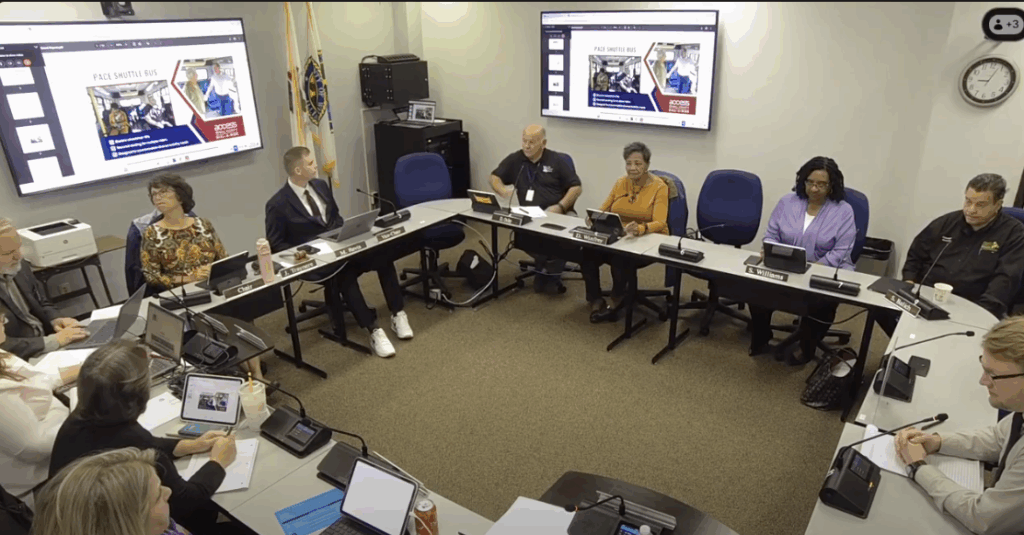
Access Will County Dial-a-Ride on Track for Full County-Wide Service in 2026
Will County Reverses Zoning on Peotone Farmland to Facilitate 10-Acre Sale