House to vote on last four govt. funding bills costing $1.2 trillion
Ten days before the government funding deadline, congressional appropriators released the last four fiscal year 2026 spending bills for the U.S. House to vote on.
The 771-page funding package includes a total of $1.2 trillion for the departments of Defense; Labor, Health and Human Services, and Education; Transportation and Housing and Urban Development; and Homeland Security.
“At a time when many believed completing the FY26 process was out of reach, we’ve shown that challenges are opportunities,” House Appropriations Committee Chairman Tom Cole, R-Okla., said in a Tuesday statement. “It’s time to get it across the finish line.”
The bulk of the cost lies in the Defense appropriations bill, which allocates $839 billion for military personnel, research, equipment, and other activities.
It also directs $13 billion toward President Donald Trump’s “Golden Dome” project, establishes a network of commercial factories able to rapidly transition to military equipment production, and gives military servicemembers a 3.8% pay raise.
The Transportation-HUD bill includes $102 billion, with $25 billion of that going to transportation and border security. When combined with money from separate highway and airport trust funds, the Federal Aviation Administration will receive $22 billion this fiscal year, while the Federal Highway Administration will get $64 billion.
The remaining $77 billion is authorized for HUD, supporting rental assistance programs, public housing funds, homelessness assistance, and mortgage insurance, among other things.
One of the thornier appropriations bills, the $221 billion Labor-HHS-Education bill, includes funding for bipartisan funding priorities like early childhood education assistance, Pell Grants, rural health and job training programs, and biomedical research.
And while Republicans score some wins, like $500 million for charter schools, fiscal hawks are sure to oppose the more than $5 billion meant for migrant and refugee assistance programs. While the amount is lower than was appropriated for the previous two years, it is still three times higher than funding levels during Trump’s first term.
Democrats, on the other hand, have issues with the $64 billion Homeland Security bill, which many believe does not do enough to restrict the authority of Immigrations and Customs Enforcement officers.
The most recent debates over whether ICE has overstepped its authority ignited after an ICE agent fatally shot a Minnesota woman who was allegedly trying to run over law enforcement officers with her vehicle.
“I will not vote to fund DHS & ICE while they are putting Americans in danger, recklessly violating laws and decency, and refusing to be held accountable for or allow any oversight of their actions,” Sen. Cory Booker, D-N.J., said. “Congress must provide checks and balances to an Administration out of control.”
But with a partial government looming if the bills aren’t passed, House Appropriations Committee Ranking Member Rosa DeLauro, D-Conn., encouraged Democrats to “review the bill and determine what is best for their constituents and communities.”
“I understand that many of my Democratic colleagues may be dissatisfied with any bill that funds ICE. I share their frustration with the out-of-control agency,” DeLauro added.
Only three of the twelve appropriations bills are currently law, but three more await Trump’s signature and the Senate will send two others to his desk next week.
House leadership are hoping to advance the remaining four out of the chamber by Friday so that the Senate can pass all six once it returns next week.






Showers And Thunderstorms Likely
Latest News Stories
Water Well, Waste Hauler Ordinances Updated by Will County Committee
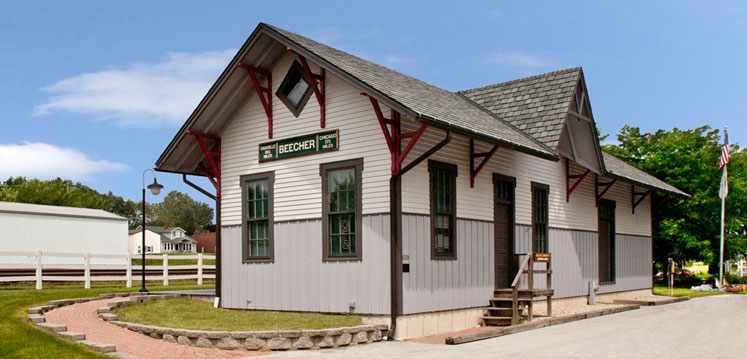
Beecher to Draft Ordinances Regulating Scooters and Fishing in Village Ponds
Beecher’s National Night Out Draws Large Crowd to New Police Station
Meeting Summary and Briefs: Village of Beecher Board of Trustees for July 28 & August 11, 2025
Finance Committee: Beecher Schools Project Balanced Budget, Earmark Funds for Major Projects
Will County Health Department Seeks $1 Million to Avert ‘Drastic’ Service Cuts from Expiring Grants
Will County’s “First-in-Nation” Veterans Center to House Workforce Services, Sparking Debate
Improved Vendor Service Creates $1.2 Million Shortfall in Sheriff’s Medical Budget
Will County Public Works Committee Unveils 25-Year Transportation Plan, Projects $258 Million Gap
Will County Animal Protection Services Seeks New Facility Amid “Gaping Wound” of Space Crisis
Board Confronts Animal Services Crowding, Explores Future Facility Options
Will County Board Members Demand Transparency in Cannabis Tax Fund Allocation
Homer Glenn Residents Push Back on 143rd Street Widening as Officials Signal “Tentative Agreement”