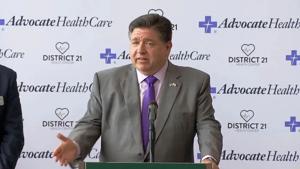
Govt. funding bills pass House on razor-thin margins, head to Trump’s desk
The U.S. House passed a critical government funding package along bipartisan lines in a nail-biter Tuesday vote, sending it to the president’s desk.
Once President Donald Trump signs the legislation into law, Congress will have knocked out 11 of the 12 appropriations bills for fiscal year 2026.
“Funding the government is not an optional exercise – it’s the most basic duty we have in Congress,” House Appropriations Chair Tom Cole, R-Okla., told lawmakers before the vote. “I share the frustrations of many that the Senate altered our deal at the last minute. But our obligation is not to those emotions – it’s to the American people.”
The $1.2 trillion legislation funds State-Foreign Affairs, Financial Services, Defense, Labor-HHS-Education, and Transportation-HUD through Sept. 30.
It also includes a two-week Continuing Resolution in place of the Homeland Security bill, a last-minute change by the Senate that required the package to return to the House. Senate Democrats had demanded the change in exchange for their votes after the second fatal shooting of a protester in Minneapolis.
The CR temporarily freezes DHS and related departments’ funding at current levels as Democrats and Republicans craft a new Homeland Security bill that includes immigration enforcement reforms.
The action stung many House Republicans, causing 21 of them to vote against the package, which only succeeded due to 21 Democrats supporting it.
“Funding Democrat earmarks and resettlement money while giving DHS two weeks is not a compromise,” Rep. Eric Burlison, R-Mo., said on social media. “It’s a bad deal.”
Senate Majority Leader Chuck Schumer, D-N.Y., has outlined Democrats’ demands, which include barring agents from wearing masks, enforcing body-worn cameras, and requiring agents to obtain judicial warrants on top of immigration court warrants in order to arrest people.
While Republican leaders have expressed support for measures like requiring body-worn cameras, they firmly oppose warrant reform. Lawmakers have until Feb. 13 to come to an agreement, or else risk another partial shutdown.




Mostly Sunny
Latest News Stories

America 250: Pastors in politics shaped American Revolution and policies today

Supreme Court to hear Chicago assault weapons ban challenge

Study: Warner Bros.-Paramount merger could generate $20B in economic activity

Op-Ed: Solving the data center conundrum – America’s next boomtowns may be nuclear towns
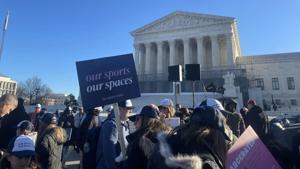
U.S. Supreme Court upholds bans on transgender athletes in female sports

Illinois Quick Hits: Chicago TV crew attacked near lakefront

Beecher Readies Fourth of July Festival as Water Main Work Begins

Beecher Board Clears FY27 Spending, Fee Schedule, Special-Ed Pact
California Assembly passes $350 billion budget
Fetterman and McCormick voted for bipartisan housing reform. Will Trump sign it?

U.S. Supreme Court to hear asylum, voting, pipeline cases next term

Illinois second in local fines and forfeitures