Minnesota protest investigations spark free speech debate
As the Trump administration moves forward with investigations around protests in Minneapolis, free speech groups are raising red flags.
Aaron Terr, director of public advocacy at the Foundation for Individual Rights and Expression, spoke with TCS in an exclusive interview. He expressed concern with the FBI’s January announcement that they would be probing the alleged systematic organization behind riots in Minnesota.
“It’s important for all Americans to stand against threats to free speech wherever they arise, regardless of the target,” Terr said. “Each time the government overreaches to control what Americans can say, the boundaries of free expression become narrower and more fragile for everyone.”
In another case, federal officials have announced a total of nine arrests in connection with a protest that disrupted a Sunday morning church service in St. Paul on Jan. 18. Journalist Don Lemon, who was on the ground in the church covering the protest, was one of those arrested.
Syracuse University’s Tully Center for Free Speech Director Professor Roy Gutterman explained to TCS his concerns with Lemon’s arrest in particular.
“The arrest and potential prosecution of Don Lemon deals with some potentially conflicting issues,” Gutterman said. “On one hand, he was covering a high-profile public protest that ended up moving into private property and a house of worship. And on the other hand, any house of worship has some legal protections to ensure its services are not disrupted.”
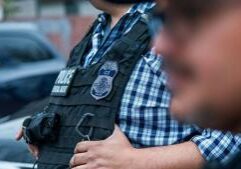
The church protest and the widespread protests throughout the Twin Cities came in the wake of the Jan. 7 killing of 37-year-old Renee Nicole Good during an encounter with ICE officers conducting enhanced immigration enforcement. The additional shooting death of Alex Pretti by federal agents on Jan. 24 only further fueled the protestors.
Officials of the Trump administration have been outspoken about their plan to prosecute those involved in the church protest.
“Listen loud and clear: WE DO NOT TOLERATE ATTACKS ON PLACES OF WORSHIP,” said U.S. Attorney General Pamela Bondi following the first arrests related to the church protest
All nine arrested, including Lemon, were indicted by a federal grand jury in Minnesota last week on two counts:
• conspiracy against right of religious freedom at a place of worship
• and injure, intimidate, and interfere with exercise of the right of religious freedom at a place of worship
Lemon, a former CNN anchor, defended the protesters during his coverage.
“I imagine it’s uncomfortable and traumatic for the people here,” Lemon said. “But, that’s what protesting is about.”
After the story broke, many Republicans called for his arrest. Just days after the incident, Harmeet Dhillon, assistant attorney general for the DOJ’s Civil Rights Division, directly addressed Lemon.
“Don Lemon himself has come out and said he knew exactly what was going to happen inside that facility,” Dhillon said. “He went into the facility, and then he began ‘committing journalism,’ as if that’s sort of a shield from being an embedded part of a criminal conspiracy. It isn’t.”
Lemon’s legal team disagreed with this accusation, citing the First Amendment.
“This unprecedented attack on the First Amendment and transparent attempt to distract attention from the many crises facing this administration will not stand,” said Abbe Lowell, Lemon’s lawyer. “Don will fight these charges vigorously and thoroughly in court.”
Gutterman said the case is complicated, but he is unsure if federal charges were warranted.
“As a criminal matter, covering the news is not the same as intentionally interfering with a religious service. Additionally, if this ends up as more of a trespass issue, like it seems, that is not a federal law enforcement matter. So, there might be some overreach here,” he explained. “There is a First Amendment issue here if law enforcement specifically sought out Don Lemon for arrest and prosecution. But there might also be a private tort or trespass issue.”
In the other case, FBI Director Kash Patel said he is not yet sure if charges will be filed. Instead, agents are investigating what is legal and illegal in the protests and their organization via encrypted Signal group chats that were leaked.
“We look at all this stuff,” Patel said. “We immediately opened up that investigation because that sort of Signal chat, being coordinated with individuals not just locally in Minnesota—but maybe even around the country – if that leads to a break in the federal statute or a violation of some law, then we are going to arrest people.”
Terr said he is unsure what will come of that investigation.
“It’s difficult to predict, but there are examples of the administration publicly threatening investigations over protected speech related to immigration enforcement that ultimately appear not to have gone anywhere,” he said. “On the other hand, the administration has, in many instances, moved beyond mere threats or bluster by using the machinery of government to inflict tangible consequences for disfavored speech, including its retaliation against universities, law firms, media outlets, and non-citizens.”
Both Gutterman and Terr ultimately expressed concern for the potential First Amendment and free speech ramifications of these federal charges and investigations.
“Any time a reporter is singled out for some sort of punishment, it could send a chill into reporting, which would mean the public has less news and information,” Gutterman explained of the Lemon case. “However, for decades, courts have been pretty clear that reporters do not have any greater right of access to private property than anyone else. For news-gatherers that is sometimes a bitter pill to swallow.”
Terr also said it could “chill” Americans’ rights.
“One of the biggest concerns is the chilling effect,” he said. “When the government signals that controversial or dissenting speech will land someone in the feds’ crosshairs, it discourages critics of the government from exercising their First Amendment rights.”

Mostly Sunny
Latest News Stories

Push increased for Dalilah’s Law to get a floor vote
Texas suffers its first casualty in Iran war: female soldier from Carrollton
Illinois quick hits: Benton’s replacement chosen; gas prices resume climb
Illinois diversity certifications lag despite partial computer fix
FBI: Suspect in federal building attack was anti-ICE ‘extremist’
U.S. House to vote on government funding stopgap
Trump vows retaliation for U.S. service members’ deaths
Forecasters split on midterms, but a sweep is possible, maybe likely

Group behind tariff challenge calls Pritzker’s refund check demand irrational
Abbott: Flooding worse in Kerrville this year than in 2025
House Oversight to examine Medicare fraud, Smithsonian, DEI policies
Judge delays merger between Paramount and Warner Bros.