Poll: Americans skeptical of Trump’s 10% credit card cap
A significant portion of Americans believe they cannot take on more debt, according to a new survey from WalletHub.
The new survey analyzed the latest consumer finance data from the New York Federal Reserve and the U.S. Bureau of Labor Statistics. Alongside the data, analysts surveyed 200 respondents about their opinions on household debt and economic concerns.
The survey found 47% of Americans believe that they cannot take on anymore household debt. This comes at the same time as total household debt exceeded $18.59 trillion in quarter three of 2025, $900 billion behind the all-time high experienced during the 2008 financial crisis.
The average household owed $154,152 in debt at the end of the third quarter in 2025, according to the report. One in three Americans said they think their household debt will increase over the next 12 months.
“There is some kind of a structural economic strain rather than a short-term policy effect because we are still digging ourselves out of a huge economic hole over the last five or six years from record inflation,” said Chip Lupo, a writer and analyst at WalletHub.
In an attempt to aid financial strains, the Trump administration recently proposed a 10% cap on credit card interest rates. U.S. Treasury Secretary Scott Bessent said the proposal was an attempt to help Americans recover from record levels of inflation.
“By capping the rate for one year, it would give the American people the chance to recover from the horrible Biden inflation,” Bessent told a congressional committee last week.
However, results from WalletHub’s survey show Americans are skeptical of the Trump administration’s proposed rule. Only about 2 in 5 Americans support a 10% cap on credit card interest rates.
The survey asked whether Americans would support a 10% cap on credit card interest rates if it meant only those with “excellent” credit were approved for the special rate. Thirty-seven percent of those surveyed said they would not support the policy.
“You would have to have almost flawless credit to qualify for a 10% interest rate and that would shut a lot of consumers out of the market,” Lupo said.
In quarter three of 2025, credit card debt increased to around $1.23 trillion. The overall debt figure is about $105 billion below the all time high in 2008 but still reflects a trending increase.
An average household’s credit card debt sat around $10,227, only $1,230 below the all time record set in 2008.
Since 2022, credit card debt has been trending upward at a steady pace. Overall credit card debt reached its highest level in quarter four of 2024 at $1.24 trillion.
Consumers prefer to deal with their own financial issues instead of relying on the government for help, Lupo said. He pointed out that lower interest rates would give incentives for Americans to spend more freely even if they cannot afford to pay it back.
“This is not something consumers were actually clamoring for any type of cap on interest rates,” he said. “Most Americans believe that better budgeting is a more effective way to address debt problems.”
According to the survey, 65% of respondents said better budgeting would solve their debt problems.
“Budgeting is the primary fundamental,” Lupo said. “You master budgeting and all the other fundamentals that result from effective budgeting, then you’ll master your financial situations.”






Showers And Thunderstorms Likely
Latest News Stories

Finance Committee: Beecher Schools Project Balanced Budget, Earmark Funds for Major Projects
Will County Health Department Seeks $1 Million to Avert ‘Drastic’ Service Cuts from Expiring Grants
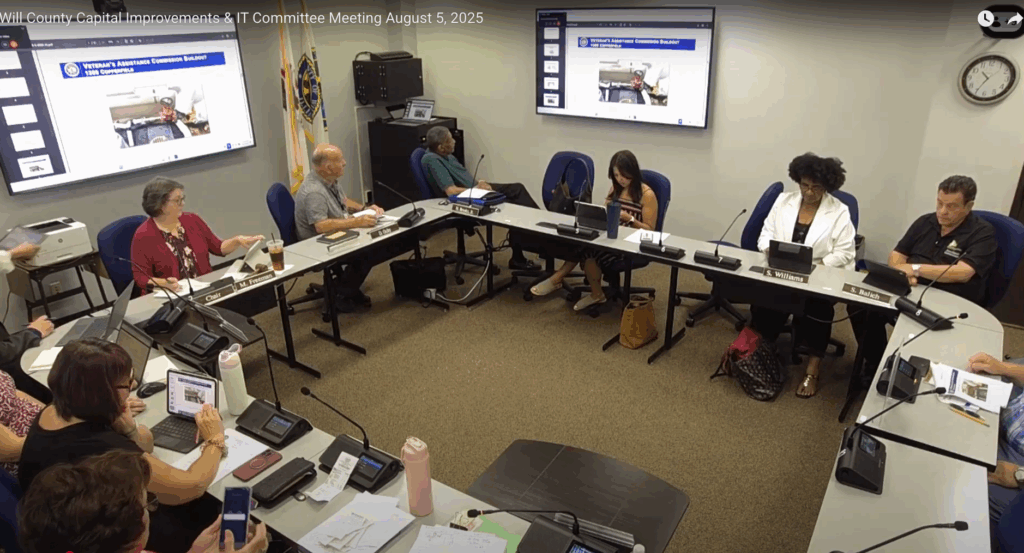
Will County’s “First-in-Nation” Veterans Center to House Workforce Services, Sparking Debate
Improved Vendor Service Creates $1.2 Million Shortfall in Sheriff’s Medical Budget
Will County Public Works Committee Unveils 25-Year Transportation Plan, Projects $258 Million Gap
Will County Animal Protection Services Seeks New Facility Amid “Gaping Wound” of Space Crisis
Board Confronts Animal Services Crowding, Explores Future Facility Options
Will County Board Members Demand Transparency in Cannabis Tax Fund Allocation
Homer Glenn Residents Push Back on 143rd Street Widening as Officials Signal “Tentative Agreement”
Will County Forges 2026 Federal Agenda Amid D.C. Policy Shifts, ‘Big Beautiful Bill’ Impacts
Health Department Seeks $1 Million Levy Increase to Prevent “Weakened System”
County Rolls Out New “OneMeeting” Software to Improve Public Access

Meeting Summary and Briefs: Will County Board Finance Committee for August 5, 2025
Will County PZC Approves Rezoning for Truck Repair Facility on Manhattan Road Amid Resident Concerns