
Seattle’s FIFA World Cup 2026 windfall: Opportunities and risks
There is no doubt that Seattle’s hosting of six matches this summer as part of the 2026 FIFA World Cup will have a major economic impact on the city and surrounding areas.
After all, how could it not? The FIFA World Cup is the world’s premier international soccer tournament, held every four years to crown a champion. It is one of the world’s most-watched sporting events, drawing billions of viewers.
For the first time, this year’s tournament is being hosted by three countries: the United States, Mexico and Canada, with the World Cup split across 16 cities in the three host nations, accommodating 48 teams.
Some of the numbers being floated are eye-popping.
Organizers anticipate an additional 750,000 people visiting the Puget Sound region during the World Cup, with travelers staying for roughly one week.
Visit Seattle has projected a total economic impact of $929 million for King County, nearly 21,000 jobs and more than $100 million in taxes from the half-dozen matches to be held at Lumen Field.
The World Cup is expected to generate approximately $652.6 million in direct spending in the Seattle area.
“I think one of the things we’re most excited about is really being able to show our city, to show our region and state, and use this as that opportunity to showcase – you know, welcome the world – and showcase who we are,” SeattleFWC26 Chief Strategy Officer April Putney said at Seattle CityClub’s most recent Civic Cocktail event held earlier this month. “And, you know, drive those benefits that are coming from it, drive people to all around the city, to around this state, and really just try to make the most of it.”
Victor Matheson, a professor of economics at the College of the Holy Cross in Worcester, Mass., is a widely recognized expert in sports economics.
He doesn’t deny the economic impact the World Cup will have on Seattle and the surrounding region, but notes there are some caveats to the big numbers being touted.
“This is a fun and exciting event for the city,” he said, adding that Seattle’s hosting a portion of the world’s biggest sporting event is about more than money.
“Also, of course … for a hotel owner, it doesn’t matter if the city as a whole doesn’t make money. You’re definitely going to have a good month of June in Seattle,” Matheson told The Center Square during a phone interview.
He noted that the city’s relative costs – in the tens of millions – for hosting the World Cup are low, as no new infrastructure needs to be built.
“This isn’t Qatar, which spent $250 billionish hosting the event last time,” Matheson quipped.
With Lumen Field holding up to 69,000 spectators for each of its six matches, and all those people spending money at the game and in the area before and after the matches, that’s a good return on investment for Seattle, according to Matheson.
“And then if you think about money circulating through the economy again and again, you can easily double that through what’s known as the multiplier effect,” he said. “So a billion dollars is not out of the question, right?”
The multiplier effect explains how a small change in investment or spending can lead to a larger change in total income.
“The rest of the revenue forecast is most likely based upon a multiplier analysis and could contain tax revenues, too,” explained Paul Turek, a regional labor economist for the Central Puget Sound region with the state Employment Security Department, in an email to The Center Square. “The multipliers would be based upon direct spending by visitors in terms of ticket price costs (and how that gets divided), event food and concessions, as well as local travel costs, hotel accommodations, food at restaurants and other tourist activities. The direct spending to the recipients can be assumed to be re-spent or circulated, thus producing an impactful multiplier effect.”
According to Matheson, there are three “problems” to consider when evaluating economic impact numbers of major events like the World Cup.
He mentioned the substitution effect – that is, the tendency of consumers to replace more expensive items with cheaper, similar alternatives when prices rise.
“A ton of the people are just going to be locals, and they’re putting money into FIFA’s pockets rather than in the pockets of other local businesses,” Matheson said. “So that doesn’t actually increase the size of the Seattle economy; it just rearranges where the money is being spent.”
Then there’s crowding out, in which World Cup events displace other economic activities that would normally occur.
“You know, the hotels are going to be pretty full, but those hotels would be full anyway, because you’re in June in Seattle, and Seattle is a good tourist destination,” Matheson said. “To the extent that you fill up all your hotels with soccer fans and that keeps out other fans, that means that you can’t count all the benefits of the soccer fans without discounting the benefits of the people who aren’t in town in June because they’re like, ‘Oh, I’m going to skip Seattle this year because it’s too crazy. We’re going to go to Portland instead.’ ”
Finally, there are leakages, the withdrawal or outflow of money from the circular flow of income, which reduces the total spending and economic activity within an economy
“That’s money that’s spent in Seattle but doesn’t stick in Seattle,” Matheson summarized.
He pointed to local breweries to make his point. Local breweries create a significant positive impact on local economies through a high multiplier effect, where money spent on beer and services stays within the community, supporting local brewers, bartenders and suppliers.
“With the World Cup, there’s a lot less of that,” Matheson said.
One of the biggest expenses for World Cup attendees is tickets, which cost between $300 and $500, he noted.
“That money doesn’t show up in Seattle at all, right?” he said. “That money immediately leaves and ends up in the pockets of probably a bunch of corrupt FIFA officials in Switzerland and Trinidad and Tobago and Brazil …”
The big financial winner in all of this, according to Matheson, is FIFA, which will make between $9 billion and $10 billion.
“They’re going to be making all the ticket money. They’re going to be making all of the broadcast money,” he said. “A little of that will end up in the United States because it spends money putting on the TV events and spending money to make sure that players are housed and that sort of stuff.”
None of the money spent on airline tickets will end up in Seattle, Matheson added.
Hotels in Seattle are charging two and three times normal rates, “but they’re not raising the wages of their desk clerks or room cleaners by two or three times, so, you know, that’s just profit for the corporate chain. That’s not money that ends up in Seattle. It ends up in corporate headquarters back in New York and shareholders’ pockets around the world.”
Economics may be known as the dismal science, but Matheson has retained a sense of humor about the hype surrounding the economic impact of mega-events like the World Cup versus the reality.
“When all is said and done, the rule I always tell people: Take whatever number the promoter’s giving you, move the decimal point one place to the left, and that’s a pretty good idea of what you’re actually going to get,” he said. “There’s no science behind that. It just seems to be that’s the way it often works.”




Showers And Thunderstorms Likely
Latest News Stories
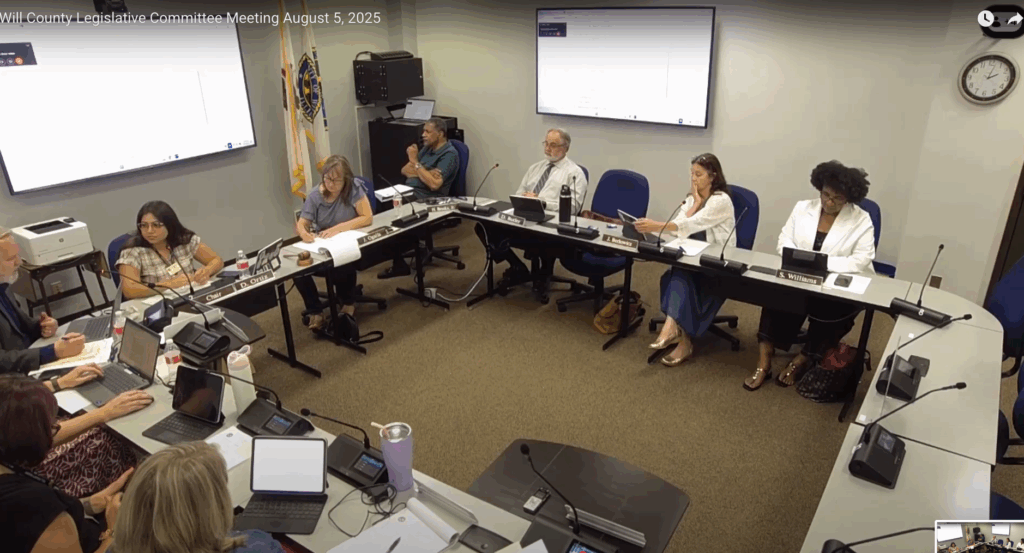
Will County Leglislative Committee Opposes Federal Push for Heavier, Longer Trucks
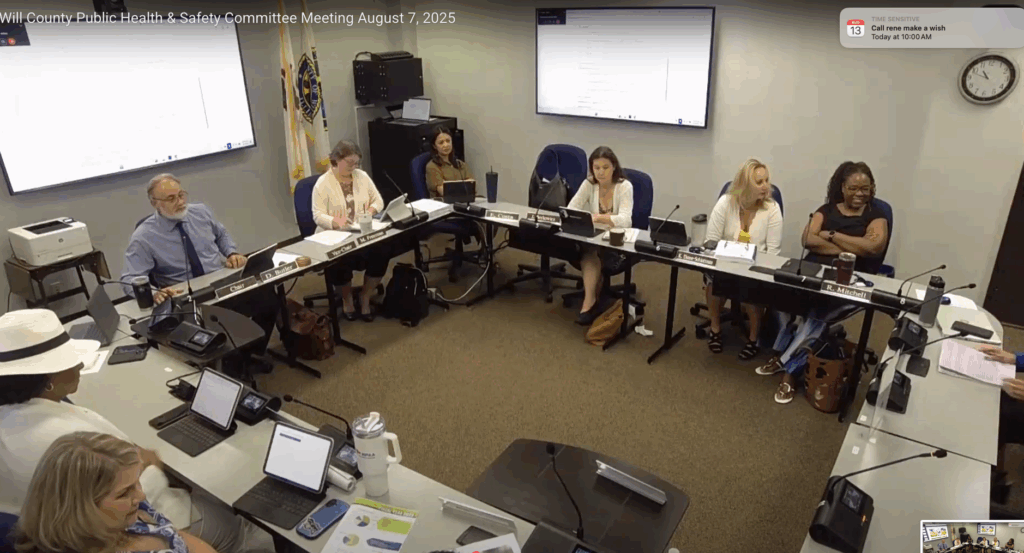
Will County Reports Progress in Opioid Fight, Highlights New FDA Labeling Rules
In-House Staff Completes Major Renovations at Will County Adult Detention Facility
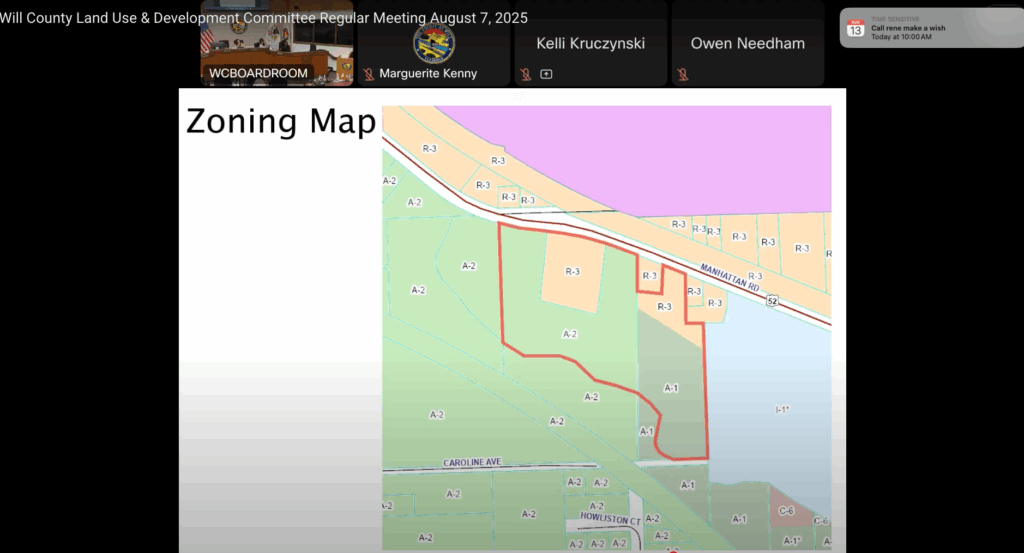
Will County Advances Truck Repair Facility Plan on Manhattan Road Despite Resident Objections
PZC Grants Variance for Oversized Garage in Joliet Township, Reversing Staff Recommendation
Will County Public Works Committee Approves Over $1.1 Million in New Agreements for 80th Avenue Project

Meeting Summary and Briefs: Will County Board Legislative Committee for August 5, 2025
Meeting Summary and Briefs: Will County Board Capital Improvements & IT Committee for August 5, 2025
Meeting Summary and Briefs: Will County Land Use & Development Committee for August 7, 2025

Meeting Summary and Briefs: Will County Planning and Zoning Commission for August 5, 2025
Meeting Summary and Briefs: Will County Public Works & Transportation Committee for August 5, 2025
Beecher Fire District Promotes Three to Lieutenant/Paramedic