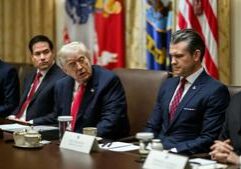
Trump’s proposed firing rule could save taxpayers $6.1 million yearly
The Trump administration proposed a rule on Tuesday to change the appeals process when a federal employee is fired, with possible savings of $6.1 million for taxpayers.
The Office of Personnel Management, the federal government’s human resources agency, proposed a rule that would give it the authority to review the appeals process of a federal employee who is fired, instead of the Merit Systems Protection Board.
The agency said this rule change would reduce costs for federal agencies and allow them to engage in more widespread reductions in force.
Typically, employees furloughed for more than 30 days or demoted by a widespread reduction in force can appeal the action to the Merit Systems Protection Board. OPM would take over that authority, in a move it called “honoring congressional intent.”
The agency argued current federal employee appeals’ processes are expensive, antiquated and lengthy.
“The return of adjudicative responsibility to OPM will likely result in net cost savings to the government,” the agency wrote.
While the agency estimated costs would be saved over time, implementation of the rule is estimated to cost $1.2 million across the whole government.
However, over the long term, OPM estimated that it will save more than $6.1 million for taxpayers due to the rule’s proposed consolidation of litigation. Annually, the new process is estimated to cost taxpayers $1.1 million per year, compared to the $7.2 million under the MSPB.
Some federal employee advocates have slammed the Trump administration’s proposal. Everett Kelley, president of the American Federation of Government Employees, criticized the administration’s move to alter the appeals process.
“Eliminating independent review of federal RIF actions would not only make it harder for employees to challenge their proposed terminations, but it would essentially give the administration free rein to terminate huge swaths of the federal workforce without meaningful independent oversight,” Kelley said.
OPM rule makers said the process would remove unnecessary appeals burdens and allow decisions to be concentrated in one agency that is aligned with the goals of the administration.
“These actions unlawfully concentrate removal authority in OPM and directly undermine the statutory framework Congress established to ensure an independent, professional, and nonpartisan civil service,” Kelley said.
Kelley said he would review legal options if the rule was finalized. Public comment can be submitted on the rule until March 12.






Sunny
Latest News Stories
Trump gives boost to Lebanese relations; puts squeeze on Iran in the process

Illinois news in brief: State police use grant money to recover 342 stolen vehicles; State launches Blue Envelope program; Treasurer: State returned $307.8 million in I-CASH
Biden recordings case could head to U.S. Supreme Court

Pritzker touts climate, green energy record as capacity leaves, rates rise

Warren will campaign this weekend for El-Sayed in Michigan

Trump hits Canada with new tariffs Congress may be powerless to stop
Abbott directs healthcare, regulatory agencies to target birth tourism in Texas

Fugitive accused in $547 million Medicare fraud scheme captured

Ongoing border enforcement: Revocation of citizenship of convicted criminals

Minnesota wildfires prompt burning restrictions as air quality improves

Poll: Americans views of socialism little changed despite recent elections

Malliotakis: Commie Caucus is coming to Congress