
White House says Trump can protect ranchers while importing more beef
The White House said it can protect U.S. ranchers while still importing additional beef from Argentina despite concerns from U.S. lawmakers in cattle states.
“Both things can happen at the same time,” White House press secretary Karoline Leavitt said Tuesday about President Donald Trump’s plans. “He wants to see prices come down.”
She called Friday’s order a “minor import” that could temporarily lower prices for consumers while ranchers rebuild herds after widespread droughts.
“Protecting our American cattle and rancher industry is a priority for the president,” she said.
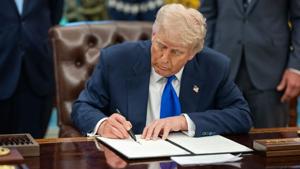
Trump has been pushing for lower beef prices amid consumer frustration over higher grocery prices. On Friday, Trump signed an executive order to increase beef imports.
U.S. Sen. Deb Fischer, R-Neb., expressed concern that the imports will hurt American ranchers.
“Instead of imports that sideline American ranchers, we should be focused on solutions that cut red tape, lower production costs, and support growing our cattle herd,” she said in a statement.
The U.S. cattle inventory is at its lowest level since 1951.
Echoing these worries, U.S. Rep. Adrian Smith, R-Neb., a senior member of the House Ways and Means Committee and Chair of the Trade Subcommittee, specifically pointed to the historically low U.S. cattle inventories.
“While the United States holds historic low-inventory in cattle herds, we must focus on policies that strengthen the market and create long-term certainty for the entire supply chain,” he said in a statement.
U.S. beef prices have increased by more than 50% since 2020, according to figures from the Federal Reserve Bank of St. Louis.
In 2018-19, ground beef prices were less than $4 per pound. Prices increased during the COVID-19 pandemic and have remained above $5 a pound since mid-2023. Ground beef prices reached $6.69 a pound in December, according to the Bureau of Labor Statistics.
Agriculture Secretary Brooke Rollins recently said that Americans consume about 12 million metric tons of beef a year. About 10 million comes from domestic producers, leaving a shortfall of about 2 million, she said.






Sunny
Latest News Stories

State lawmaker accused of sexual harassment asked to resign or be ousted

Illinois Quick Hits: 178 Illinois tornadoes so far in 2026

Meeting Summary and Briefs: Beecher Village Board for June 22, 2026

Beecher Board OKs Maintenance Contract, Aide Hire, Four Resignations

Op-Ed: The Declaration is a gift. But to keep it, we must earn it

Justice Department sues California, Virginia over new gun laws

Republican revolt against Johnson halts business in U.S. House

Trump administration, GOP seek workarounds to tackle birthright citizenship
Trump praised ‘natural 7-OH’; DEA moves to ban it

WATCH: Panel OKs making rebuilding easier in Altadena

Businesses call for domestic AI, manufacturing

Minimum wages rise in Chicago, Cook County