Election 2026: Cooper social post is now you see it, now you don’t
Roy Cooper vetoed mandatory requirement of photo identification in 2018.
Thursday, the U.S. Senate candidate vetoed a photo of himself presenting photo ID to cast a ballot.
In 2018, his veto was overridden and a half-a-decade of litigation played out before the wish of the North Carolina voters was implemented.
No word on if he’s pursuing litigation this time – as he did on the wishes of voters – on the staffer who posted the image to his social media account. It would seem unlikely, given he put the photo back up later and it remained Friday morning.
Hide and seek election season. Welcome to 2026.
All pleasantry aside, Cooper’s bid to win the Democratic primary and potentially face Republican Michael Whatley in November added the juice to the mixer Thursday evening. Though it’s nothing like the previous week, when names finally began to become public among the 3,500 prisoners he released and said were nonviolent in a 2021 settlement with the NAACP and ACLU.
More than 50 were serving life sentences. More than 5,400 more had been let out prior to settlement release.
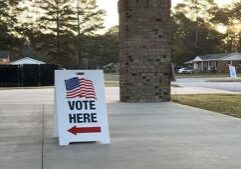
Absentee voting started with mailed ballots Jan. 12, Cooper participated in the first day of early in-person voting on Thursday, and March 3 is the primary Election Day for six Democrats, six Republicans, and a seventh Republican already ruled ineligible to win by primary.
Text on his original post included, “I know there’s a lot riding on this race, and I don’t take your votes for granted. You can count on me to represent all North Carolinians in the Senate. I exercised my civic duty today, and I hope you’ll join me.”
The image of his ID being checked was largest of a three-piece collage. The other two were greeting supporters and from a distance marking his ballot. In a press conference afterward, he did not support the SAVE Act – a proposal for requiring photo ID in federal elections.
His edited version included showing ID and marking the ballot.
Whatley reposted Cooper, saying, “Today, Cooper showed how easy it is to use an ID to vote. I strongly support the SAVE America Act and will always fight to protect our elections.”
So does the nation. Cooper is against policy 83% of Americans favor, according to the Pew Research Center, and 84% according to Gallup. The Pew sampling includes 71% of Democrats, and Gallup says its 67%.
Either way, Cooper is 1 in 3 for his party, less than 2 in 10 in America.
Cooper was in his first term as governor when, in 2018, a constitutional amendment before voters in November asked about photo ID as a requirement to vote. It wasn’t close for 3.7 million casting a decision – 55.5% said yes and only 44.5% said no.
Still, the move was fraught with legal battles. It didn’t emerge for good until Super Tuesday in the 2024 presidential cycle, with few to no problems reported statewide by the Democratic majority State Board of Elections.


Mostly Sunny then Showers And Thunderstorms Likely
Latest News Stories

EXCLUSIVE: The Oversight Project calls for investigation into Fusus, Oak Brook contract
Will County Executive Committee Recommends 600 MW Pride of the Prairie Solar Project in 6-5 Split Vote
Beecher 200U Adopts District-Wide Cell Phone Policy, Tightens High School Discipline Steps
Europe tried wealth taxes. Most gave up.
Aging Systems and Judicial Mandates Drive Significant FY2027 Budget Requests for Will County Courts and Sheriff

Meeting Summary and Briefs: Will County Planning and Zoning Commission for May 5, 2026

Colorado governor shortens Tina Peters’ sentence for election tampering

No ruling; Florida judge hears arguments in redistricting litigation
Debate grows over bill on gender, abortion care access in child placement

Lawsuit: D300 secretly gender transitioned student; Seeks to nix IL gender ‘guidance,’ too

WATCH: Family farm’s decade-long water war with Ecology waiting on WA Supreme Court

Beecher Powers Past Momence in 13-5 Conference Win