
Group: Raising minimum wage could cause drastic inflation
(The Center Square) – Illinois lawmakers have proposed raising the state’s minimum wage to $27 per hour in 2032, but an employment policy researcher says the move could trigger drastic inflation.
House Bill 5367 and Senate Bill 3821 provide for incremental increases, starting on July 1st of this year.
Citing research by economists and Bureau of Labor Statistics data, Employment Policies Institute Research Director Rebekah Paxton said every one-dollar increase in the minimum wage can trigger up to 5.5% price inflation.
“When you’re talking about a proposal like a $27 an hour minimum wage, those increases could be much more drastic and much more swift, depending on how it’s implemented,” Paxton told The Center Square.
Paxton said California’s $20 minimum wage for fast food workers is a real-life example. The measure took effect in 2024.
“Just a year after that policy went into place, food prices were jumping over 14%. This is certainly something that’s not just in a textbook or an academic paper. This is something that we’re seeing in the real world,” Paxton said.
The minimum wage bills were filed earlier this month by state Rep. Norma Hernandez, D-Melrose Park, and state Sen. Kimberly Lightford, D-Maywood.
If the legislation is passed and signed by the governor, the state minimum wage would rise from the current $15 per hour to $17 per hour on July 1. Additional hikes would follow each January 1 from 2028 to 2032. After 2032, the minimum wage would automatically rise with the consumer price index, up to 2.5% annually.
In addition to raising the state minimum wage, the legislation would phase out the tip credit and raise the minimum wage for workers under the age of 18 to match the mandated minimums for workers 18 and older.
Paxton said Stanford University research showed that the inflationary effects of minimum wage hikes hurt the poorest 20% of the country.
“Especially for those poorer folks, especially for folks who may be new to the work force, younger or entry level, they may be more acutely affected by inflation, which is the reverse of what folks are intending to do with this legislation,” Paxton said.
The National Federation of Independent Business said HB 5367 and SB 3821 would also allow uninjured special-interest groups to sue employers for alleged violations.
“Illinois’ small business community is already struggling with the current minimum wage and paid-leave mandates. They can only raise their prices so much to offset these additional costs,” NFIB Illinois State Director Noah Finley said in a statement.
###



Mostly Sunny then Showers And Thunderstorms Likely
Latest News Stories
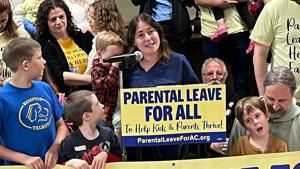
Pittsburgh nurses lead charge for paid leave, for everyone

Existing-home sales edge up in April as affordability improves
Accused correspondents’ dinner shooter pleads not guilty to all charges

Illinois Quick Hits: Diesel passes $6; unleaded price drops

U.S. Senate panel to examine fertilizer costs, food prices

Green Garden Solar Project Cleared to Implement Higher “Agrivoltaic” Standards

Everyday Economics: Stable but weak under the surface

Committee: Facilities Department Reports $92,000 in Energy Savings, Completes Veterans Assistance Commission Buildout
Nebraska voters to elect party representatives

U.S. farmers struggling with high price of fuel, fertilizer as bankruptcies rise

Trump, Xi meeting to be packed with slew of hot topics

Meeting Summary and Briefs: Beecher Public Library District for March 17, 2026