Superintendent Warns of State Funding Gaps Despite Balanced Budget
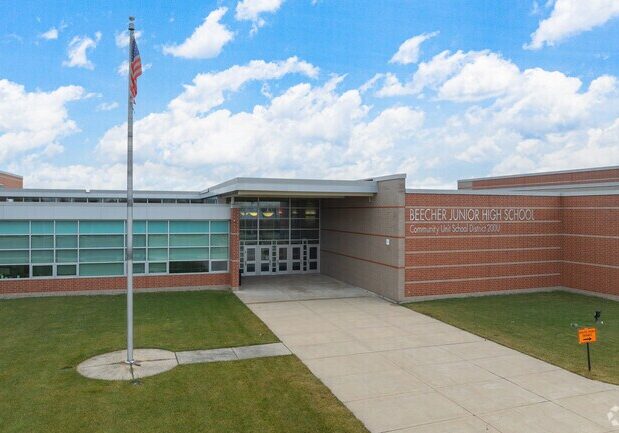
Beecher Board of Education Meeting | February 11, 2026
Article Summary: While celebrating a positive staff culture that promotes internal advancement, Superintendent Dr. Jack Gaham warned the Board of Education about chronic underfunding in state reimbursements. Specifically, “mandated categoricals” such as transportation and special education are currently reimbursed at only a fraction of their actual cost.
Financial Key Points:
-
Funding Shortfall: The state is currently funding mandated categoricals at approximately 60% to 65%, leaving the district to cover the difference.
-
Local Cost: The shortfall in state reimbursement costs the district approximately $500,000 annually.
-
Staff Retention: Dr. Gaham highlighted the district’s success in “growing their own” teachers, citing multiple aides and support staff who have obtained teaching degrees while working for the district.
During the Beecher Board of Education meeting on Wednesday, February 11, 2026, Superintendent Dr. Jack Gaham provided a financial reality check regarding state funding.
While the state has fully funded Evidence-Based Funding (EBF), Gaham pointed out that “mandated categoricals”—state-required services such as special education and transportation—are not fully reimbursed.
“We are by law mandated to make sure that kids get these services,” Gaham explained. He estimated the cost for these services at $1.2 million. However, because the state funds these items at a proration of roughly 60% to 65%, the district receives only about $700,000.
“There’s $500,000 that I need to steal from a different fund to cover the mandated categoricals,” Gaham said. He urged the Board to be aware of this gap as legislators continue to discuss school funding.
Despite the financial caution, Gaham praised the district’s ability to retain and develop staff. He listed several employees, including teachers Nick Jacobs, Rhianna, and Mrs. Martinez, who began as aides, substitutes, or custodians and pursued degrees to become full-time teachers within the district.
“We’re building something here, guys, that teachers want to be here,” Gaham said. “They’re seeing the need and they’re stepping up.”




Mostly Sunny then Showers And Thunderstorms Likely
Latest News Stories
Will County Considers First Update to Wastewater Ordinance Since 2016
IDOT Plans to Invest Over $1.3 Billion in Will County Roads Through 2031
Committee Advances 50% Increase in Mental Health Levy on 4-3 Vote
Will County Poised to Launch Major Mental Health Initiative Based on Joliet Program’s Success
Looming State Energy Bill Threatens to Further Limit County Control Over Solar and Wind Projects
Controversial Immigrant Rights Resolution Postponed by Will County Board After Heated Debate
Will County’s Gas-to-Energy Plant Reports Nearly $460,000 Net Loss Amid Operational Setbacks
Will County to Draft First-Ever Policy on Artificial Intelligence Use
Will County Sees 50% Drop in Opioid Deaths, But Alarming Rise in Suicides
Will County Board Backs Effort to Rename ‘Stigmatizing’ Chicago Sanitary and Ship Canal
Access Will County Dial-a-Ride on Track for Full County-Wide Service in 2026
Will County Reverses Zoning on Peotone Farmland to Facilitate 10-Acre Sale