Will County Board Advised on Strict “Judicial” Role Ahead of Landfill Expansion Application
Will County Landfill Committee Meeting | February 10, 2026
Article Summary: During a detailed legal briefing on Tuesday, the Will County Landfill Committee received strict instructions regarding their conduct during the upcoming application process for a landfill expansion. Special Assistant State’s Attorney Charles Helsten warned officials that they must act as impartial judges and avoid private communications with the public or county staff to preserve the legal integrity of the siting process.
Landfill Siting Process Key Points:
-
Quasi-Judicial Role: Board members act as judges, not legislators, and cannot discuss the application privately (ex parte) once filed.
-
The “Ethical Wall”: A legal separation will be established between the County Board (the decision-makers) and the County Executive/Staff (the applicants).
-
Timeline: Once the application is filed, a public hearing must occur between 90 and 120 days later, with a final vote required within 180 days.
-
New Accessibility Laws: Recent state statute amendments require the county to provide interpretation services for non-English speakers and accommodations for disabilities to ensure “meaningful access.”
The Will County Landfill Committee on Tuesday, February 10, 2026, received a stern legal briefing regarding their responsibilities during the anticipated expansion of the county-owned Prairie View Landfill.
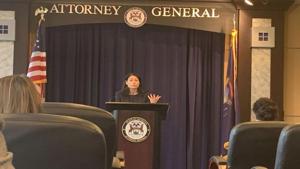
Charles Helsten, a Special Assistant to the Will County State’s Attorney, outlined the rigorous “quasi-judicial” process board members must adhere to, warning that the County Board will simultaneously serve as the applicant seeking the expansion and the judge approving it. To manage this conflict, Helsten described the implementation of an “ethical wall” to separate decision-makers from the county staff preparing the technical application.
“The author of a play or a novel cannot be the reviewing critic,” Helsten told the committee. “We will have one attorney that will represent the county in its executive capacity… There will be a separate attorney that represents you as the decision makers. And never the twain will meet.”
The briefing comes as the county prepares to file a siting application, a process governed by nine specific statutory criteria ranging from flood plain location to traffic impact and consistency with the county’s solid waste management plan.
Helsten emphasized that once the application is formally filed, board members are strictly prohibited from having “ex parte” communications—private discussions with the public or objectors regarding the proposal. He cited case law where election pamphlets promising a specific vote on a landfill were used as evidence of prejudgment, potentially jeopardizing the legality of the final decision.
“You sit as a judge,” Helsten said. “If you see Miss Williams and her attorney halfway through the trial going to lunch with the judge and then you lose, what are you going to think?”
The committee also reviewed the strict timeline mandated by state law. Once the application is filed, a 90-day review period begins. A public hearing must be held no sooner than 90 days and no later than 120 days after filing. The board must vote on the application within 180 days, or the project is deemed approved by default.
Helsten highlighted a new amendment to the state siting statute requiring “meaningful access” for the public. This includes mandatory interpreters for non-English speakers and accommodations for individuals with disabilities. Helsten noted this change was driven by a recent case in a Chicago suburb where a hearing was conducted entirely in English despite the local population being nearly 60% Latino.
“You bend over backwards to make sure that the process is fundamentally fair,” Helsten advised.
Board Member Kelly Hickey (D-Naperville) asked for clarification on how board members should respond to constituents asking about their voting intentions.
“At no point during the process should anyone say ‘this is how I intend to vote,'” Hickey asked.
Helsten confirmed that members should state they are keeping an open mind until all evidence is presented at the public hearing.
County Board Speaker Joe VanDuyne (D-Wilmington) noted that the board’s composition could change following elections and requested that the legal briefing be repeated for future members to ensure the process remains legally sound.
“We do want to do this correct,” VanDuyne said.


Scattered Showers And Thunderstorms then Mostly Sunny
Latest News Stories

Legislator seeks to exempt cap for Hollywood tax credits

U.S. announces end to military operations in Iraq as conflict in Iran ramps up

U.S. House votes to make daylight savings time permanent
Congressional committee to hold hearing in Houston after ICE fatal shootings

Feds: Chicago is key in trade fraud fight

Democrats tank advance of national defense bill in U.S. Senate

Illinois Quick Hits: State officials launch court user survey

Former CBO chief: Congress isn’t grappling with AI’s fiscal impact

GOP hardliners lift U.S. House blockade, challenges remain

U.S. House passes 10 bills to strengthen homeland security, address terrorism

Gulf lawmakers aim to extend state borders to 9 miles offshore

Ongoing border security prosecution efforts: 23 extraditions in one month