Many Republicans say proposed bipartisan DHS funding deal ‘impossible’
Senate Republican leaders appear close to reaching a Department of Homeland Security funding deal with Democrats, but many rank-and-file Republicans view the proposed compromise as inadequate.
With the DHS shutdown entering week six and travel chaos growing at some airports, a tentative off-ramp has emerged, according to reports: the Senate would vote on the fiscal year 2026 Homeland Security bill, but without the $5.5 billion for Immigration and Customs Enforcement’s deportation operations.
If the Senate passes the bill, the House will also have to approve it.
The tactic is meant to win over enough Democrats to finally fund DHS, without having to adopt all of the new restrictions on ICE activities that Democrats had demanded in exchange for their votes to end the shutdown.
Republican leaders then plan to fund the rest of ICE separately via a budget reconciliation bill, like the “One Big Beautiful Bill Act” passed last year that implemented President Donald Trump’s major tax policies.
Even though the proposal has yet to be officially released, multiple Republican lawmakers are already negatively reacting to the news.
Sen. Rick Scott, R-Fla., stated Tuesday that he “cannot in good conscience” support a bill “that fails to fund the people who keep us safe.”
“Anyone who wants my vote on this DHS ‘deal’ needs to tell me how it’s going to ensure ICE agents and everyone at DHS charged with keeping us safe from illegal aliens will get paid,” Scott added. “You can say the Big Beautiful Bill will do this, but the way I read it, that’s not the case.”
That reconciliation maneuver is risky on multiple fronts, particularly if Republicans also throw in their SAVE America Act, a voter-ID and election security bill that the Senate is currently holding a marathon debate on.
“It’s hard to imagine how the SAVE America Act could be passed through reconciliation,” Sen. Mike Lee, R-Utah, said in response to the proposed funding plans. “And by ‘hard’ I mean ‘essentially impossible.’”
Even if Republicans restructure their legislation to be incentives-oriented rather than an edict, some pieces of the SAVE America Act wouldn’t pass reconciliation rules. The Byrd Rule requires budget reconciliation bills to cover only fiscally-oriented matters for the majority vote privilege to apply.
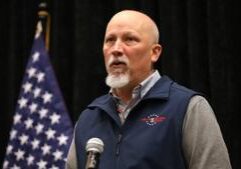
Rep. Chip Roy, R-Texas, said that the proposal is “gaslighting” and “will not go well,” and the entire House Freedom Caucus expressed the same view in a Tuesday statement on social media.
Besides concerns about the Byrd Rule, the group asked why Republican leaders would support the reconciliation route when it allows Democrats to offer unlimited amendments, causing a major delay to passing the legislation.
Senate Majority Leader John Thune, R-S.D., had previously ruled out instituting the “talking filibuster” and instead started a marathon debate on the SAVE America Act in part because the talking filibuster would also have allowed unlimited amendments.
“If unlimited amendments were the excuse before, why is the same risk suddenly acceptable now?,” caucus member Rep. Keith Self, R-Texas, said in an X post Tuesday. “The American people see the double standard. Stop the procedural games.”






Chance Showers And Thunderstorms
Latest News Stories

Search goes on for suspect in Charlie Kirk assassination

Free speech, freedom from violence a concern after Kirk killing

Suspect still at large in Kirk assassination as FBI chiefs head to scene

WATCH: Group urges Trump to help save Chicago ‘before it’s too late’

Conservatives vow to continue the fight Charlie Kirk started

Pritzker signs cryptocurrency bills, sparking debate over protection, innovation

Illinois quick hits: Deadly smash and grab reported; resolution honors Charlie Kirk
WATCH: Sides lay out positions on immigration reform amid increased enforcement
Feds, ‘new sheriff’ descend on Chicago suburb, seize illegal vaping items

WATCH: Reaction to Charlie Kirk’s assassination pour in; Freedom Caucus discusses 2026

Illinois quick hits: Freedom Caucus remembers Kirk; new chief judge for Cook County

Illinois quick hits: DOJ seizes illegal vaping products in Bensenville; NFIB optimism index rises