Many Republicans say proposed bipartisan DHS funding deal ‘impossible’
Senate Republican leaders appear close to reaching a Department of Homeland Security funding deal with Democrats, but many rank-and-file Republicans view the proposed compromise as inadequate.
With the DHS shutdown entering week six and travel chaos growing at some airports, a tentative off-ramp has emerged, according to reports: the Senate would vote on the fiscal year 2026 Homeland Security bill, but without the $5.5 billion for Immigration and Customs Enforcement’s deportation operations.
If the Senate passes the bill, the House will also have to approve it.
The tactic is meant to win over enough Democrats to finally fund DHS, without having to adopt all of the new restrictions on ICE activities that Democrats had demanded in exchange for their votes to end the shutdown.
Republican leaders then plan to fund the rest of ICE separately via a budget reconciliation bill, like the “One Big Beautiful Bill Act” passed last year that implemented President Donald Trump’s major tax policies.
Even though the proposal has yet to be officially released, multiple Republican lawmakers are already negatively reacting to the news.
Sen. Rick Scott, R-Fla., stated Tuesday that he “cannot in good conscience” support a bill “that fails to fund the people who keep us safe.”
“Anyone who wants my vote on this DHS ‘deal’ needs to tell me how it’s going to ensure ICE agents and everyone at DHS charged with keeping us safe from illegal aliens will get paid,” Scott added. “You can say the Big Beautiful Bill will do this, but the way I read it, that’s not the case.”
That reconciliation maneuver is risky on multiple fronts, particularly if Republicans also throw in their SAVE America Act, a voter-ID and election security bill that the Senate is currently holding a marathon debate on.
“It’s hard to imagine how the SAVE America Act could be passed through reconciliation,” Sen. Mike Lee, R-Utah, said in response to the proposed funding plans. “And by ‘hard’ I mean ‘essentially impossible.’”
Even if Republicans restructure their legislation to be incentives-oriented rather than an edict, some pieces of the SAVE America Act wouldn’t pass reconciliation rules. The Byrd Rule requires budget reconciliation bills to cover only fiscally-oriented matters for the majority vote privilege to apply.
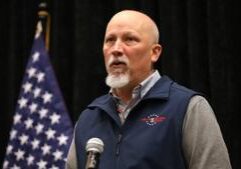
Rep. Chip Roy, R-Texas, said that the proposal is “gaslighting” and “will not go well,” and the entire House Freedom Caucus expressed the same view in a Tuesday statement on social media.
Besides concerns about the Byrd Rule, the group asked why Republican leaders would support the reconciliation route when it allows Democrats to offer unlimited amendments, causing a major delay to passing the legislation.
Senate Majority Leader John Thune, R-S.D., had previously ruled out instituting the “talking filibuster” and instead started a marathon debate on the SAVE America Act in part because the talking filibuster would also have allowed unlimited amendments.
“If unlimited amendments were the excuse before, why is the same risk suddenly acceptable now?,” caucus member Rep. Keith Self, R-Texas, said in an X post Tuesday. “The American people see the double standard. Stop the procedural games.”





Chance Showers And Thunderstorms
Latest News Stories

Op-Ed: If Illinois wants clean energy, it needs data centers

Illinois senator’s bill on transgender ‘mental illness’ sparks debate

Lawmaker says Illinois behind 44 states in legislative transparency

Illinois Quick Hits: Foreign national faces harboring, forced labor charges

Meeting Summary and Briefs: Legislative Committee for February 3, 2026

Village to Revise Noise Ordinance Following Trucking Complaints
Health & Safety Committee: Opioid Overdose Deaths Drop to Zero in January as Behavioral Health Department Expands Role

Illinois GOP state reps call on Dems to stop taxing s’mores, other goods

Illinois Quick Hits: Tangent to expand in Montgomery

Retail advocate: Swipe fees ruling is largest Main St. ‘relief package’ in Illinois

Smith & Wesson wins appeal chance in Highland Park lawsuits

Illinois Republicans say federal student data probe may reach Illinois State after Tufts review

Washington Township Trustees Move to Create Official Emails to Comply with FOIA