Advocates urge stable tariff policy, protections against China
Advocates sparred Wednesday over the Trump administration’s trade and national security policy, particularly with concerns over China.
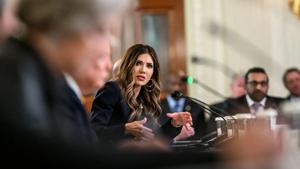
Advocates and experts gathered at the American Institute for Economic Research’s Trade, National Security and American Prosperity Conference Wednesday in Washington, D.C.
The groups debated the implementation of the Trump administration’s trade policies and their effect on national security. Most advocates argued for a greater reliance on free trade in the economic marketplace.
Michael Faulkender, former deputy secretary of the Treasury Department, called for the United States to build a comprehensive coalition of countries to counter China’s growing economic influence. He said the U.S. needs to enable cooperation with allies to encourage innovation and compete with China.
Derek Scissors, senior fellow at the American Enterprise Institute, agreed. He said the U.S. needs to engage in technological innovation at a greater scale to keep up with China.
Faulkender also called for a fundamental reform of the National Environmental Policy Act. The act requires federal agencies to assess and submit reports on the environmental effects of proposed actions before making decisions.
Gregg said overbearing regulations in the U.S. allow countries like China to get ahead. He urged a more relaxed approach to environmental regulations, alongside Faulkender.
“We’ve had some significant raw mineral discoveries in the United States over the past five years, but they’re still not up and running,” Gregg said. “Some of the problems we have have little to do with trade, they’re much more to do with things like excessive regulation.”
The advocates discussed whether to pursue economic and trade policies that regulate China or promote American growth. Faulkender said the U.S. can pursue both strategies.
Advocates at the conference also called for a free trade approach to economic policy. Samuel Gregg, president at the American Institute for Economic Research, said free trade is essential for America’s long-term economic interests and innovation.
“The more open a country’s economic orientation, the faster its economy grows, compared to nations with high trade barriers,” Gregg said.
He argued that allowing free trade to spur economic growth can help prevent military conflicts, allow the private sector to thrive and can help lower costs for those industries. Gregg said the U.S. does not need to sacrifice national security objectives in order to achieve freer trade goals.
“We shouldn’t think of freer trade as a luxury that America can only afford in peacetime,” Gregg said. “It’s capable of strengthening America’s economy, fortifying our alliances and helping to deter America’s adversaries.”




Partly Sunny then Chance Showers And Thunderstorms
Latest News Stories

Trump orders new mediation for New York rail contract dispute
U.S. House passes two more govt funding bills, sending to Senate

Governors seek delay on sharing cost of food stamp errors
Supreme Court ruling allows Bost to challenge Illinois election law

Illinois quick hits: Illinois auto insurance rates dropping
SCOTUS rules on warrantless searches, double convictions and election suits

WATCH: WA Democrats criticize reporter probes into potential daycare fraud
Title IX central to transgender sports cases, advocates say
WATCH: Legislator raises red flag over Illinois tax funds for group encouraging ICE protests

Bill filed to address loss of homes, equity over property tax debt
Arizona senator optimistic after U.S. Supreme Court debate

Documentary shows cost of personal injury lawsuit abuse