
Report: Coordinated resilience infrastructure is needed in age of AI
Highly coordinated resilience infrastructure is needed in the age of artificial intelligence, says a new report released Thursday from the Elon University Imagining the Digital Future Center.
A survey found 82% believing artificial intelligence will play “a significantly larger role in shaping people’s lives and key societal functions in the next 10 years or less.” The resilience infrastructure is to “counterbalance the human and systemic challenges posed by widespread AI adoption.”
Authored by Janna Anderson and Lee Rainie, the nonscientific canvass was conducted between Dec. 26 and Feb. 12. More than 4,000 experts were invited to respond, drawing 386 responses to at least one aspect and 251 responses to open-ended questions.
“The central risk described by these experts is not a single catastrophic AI event,” said Anderson, professor of communications and senior researcher for the center. “They said accelerated AI use will lead to a cumulative reallocation of human agency until people and institutions find it harder to question, contest or even notice what has changed. That drift can look like ‘progress’ in the short term, but it has a price – the gradual weakening of human judgment, accountability, shared truth and the social fabric that makes self-government possible.”
Among the findings, only 13% said the level change is 20 to 30 years away. In decisions guided by artificial intelligence, “56% said that the time they expect AI will be significantly more advanced it will influence, guide or control ‘nearly all’ or ‘most’ human activities and decisions.” Another 24% said it would influence, guide or control nearly half.
Mel Sellick, founder of the Future Human Lab, said, “AI has become the infrastructure through which all relating now happens. Even when we think we are not using AI directly, we are constantly interacting with what AI has already touched. There is no ‘outside’ anymore. Some form of AI is upstream of everything. We are the last generation that knows what human capacity felt like before it became inseparable from AI.”
The report also found only 33% saying people “will be more satisfied than dissatisfied with AI systems at that time; 31% said people will be more dissatisfied than satisfied; 33% said people will have an equal amount of satisfaction and dissatisfaction with AI systems.”
Other findings include worries about the loss of human agency; epistemic fragmentation and collapse of shared reality; need for “existential literacy”; the “work quake,” meaning an economic threat and identity upheaval; new divisions and inequities; automated complacency; change in social interaction; and complications when nonhuman actors move into human spaces.






Partly Sunny then Slight Chance Showers And Thunderstorms
Latest News Stories
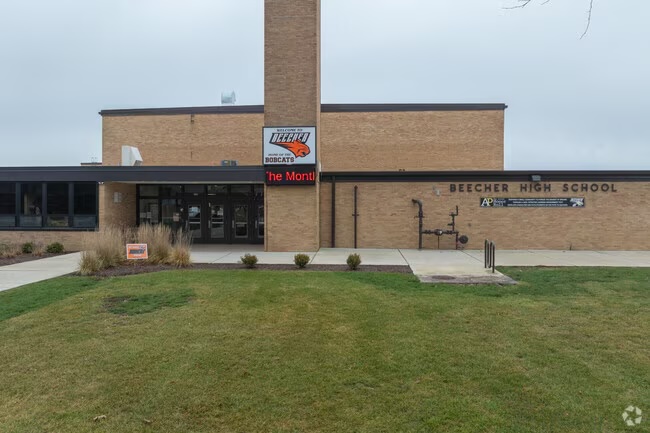
Committee Questions High School Weighted Grading System

P&Z Commission Advances Plan for Construction Debris Fill Operation on Brandon Road

Meeting Summary and Briefs: Beecher School District Transportation Committee for Dec. 8, 2025

Regional Transit Agencies Tout New State Funding, Prepare for Shift to ‘NITA’

IL Dem touts ‘great job’ on transit, GOP candidate laments ‘bailout’ for Chicago

Bill designed to protect school kids from sexual misconduct

Illinois quick hits: More bills enacted into law; former ComEd CEO seeking Trump pardon

Pritzker enacts bills, including measure decoupling IL from federal tax code

WATCH: California co-leads suit over $100,000 H-1B visa fee
WATCH: Trump outlines AI order, calls Pritzker ‘totally unreasonable’

Entrepreneur’s supporters say case law may result in release

GOP lawmakers silent on Trump’s EO punishing state AI guardrails