Student suspended for pro-ICE flyer while NEA spends $1.7M to help anti-ICE protests
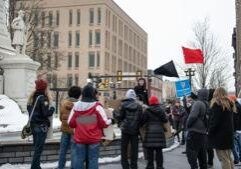
A student at Torrey Pines High School in San Diego was suspended after posting a pro-Immigration and Customs Enforcement flyer reading, “We [heart] ICE – Real Americans,” following an anti-ICE walkout on campus, according to the Foundation for Individual Rights and Expression.
Student-led anti-ICE walkouts have continued to rise nationwide. In 2026 alone, more than 300 such walkouts and protests have taken place. Various organizations have led training programs within K–12 schools, and the National Education Association has provided $1.7 million in funding to a May Day 2026 training toolkit that includes anti-U.S. Immigration and Customs Enforcement messaging, according to an investigation by Defending Education.
A “Four Weeks of Power” training series is organized and led by Free the Future, the Alliance to Reclaim Our Schools, New York University’s Steinhardt Metro Center and the Midwest Academy.
Torrey Pines school officials reportedly claimed the student’s flyer was “harassment” and “intimidation,” leading to the student’s suspension and prompting concerns from free speech advocates.
“Schools cannot favor one viewpoint over another. When students express themselves non-disruptively, the First Amendment guarantees their right to freedom of speech, regardless of what opinion they share,” Conor Fitzpatrick, senior attorney at FIRE, told The Center Square.
Midwest Academy has received $1,735,000 since 2015. The NEA funding has supported trainings and organizing efforts that promote demonstrations calling for policies like taxing the wealthy, opposing ICE and expanding democracy, according to materials outlined in the toolkit.
At the school level, the toolkit encourages participants to stage “walk-ins,” where students and supporters gather on campus to protest or “celebrate” issues related to school conditions and public policy.
“It should be deeply concerning that one of the suggested tactics is to enter schools to protest against policies they don’t like,” Rhyen Staley, director of research at Defending Education, said in a statement. “Putting children’s education and safety at risk for political gain is unethical and immoral.”
The Center Square reached out to Defending Education for further comment but has not received a response.
Fitzpatrick said punishing students for expressing certain viewpoints while allowing others raises concerns about viewpoint discrimination.
“Any time a student is punished for non-disruptive speech, it makes others scared to exercise their own free speech rights,” Fitzpatrick said. “We expect schools to prepare students for real life, and in life, students will have co-workers, neighbors and elected officials who may not talk, think or pray the same way they do.”
Fitzpatrick added that, generally, speech in schools rises to the level of punishable harassment only if it is “so severe, pervasive, and objectively offensive” that it effectively denies other students equal access to educational opportunities. He said intimidation must meet a high legal threshold, such as a true threat involving intent to commit unlawful violence, to be subject to discipline.
The Center Square reached out to the NEA for a comment, but has not received a response.






Mostly Sunny then Showers And Thunderstorms Likely
Latest News Stories
Meeting Summary and Briefs: Will County Board Finance Committee for May 5, 2026

Trump proposes rule expanding IVF access

Committee Advances Nearly $212,000 in Road and Facility Contracts for Jackson Township and Monee

Will County Committee Hits Brakes on License Plate Reader Agreements Awaiting Privacy Policy Review
Meeting Summary and Briefs: Will County Board Capital Improvements & IT Committee for May 5, 2026
Pittsburgh nurses lead charge for paid leave, for everyone

Existing-home sales edge up in April as affordability improves
Accused correspondents’ dinner shooter pleads not guilty to all charges

Illinois Quick Hits: Diesel passes $6; unleaded price drops

U.S. Senate panel to examine fertilizer costs, food prices

Green Garden Solar Project Cleared to Implement Higher “Agrivoltaic” Standards

Everyday Economics: Stable but weak under the surface