UAE quits OPEC as gas prices hit $4.19 a gallon nationwide
The United Arab Emirates announced Tuesday it is leaving OPEC and the broader OPEC+ alliance on May 1, a historic break from the oil producers’ cartel that could eventually increase global supply and ease prices at the pump for American consumers, although relief is unlikely to arrive soon.
The UAE, which joined the Organization of the Petroleum Exporting Countries in 1967 through the Emirate of Abu Dhabi, said the decision follows “a comprehensive review of the UAE’s production policy” and reflects its “national interest and commitment to contributing effectively to meeting the market’s pressing needs,” according to a statement from the UAE government’s official news agency WAM.
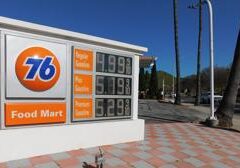
The announcement comes as the Iran war has driven U.S. gas prices up $1.06 per gallon over the past year, with the national average hitting $4.194 per gallon Tuesday, according to GasBuddy, up nearly 20 cents from just a week ago. Oil prices have surged to around $130 per barrel, about $60 above pre-conflict levels, as fighting and an ongoing U.S. naval blockade on Iranian ports have choked off flows through the Strait of Hormuz, the narrow waterway through which roughly a fifth of the world’s oil and liquefied natural gas normally passes.
The UAE is one of the few oil producers in the world with significant untapped production capacity. According to the International Energy Agency’s April 2026 Oil Market Report, the UAE has sustainable production capacity of 4.28 million barrels per day. In March, it was producing just 2.37 million barrels per day, well below both its capacity and its OPEC-assigned target of 3.39 million barrels per day.
Outside of OPEC’s quota system, the UAE would be free to close that gap, potentially adding close to 2 million barrels per day to global supply once shipping routes reopen. The IEA estimates the Iran war has removed more than 13 million barrels per day from global export markets.
The UAE’s statement said it will bring additional production to market “in a gradual and measured manner, aligned with demand and market conditions.”
The immediate impact on American gas prices is expected to be limited. Flows through the Strait of Hormuz, the exit route for Gulf oil, have collapsed from more than 20 million barrels per day before the conflict to around 3.8 million barrels per day in early April, according to the IEA. Until the strait reopens, additional UAE production capacity has few routes to international markets.
Alternative export routes – including from Saudi Arabia’s west coast, the UAE’s Fujairah terminal, and the Iraq-to-Turkey ITP pipeline – have increased combined flows to 7.2 million barrels per day, up from less than 4 million before the war. That remains far short of pre-conflict export levels.
A two-week ceasefire, which expired Tuesday, has been extended by President Donald Trump without a new timeline.
In a Truth Social post Tuesday morning, Trump said Iran had informed the U.S. it was in a “State of Collapse” and was requesting the Hormuz strait be reopened.
“They want us to ‘Open the Hormuz Strait,’ as soon as possible, as they try to figure out their leadership situation,” Trump wrote.
Diplomatic talks between U.S. and Iranian representatives collapsed over the weekend after Trump called off a planned meeting in Islamabad, Pakistan, citing dysfunction within Iran’s leadership. The U.S. naval blockade on Iranian ports remains in place.
The exit marks a significant realignment in global energy politics. The UAE has been a member of OPEC for nearly six decades and, until recently, a close ally of Saudi Arabia, which effectively leads the cartel. The UAE’s statement acknowledged the split diplomatically, expressing appreciation for “more than five decades of cooperation” while noting that “the time has come to focus our efforts on what our national interest dictates.”
The move aligns with longstanding U.S. criticism of OPEC.
Speaking before the United Nations General Assembly in 2018, Trump said: “OPEC and OPEC nations, are, as usual, ripping off the rest of the world, and I don’t like it. Nobody should like it. We defend many of these nations for nothing, and then they take advantage of us by giving us high oil prices. Not good.”
With U.S. military operations costing more than $1 billion per day and Trump expected to request up to $100 billion more from Congress in a supplemental funding bill for Iran operations – on top of a proposed $1.5 trillion base defense budget – the war’s economic burden on American taxpayers is substantial and growing. The national debt stands at $39 trillion, and the federal deficit reached $1.7 trillion in fiscal year 2025 alone.
A meaningful increase in global oil supply, whenever Gulf shipping routes stabilize, would help offset some of that strain by lowering energy costs across the economy. For now, the UAE’s exit from OPEC sets the stage for a potential supply increase. Whether American drivers feel it at the pump depends on how quickly the Strait of Hormuz reopens.





Chance Showers And Thunderstorms
Latest News Stories

Late-Inning Surge and Dominant Relief Lift Beecher Past Bloom 12-5

Democrats call on Lutnick to resign over Epstein ties

Norkus Strikes Out 16 in One-Hit Masterpiece as Beecher Downs Donovan 10-1
Carmela Irwin Throws One-Hitter as Beecher Offense Erupts in 18-1 Rout of Donovan

Texas congressional delegation calls for federal investigation into H-1B visa fraud

Foxx: Prosecutors’ ‘silence’ on murder exonerations doesn’t mean ‘innocent’

Illinois Quick Hits: ISU union workers reach deal, return to work
Trump’s Iran objective moves from ‘surrender’ to nuclear deal

Democrats demand answers from Trump on consumer costs of Iran conflict

Illinois Dems eye $7B from new tax proposals, push ‘Billionaire Wealth Tax’

Plan would have state taxpayers provide $50M for ICE-impacted businesses

Homan threatens crackdown if New York limits ICE cooperation