Supreme Court hears challenges to Haiti, Syria TPS
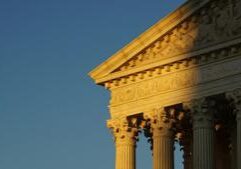
The U.S. Supreme Court is hearing arguments in two cases to determine whether orders ending temporary protected status for Haiti and Syria are constitutional.
Justices on the court are hearing Trump v. Miot and Mullin v. Doe. The two cases challenge an order from President Donald Trump that sought to terminate the special immigration status for Haitian and Syrian immigrants living in the United States.
Temporary protected status is granted to immigrants who are fleeing war or natural disasters in their home countries. Haitian and Syrian nationals challenged the Trump administration’s order.
Kristi Noem, former Secretary of the U.S. Department of Homeland Security, terminated the protected immigration status indiscriminately, a lower court judge said.
The U.S. Supreme Court has previously allowed the Trump administration to end temporary protected status for immigrants from Venezuela.
Carrie Severino, president of the Judicial Crisis Network, said she expects justices on the court to reach the same conclusion as they did for Venezuelan immigrants. Justices on the court are expected to decide if lower court judges have the authority to stop the Trump administration from stripping temporary status from the Haitian and Syrian immigrants.
“Congress made clear in the Immigration and Nationality Act that for Temporary Protected Status, ‘[t]here is no judicial review of any determination’ regarding ‘the designation, or termination or extension of a designation, of a foreign state,'” Severino said.
Haiti was first granted temporary protected status in 2010, after an earthquake severely damaged the country’s infrastructure. In 2024, the Biden administration extended temporary protected status for Haiti, based on general concerns about security and humanitarian concerns in the country.
Lawyers for the Haitian immigrants argued that the country is not safe for migrants to return. They also argued that the policy could cause damage to public safety in the United States.
“Stripping TPS holders of their status may discourage them from reporting crimes or seeking medical care due to fear of detention or deportation,” the lawyers wrote.
Syria was first designated temporary protected status in 2012, after the outbreak of the Syrian Civil War. In 2024, the Biden administration extended the cutoff date for Syrian migrants and gave amnesty to anyone who arrived in the U.S. since 2012. About 6,100 Syrian migrants live in the United States under temporary protected status.
Lawyers for the Trump administration cited ongoing diplomatic negotiations between the U.S. and Syria following the end of the civil war in 2024.
“Thwarting the Secretary’s determination of TPS thus undercuts the Secretary’s judgment as to how best to protect the public and how best to further the government’s foreign-policy goals,” lawyers for the Trump administration wrote.
Justices are hearing arguments at the court and are expected to issue a decision in both cases by July, the end of the court’s term.





Mostly Sunny then Showers And Thunderstorms Likely
Latest News Stories

Search goes on for suspect in Charlie Kirk assassination
Free speech, freedom from violence a concern after Kirk killing

Suspect still at large in Kirk assassination as FBI chiefs head to scene

WATCH: Group urges Trump to help save Chicago ‘before it’s too late’

Conservatives vow to continue the fight Charlie Kirk started

Pritzker signs cryptocurrency bills, sparking debate over protection, innovation

Illinois quick hits: Deadly smash and grab reported; resolution honors Charlie Kirk
WATCH: Sides lay out positions on immigration reform amid increased enforcement
Feds, ‘new sheriff’ descend on Chicago suburb, seize illegal vaping items

WATCH: Reaction to Charlie Kirk’s assassination pour in; Freedom Caucus discusses 2026

Illinois quick hits: Freedom Caucus remembers Kirk; new chief judge for Cook County
Illinois quick hits: DOJ seizes illegal vaping products in Bensenville; NFIB optimism index rises