Executive order creates website for retirement accounts, matching federal contributions
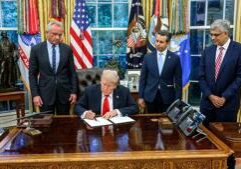
President Donald Trump signed an executive order Thursday aiming to expand access to “high-quality” retirement accounts to all Americans.
The administration will launch a website called TrumpIRA.gov where qualifying Americans who don’t have access to retirement plans through their employer can shop for private retirement accounts and access the Saver’s Match, a federal program that provides up to $1,000 in annual matching government contributions.
Trump called the plan “revolutionary.”
“Great thing for millions of Americans who lack employer-sponsored plans,” Trump said at the signing.
Most Americans with earned income can set up an individual retirement account on their own, regardless of whether their employer offers a retirement plan.The Saver’s Match was created by the SECURE Act 2.0 of 2022, which built on the SECURE Act – or the Setting Every Community Up for Retirement Enhancement Act – of 2019. Both laws seek to encourage more Americans to save for retirement by expanding access and simplifying administrative rules.
The match was set to become broadly available to qualifying low-income Americans in 2027, but Americans can only receive matching contributions if they have a retirement savings account and are contributing themselves.
Trump’s executive order gives individuals wanting to set up a retirement account one place to shop and compare plans online and easily access the match that may have already been available to them but they may never have learned about.
Under SECURE 2.0 and starting in 2027, single taxpayers making $20,500 or less per year and contributing to a retirement account will qualify for a full match on up to $2,000 in federal dollars. Single filers making between $20,500 and $35,500 in 2027 can qualify for smaller federal contributions.
But Trump also expressed a desire to expand the program with Congress. The director of the National Economic Council, Kevin Hassett, said.
“We think that there are a lot of people, even who make more than [$35,500], that don’t have any assets for retirement. And so we’re working with Congress to significantly expand this program,” Hassett said.





Mostly Sunny
Latest News Stories

Fugitive accused in $547 million Medicare fraud scheme captured

Ongoing border enforcement: Revocation of citizenship of convicted criminals

Minnesota wildfires prompt burning restrictions as air quality improves

Poll: Americans views of socialism little changed despite recent elections
Malliotakis: Commie Caucus is coming to Congress

Texas Republicans chastise Mexican official’s ‘audacious’ border security claims
Feds freeze $1B to California, Minnesota Medicaid
Arrangements, services in place for Graham

Push increased for Dalilah’s Law to get a floor vote

Texas suffers its first casualty in Iran war: female soldier from Carrollton
Illinois quick hits: Benton’s replacement chosen; gas prices resume climb
Illinois diversity certifications lag despite partial computer fix