Glock can’t appeal judge’s greenlighting of Chicago’s ‘switches’ suit: Judge
A Cook County judge has again refused to allow firearms maker Glock to use appellate courts to challenge his rulings greenlighting a lawsuit from the city of Chicago that Glock and others have said amounts to yet another attempt by Democratic government officials and trial lawyers to use litigation to not only financially punish gun makers for the actions of criminals, but also bypass the Second Amendment and forbid certain kinds of guns from being sold.
On April 24, Cook County Circuit Judge Allen P. Walker refused a request by Glock to reconsider his earlier decision that had denied the company a chance to appeal the judge’s ruling that Chicago’s city lawsuit neither the city’s lawsuit nor the state consumer fraud law on which it rests don’t violate the Second Amendment, federal law or a recent U.S. Supreme Court decision concerning such lawsuits aimed at the makers of firearms.
In the new ruling, Walker also specifically refused to give Glock the same legal path to appeal opened by the Illinois Supreme Court to firearms maker Smith & Wesson, even though the cases center on the same key legal question.
Both Glock and Smith & Wesson are facing potentially massive payout demands in lawsuits in which plaintiffs have said they are trying to hold the gun makers liable for the illegal use of their weapons by violent criminals to commit murder and other crimes.
Both lawsuits center on similar claims that the gun makers have violated a recently enacted provision of Illinois’ consumer fraud law, crafted by Democratic lawmakers in 2023 specifically to trigger such lawsuits against gun makers.
In the Chicago lawsuit, the city government, together with allied trial lawyers and gun control activists, claim Glock has violated the state law and a related Chicago city ordinance by selling semiautomatic pistols, which allegedly can be easily converted to fully automatic weapons by illegally installing an aftermarket “switch,” known as an “auto sear.”
A semiautomatic weapon fires one round for each time the trigger is pulled. An automatic weapon fires multiple rounds of ammunition per squeeze of the trigger.
Glock does not make or sell any “switch” or other devices that convert their weapons from semiautomatic to automatic fire.
Smith & Wesson is not being sued by any government. Rather, they are facing a group of 25 consolidated lawsuits, filed on behalf of the victims of the July 4, 2022, massacre in Highland Park.
All of the actions seek to use the 2023 “consumer fraud” law to punish Smith & Wesson for the actions of the murderer, Robert Crimo III, because, they argue, the company allegedly illegally marketed its products to allegedly entice Crimo to use a Smith & Wesson rifle to carry out the mass shooting.
Those lawsuits were lodged in Lake County Circuit Court in 2022 by attorneys from some of the top class action law firms in Chicago and elsewhere in the U.S., including the firms of Romanucci & Blandin, of Chicago; Edelson P.C., of Chicago; and Paul Weiss Rifkind Wharton & Garrison, of New York.
They are also joined by lawyers from some of the country’s leading supporters of gun control, including Everytown USA and the Brady Campaign, who have made no secret of their intent to use such lawsuits to extract massive payouts from gunmakers to punish them for making the products ostensibly protected by the Second Amendment’s guarantee of Americans’ right to keep and bear arms.
The legal team behind the Highland Park lawsuits notably included a number of groups and law firms who also sued gunmaker Remington over the school shooting at Sandy Hook Elementary in Connecticut in 2012, which killed 28 people, including numerous children. That legal action resulted in a $73 million settlement from Remington, marking the first time plaintiffs had successfully secured payment from a gun maker over a mass killing.
The lawyers in the Highland Park case indicated they intend to use the Illinois lawsuits to replicate or exceed the Sandy Hook settlement in the name of “justice” and holding “one of the most powerful and profitable gun companies accountable for inspiring generations of mass shooters.”
In both the Chicago case against Glock and the Highland Park families’ lawsuit vs Smith & Wesson, judges in Cook County and Lake County, respectively, rejected motions to dismiss from the gun makers.
Judge Jorge Ortiz ruled in Lake County court against Smith & Wesson.
And Judge Walker rejected Glock’s similar attempt to toss Chicago’s lawsuit.
In both rulings, judges Ortiz and Walker similarly rejected the companies’ claims that the lawsuits amounted to illegal and unconstitutional attempts to use the courts to punish gun makers for selling weapons, violating both federal law and the Second Amendment.
Specifically, in both cases, the judges said they disagreed that the lawsuits should be disallowed under the federal law known as the Protection of Lawful Commerce in Arms Act (PLCAA). The circuit court judges said the lawsuits should be allowed to move forward because they did not directly attempt to sue the gun makers over the actions of criminals. Rather, they said the lawsuits were brought against the gun makers for marketing or selling firearms in a way that allegedly violated the state consumer fraud law.
Thus, the judges both said, the lawsuits should be allowed to continue under a so-called “predicate exception” included in the PLCAA for such claims accusing companies of allegedly knowingly violating state law, even though they are otherwise shielded from lawsuits.
In the Lake County case, the Illinois Second District Appellate Court rejected Smith & Wesson’s attempt to appeal Ortiz’s ruling.
And in Cook County, in January, Judge Walker also denied Glock permission to appeal his ruling to the Illinois First District Appellate Court.
However, in February, the Illinois Supreme Court intervened in the Lake County case. In an unsigned so-called supervisory order, the state high court reversed the Second District’s order, and directed the court to hear Smith & Wesson’s appeal of the key legal and constitutional questions in that case.
No higher court has yet intervened in the Chicago case vs Glock.
However, the gun maker earlier this spring asked Walker to reconsider his earlier decision and to allow them to appeal.
In their motion for reconsideration, lawyers for Glock pointed to the Illinois Supreme Court’s decision to allow Smith & Wesson to appeal and seek a higher court’s review of the consequential constitutional and legal question in the case, whether the lawsuits should be disallowed by the PLCAA.
In his new ruling, Walker conceded the similarities in the cases.
However, Walker still refused Glock’s request, saying he believed the supervisory order in the Smith & Wesson case was “specific” to that case and should have no bearing on the Glock case, which he said should remain in Cook County court and continue, unpaused.
“The Court interprets the Supervisory Order as being case specific, and not a determination that interlocutory appeal is warranted whenever similar claims arise,” Walker wrote. “Therefore, the Court concludes that the Supervisory Order does not constitute a ‘change in law,’ that would compel this Court to revisit its prior ruling or otherwise dictate the outcome of a discretionary procedural determination.”
It is not known from the public record if Glock has petitioned a higher court for review of Walker’s rulings.
The Illinois Supreme Court has not issued any orders in the Chicago case against Glock.
Glock has been represented in the case by attorneys Glock is represented in the action by attorneys Richard J. Leamy Jr., of Wiedner McAuliffe, of Chicago; and John F. Renzulli, Christopher Renzulli and Scott C. Allan, of the Renzulli Law Firm, of White Plains, New York.
In addition to attorneys from Everytown Law and the city’s Department of Law, the city has been represented in the action by attorneys Mimi Liu, Elizabeth Paige Boggs and Fidelma Fitzpatrick, of the firm of Motley Rice, of Washington, D.C., and Providence, Rhode Island.






Chance Showers And Thunderstorms then Slight Chance Showers And Thunderstorms
Latest News Stories

Executive Committee June 12 Meeting Briefs

Beecher School District Approves Future Retirements of Veteran Educators, Hires New Staff and Coach

Beecher School Board Raises Lunch Fees for 2025-26 School Year
Policy Changes, Student Handbook Updates Get Initial Review by Beecher School Board
Meeting Summary and Briefs: Beecher Board of Education for June 11, 2025
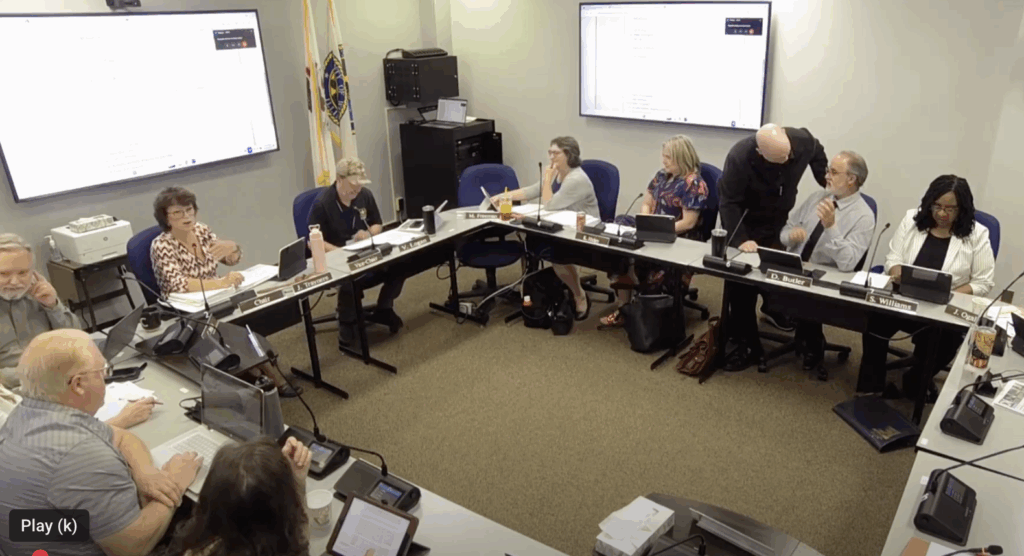
Will County to Draft New Harassment Policy Amid Debate Over Board Authority
Committee Uncovers Gaps in County Asset Tracking, Calls for Better System
In Brief: Ordinance Review Committee Actions

Beecher Approves Over $35,000 for Emergency Repairs to Well #5

Beecher to Seek Legal Advice on Chronic Nuisance Property After Years of Complaints

New Beecher Public Safety Facility Nears Completion Amidst Minor Setbacks

Beecher Pushes Forward with Downtown Enhancement Projects
Meeting Summary and Briefs: Village of Beecher Board of Trustees for June 9, 2025