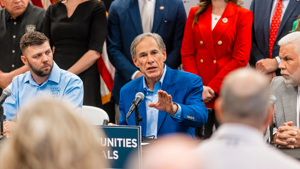
Doctors warn CMS proposal could weaken colorectal cancer screening standards
Doctors have voiced concerns about a proposed rule from the Centers for Medicare & Medicaid Services that would expand Medicare coverage for some colorectal cancer screening tests.
The proposal would allow for coverage of non-invasive, blood-based tests under new national standards if they meet specific performance thresholds. Critics argue the framework focuses on detecting cancer after it develops instead of identifying and removing precancerous growths.
They argue the change could lead to missed cancers and higher costs for taxpayers.
Former U.S. Surgeon General Dr. Richard Carmona said the proposal does not align with how screening reduces deaths.
“The evidence is compelling and consistent: the majority of the long-term mortality benefit from colorectal cancer screening comes from detecting and removing precancerous lesions before they develop into cancer,” he said in a public comment. “A coverage framework built primarily around cancer detection thresholds, without meaningful requirements for precancerous lesion sensitivity, is a framework that is not fully aligned with that evidence.”
Dr. Jerome Adams, another former U.S. Surgeon General, said the proposal risks missing early warning signs.
“The proposed framework emphasizes performance thresholds focused primarily on cancer detection,” his public comment said. “While that is important, it risks underweighting the need for strong sensitivity to precancerous lesions. A standard that prioritizes convenience and cancer detection alone, without robust requirements for detecting advanced precancerous changes, may miss the full preventive potential of screening. It’s akin to a smoke detector that alerts only after flames are visible, rather than when smoke first appears.”
Gastroenterology groups say the proposal does not set clear standards for detecting precancerous conditions.
Dr. Amitabh Chak, president of the American Society for Gastrointestinal Endoscopy, said the policy could allow weaker tests.
“We are deeply concerned that the proposed decision does not include performance thresholds for advanced precancerous lesions (APLs), despite well-established evidence,” Chak said. “Lower sensitivity increases the risk of missed cancers and missed opportunities for early intervention. Allowing tests with substantially lower sensitivity to meet coverage criteria may introduce screening options that provide inferior clinical outcomes.”
Dr. Ashish Nimgaonkar of Johns Hopkins Hospital said the proposal overlooks how screening prevents cancer.
“I respectfully urge CMS to reconsider its decision not to include performance benchmarks for detecting advanced adenomas (AAs) and early-stage CRC,” he said. “The proposed decision memo itself states that early detection and removal of large precancerous adenomas prevents progression to cancer and improves mortality, and yet the coverage criteria set thresholds only for CRC detection, not for the precursor lesions whose removal is the very mechanism by which screening prevents cancer.”
Critics also raised cost concerns.
Former U.S. Rep. Michael Patrick Flanagan, R-Ill., said the policy could increase spending on less effective tests.
“American patients deserve their Medicare dollars to be directed at tests that will help protect them and keep them healthy,” he said. “The new blood-based test costs around $1,500 opposed to $500 for standard stool-based tests. This means that there are more taxpayer dollars being spent on less effective tests.”
CMS has opened the proposal for public comment as it considers changes to Medicare coverage for colorectal cancer screening.





Mostly Sunny
Latest News Stories

Grijalva, Butierez headed for rematch in congressional race

Biggs wins Arizona gubernatorial primary with 71.5% of vote

Trump endorsements score wins for Arizona candidates
Republicans advance bill to make Trump border policy permanent

Trump admin investigates five medical schools over DEI

Lawyer: Billionaire tax could cost California $1 trillion

Hegseth defends Trump’s request for $67B to fund Iran conflict

Official: Agreement could come soon on Colorado River
Trump gives boost to Lebanese relations; puts squeeze on Iran in the process

Illinois news in brief: State police use grant money to recover 342 stolen vehicles; State launches Blue Envelope program; Treasurer: State returned $307.8 million in I-CASH

Biden recordings case could head to U.S. Supreme Court

Pritzker touts climate, green energy record as capacity leaves, rates rise