
Advocates criticize bipartisan housing bill
Advocates warned the U.S. Senate’s bipartisan ROAD to Housing Act could create affordability concerns, and reduce competition in the marketplace.
In March, the U.S. Senate overwhelmingly passed the bipartisan 21st Century ROAD to Housing Act, a bill designed to increase American housing supply and lower home prices.
The bill would set limits on large institutional investors from owning more than 349 homes. It would also include a government pilot program to finance home repairs and lift the 15% cap on banks’ private investments in affordable housing to 20%.
Joel Griffith, a senior fellow at the Advancing American Freedom Foundation, said the legislation will restrict private investment in new housing and lead to a larger affordability issue in the market. He argued that home prices are rising because of government subsidies for owners.
“The primary driver of all that are all of the government subsidies toward this sector of the economy,” Griffith said. “You’ve seen more money in people’s pockets directed to housing because the government has decided this is a sector we want people to park money in.”
The bill would require large institutional investors – including investment funds and corporations – to sell newly constructed single family homes within seven years of acquisition. Griffith said these policies could prevent families who move around often from owning a home.
“If you can’t afford to buy a home or if you are a family that moves every few years, well, D.C., has decided you need to live in an apartment,” Griffith said. “The free market is actually giving families an alternative. You don’t have to live in an apartment if you can’t afford to buy a home.”
Griffith also warned that the legislation would standardize housing restrictions across the country. He said more relaxed zoning laws in Texas could be replaced by strict environmental requirements in California.
The ROAD to Housing Act would also allow families in public housing to use their rental payments as a down payment on a home.
“This is an improper use of government power; you’re not entitled to a downpayment from your fellow taxpayers,” Griffith said. “If you’re going to now provide potentially millions of people with money to put down on a starter home, that is going to increase demand pressures in that part of the market.”
Supporters of the bill said the federal government needs to have a standardized program to address rising housing costs and increase availability of affordable housing. Wisconsin Gov. Tony Evers and Wyoming Gov. Mark Gordon applauded the effort.
“Governors welcome alignment at the federal level with the approach they have long championed and stand ready to be partners in implementation,” Evers and Gordon wrote. “America cannot achieve economic competitiveness, workforce mobility or intergenerational opportunity without adequate, affordable housing. Governors have built the case, and we welcome Congress answering the call.”
Griffith called for an end to President Donald Trump’s tariffs on housing construction materials and called on Congress to enact protections that privatize the United States’ housing market. He said tariffs have added $10,000 to construction costs per home.
“Diminish the role of government-sponsored enterprises in the residential housing space and prohibit the Federal Reserve from purchasing additional mortgage-backed securities,” Griffith said.





Mostly Sunny then Showers And Thunderstorms Likely
Latest News Stories

Board Establishes New Regulations and Fees for Wireless Telecommunication Facilities

House passes funding for ICE, CBP, tees up DHS reopening

Florida poised to flip 4 U.S. House seats with new map
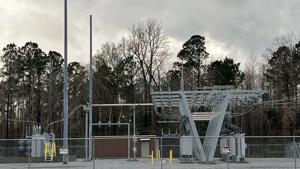
Energy industry insiders advise lawmakers on supporting AI growth, protecting ratepayers

WATCH: Students see tuition as a good investment despite loan debt, survey says
California congressman slams nation’s ‘gerrymandering war’
Illinois pauses redistricting effort after Supreme Court ruling

Hegseth pledges housing fix after $2.6 billion used for warrior bonuses

Feds charge Sinaloa governor, others with running drugs to US
House passes three-year spy powers extension with crypto amendment
U.S. gas prices at 4-year high as oil exports hit new record

Government leaders statewide call for cashless bail reform after CPD officer killed