
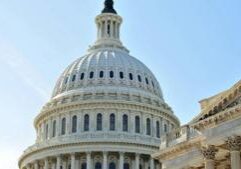
Citizen Voting Amendment may avoid partisan SAVE Act pitfalls
Despite public support and majorities in both houses, Republicans have been unable to pass the SAVE Act because of Democratic objections in the Senate.
But a proposed constitutional amendment could be a way to unite lawmakers from both parties to pass meaningful election reform.
The Safeguard American Voter Eligibility (SAVE) Act – as well as the SAVE America Act and the MEGA (Make Elections Great Again) Act – would require documentary proof of citizenship to register to vote in federal elections and, in some versions, to update your registration and to vote at the polls. Those documents could be passports, birth certificates, naturalization papers, etc.
Democrats object to voters being required to show proof of citizenship and to show photo ID to prove their identity. They feel millions of American citizens with the right to vote could be disenfranchised because of the paperwork required to provide the necessary documentation.
According to a Navigator Research poll conducted in March, awareness of the SAVE Act already is fairly high. But it says once people hear detailed critiques, support flips into net opposition, especially among independents.
Before being given any information, the poll found 50% of those surveyed support the SAVE Act with 39% opposed, with 42% of independents supporting it.
But after reading a series of messages against the bill, overall opinion reverses to a slight opposition (45% support, 47% oppose). Among independents, the move is greater (34% support, 46% oppose).
Republicans are somewhat more likely to have heard of the SAVE Act at 64% to 60% of Democrats and 45% of independents. Among Republicans who watch Fox News, that jumps to 80%. Women, rural Americans and lower-income Americans are more like to not be aware of the measure.
According to the poll, the two biggest reasons for skepticism in the SAVE Act are:
· President Donald Trump has made it a top priority even though it “does nothing to bring down the cost of living” and distracts from affordability concerns.
· Barriers to voting, such as the required documentation to vote is unavailable to millions, forcing rural Americans to travel long distances to register and upending current registration practices.
Whether those issues are a smokescreen or not, the intended result of the message is resonating with voters.
But one way Republicans could pass election reform is with the Citizen Voting Amendment, which was introduced in March by Rep. Laurel Lee (R-Florida).
The proposed U.S. constitutional amendment would explicitly state that only U.S. citizens may vote in federal elections for president, vice president and members of Congress.
“The Constitution itself does not explicitly require citizenship for voting in federal elections,” Lee said. “This amendment provides the clarity and permanence needed to ensure that this fundamental principle is protected.”
Supporters say the amendment lacks the issues that have drawn disdain from Democrats. Likewise, the supporters say the plan is meaningful, would satisfy the Republican base and would allow Democrats to prove they really don’t want noncitizens voting in federal elections.
Right now, voter eligibility for federal elections is tied to voter eligibility for state legislative elections, according to Article 1 Section 2 and the 17th Amendment of the U.S. Constitution. The USCVA would sever the voter eligibility tie that exists between state elections and federal elections so no state could allow noncitizens to vote in federal elections.
It doesn’t change anything for the voter and requires nothing of them when voting or registering to vote. It also prevents states from legalizing noncitizen voting in federal elections, and it wouldn’t impact married woman and people who do not have photo IDs, which is another criticism of the SAVE Act.
The USCVA would need two-thirds of both the House and Senate to pass, which is a higher threshold than the other bills need to overcome. If it were a partisan bill, this higher threshold would make it more difficult to pass. But because it is a truly nonpartisan bill, it could be much easier to pass.
For example, 56 Democrats voted to end noncitizen voting in Washington, D.C., municipal elections in 2025. The USCVA would need 70 Democrats in the House to pass.
“Despite all of the hand wringing over citizenship verification, the three big Republican bills leave the constitutional loophole for legal noncitizen voting wide open,” said Avi Fortenberry, president of Americans for Citizen Voting. “To get around the citizenship verification requirements of these bills a state may choose to legalize noncitizen voting for state and federal elections. That’s when things really go haywire.
“Democrat members have objected to citizenship verification. But to my knowledge, none have said they want noncitizens voting in federal elections.”
It’s also worth noting that many state constitutions do not specifically prohibit foreign citizen voting, and many people – even lawmakers – are unaware of that fact.
In recent years, city councils in New York, Washington and three cities in Vermont have voted to legalize foreign citizen voting. They joined cities in California, Illinois and Maryland that, because of loopholes in their state constitutions, also allow foreign citizens to vote.
Just last week, a Los Angeles City Council member has proposed allowing noncitizens to vote in local elections.
“After my parents immigrated here from Mexico, they worked hard, paid taxes, raised their kids in our public schools, but for decades, they had no voice in the decisions shaping their community until they became citizens,” Councilmember Hugo Soto-Martinez said.
In recent years, several states have passed constitutional amendments to ensure non-citizens don’t vote in state elections. West Virginia, for example, has an amendment on the ballot in this fall’s election.
In recent years, ACV has worked to have similar measures adopted in states. Texas voters approved a similar measure in November. And in 2024, eight states (Idaho, Iowa, Kentucky, Missouri, North Carolina, Oklahoma, South Carolina and Wisconsin) passed laws to keep non-citizens from voting.
Including Texas, 21 states now have laws ensuring only American citizens can vote in those states, and several other states are actively considering such legislation.
Legislatures in Arkansas, Kansas and South Dakota also have placed amendments on the 2026 ballot.




Mostly Sunny
Latest News Stories

Beecher Faces $202,000 Revenue Loss, Considers Local 1% Grocery Tax

Beecher Amends Zoning Ordinance to Add Regulations for Solar and Wind Energy

Beecher Police Records Clerk Linda Krug to Retire After 27 Years

Meeting Summary and Briefs: Village of Beecher Board of Trustees for June 23, 2025
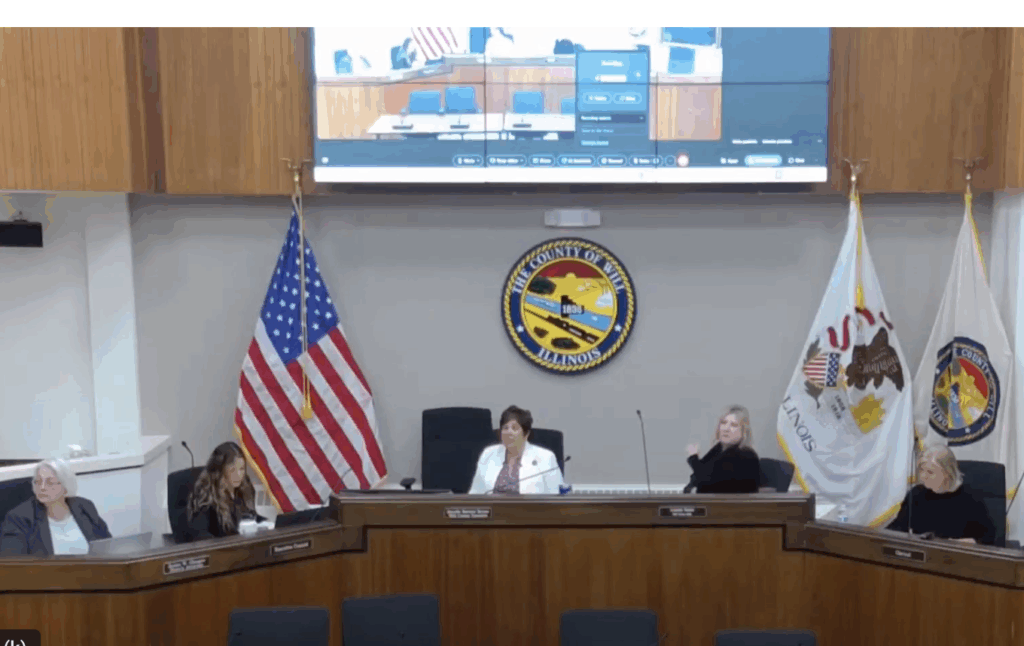
Will County Board Halts Transportation Plan After Contentious 143rd Street Debate
Will County Board Upholds Zoning Denials, Rejecting Developer Appeals
Split Vote Halts Monee Truck Terminal Project
Future Quarry Fight Looms as Board Approves ‘Tequila Barrel’ Retreat
News Briefs from the Will County Board June 18 Meeting
Beecher Library Trustee Kathryn Czarnecki Resigns

Beecher Library Board Approves Staff-Wide Pay Raises, Invests Nearly $450,000 in New CD

Meeting Summary and Briefs: Beecher Public Library District for June 17, 2025
Mental Health Board Awards $5 Million in Grants to Will County Organizations