
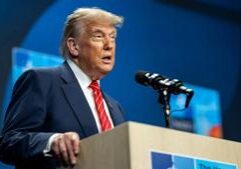
Court strikes tariff, Trump moves ahead with replacement
President Donald Trump’s administration signaled Friday it intends to appeal a federal trade court’s ruling striking down his 10% global tariff as unlawful, while simultaneously pressing ahead with a separate round of import taxes that could take effect as early as July.
American businesses have paid $166 billion in tariffs under the International Emergency Economic Powers Act. Those tariffs, which the Supreme Court struck down in February, are in the process of being refunded to the importers who paid them. An additional $8 billion was collected from the Section 122 tariff, which was struck down Thursday, according to We Pay the Tariffs, a coalition of nearly 1,200 small businesses that opposes tariffs. The Yale Budget Lab, a nonpartisan policy research center, estimated the Section 122 tariffs would cost the average U.S. household between $600 and $800 per year.
A Federal Reserve Bank of New York report, the Kiel Institute for the World Economy, and a Duke University study all concluded that Americans are paying nearly the entire cost of tariffs, not foreign countries as the White House has maintained.
“President Trump has lawfully used the tariff authorities granted to him by Congress to address our balance of payments crisis,” White House spokesman Kush Desai told The Center Square on Friday. “The Trump administration is reviewing legal options and maintains confidence in ultimately prevailing.”
Trump’s U.S. Trade Representative, Jamieson Greer, said Friday the administration expects to prevail on appeal.
“They essentially said that Congress passed a law that can’t be used, which we all know in the legal community, that’s not how law should be interpreted,” Greer told Fox Business Network’s “Mornings with Maria” show. “They should be interpreted to be used. So we’re confident that on appeal we’ll be successful.”
The Court of International Trade’s decision on Thursday only applied to two small businesses and the state of Washington. That means the government is still collecting the tariffs on all other importers.
Michael Lowell, partner and chair at Reed Smith’s Global Regulatory Enforcement Group, said the narrow ruling leaves the next move to the administration.
“Without a universal injunction, the ball’s really in the government’s court on what comes next,” he said. “It’s almost certainly an appeal to the Federal Circuit court of appeals.”
The lone dissenting judge, Timothy Stanceu, argued the majority invented a measurement standard and warned that under the majority’s logic, a federal statistics agency could repeal a law simply by changing how it measures economic data.
Phillip Magness, a senior fellow at the Independent Institute, said Trump’s path ahead is “becoming increasingly difficult.”
“The Supreme Court has already ruled against the administration in the IEEPA tariff case, and the Court of International Trade is showing growing impatience over delays in refunding unlawfully collected tariffs,” he said.
While the expected appeal plays out in the courts, the administration has been building its next tariff vehicle. Greer’s office launched Section 301 investigations on March 11 against 16 economies, including most of the United States’ top trade partners. Hearings on those investigations ended Friday. Treasury Secretary Scott Bessent said in April the new tariff regime could go into effect in July.
Section 301 of the Trade Act of 1974 allows the president to impose tariffs after the U.S. Trade Representative investigates and finds that a foreign country’s trade practices are unfair or discriminatory. Greer cited what he called structural overproduction that displaces U.S. manufacturing.
Critics say the administration is stretching the law again. Magness said in March that Greer was offering “a tautological redefinition” of unfair trade practices that “basically treats any exportation of any good to the United States for almost any reason as if it is evidence of an ‘unfair’ trading practice.”
Alfredo Carrillo Obregon, a policy analyst at the Cato Institute, said the Section 122 tariffs “were always meant to be a bridge” to future tariff actions.
“We can expect more tariff announcements in the coming months,” he said.
That’s something small businesses can’t afford, said Dan Anthony, executive director of We Pay the Tariffs.
“Small businesses cannot afford a repeat of the IEEPA refund headaches now playing out,” he said.
With midterm elections approaching, public skepticism of the administration’s tariff agenda is growing. The Center Square Voters’ Voice Poll conducted in March found that 42% of voters believe American consumers primarily pay for tariffs, while just 12% say foreign countries bear the burden.
Magness previously told The Center Square the political costs may become more visible as the Midterm election nears.
“Not all have made the connection yet that tariffs are tantamount to a tax increase on affected goods,” he said. “I suspect this connection will become more pronounced as the election approaches.”




Chance Showers And Thunderstorms then Showers And Thunderstorms Likely
Latest News Stories
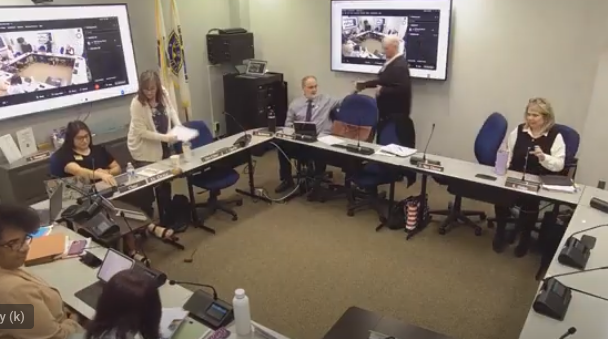
Will County Legislative Committee News Briefs
Shanahan Development Agreements Near Completion, Will County to See $282,000 Annual Revenue Boost
County Explores Bond Refinancing Options to Generate Potential Savings
County Approves $150,000 for Medicare/Medicaid Billing Consultant for Health Department, Nursing Home
- « Previous
- 1
- …
- 185
- 186
- 187