
Trump budget targets ‘valley of death’ with new military contractor accountability model
The Trump administration’s $1.5 trillion military budget request would rewrite how the Pentagon buys weapons – forcing contractors to fund their own factory expansions and penalizing them for missing production targets – in a bid to fix what officials describe as a decades-long failure to turn American innovation into usable military capability.
Submitted to Congress on April 3, the proposal allocates more than $100 billion to rebuild the defense industrial base through four programs: $20.2 billion through the Office of Strategic Capital for low-interest credit and loan guarantees; $30.4 billion through the Defense Production Act to expand production capacity; $41.8 billion for industrial base analysis and sustainment to attract new suppliers; and $52.9 billion through the Munitions Acceleration Council to send long-term demand signals to manufacturers.
Secretary of War Pete Hegseth told the House Armed Services Committee that funding alone will not solve the problem – the procurement system itself must change.
“The historic, generational, and transformational changes we implement will move us from the current prime contractor-dominated system defined by limited competition, vendor lock, cost-plus contracts, stressed budgets and frustrating protests – to a future powered by a dynamic vendor space that accelerates production,” Hegseth said.
At the center of that shift is a new multi-year procurement model – contracts lasting up to seven years for critical munitions – designed to give manufacturers the certainty needed to build new facilities rather than add shifts to existing ones. Under the model, contractors fund their own capital expenditures up front and face financial penalties if they fail to meet agreed-upon production ramp rates.
Jules “Jay” Hurst III, performing the duties of Under Secretary of War Comptroller, said the previous approach, in which the government financed capacity expansion, had produced marginal results.
“We’re making them put skin in the game,” Hurst said at an April 21 Pentagon budget briefing. “We’re giving them a multi-year order, and we expect them to meet the ramp rates that they agree to, and if they don’t, there’ll be penalties for them.”
The changes target a structural problem that the government’s own watchdog has tracked for years and found to be getting worse. In its June 2025 annual weapon systems assessment, the Government Accountability Office found that major defense acquisition programs now take nearly 12 years on average to deliver even an initial capability to troops, up 18 months from the prior year. Combined costs across 30 major programs increased by $49.3 billion in a single year, with the Air Force’s Sentinel ICBM program accounting for $36 billion of that growth alone.
“DOD plans to invest nearly $2.4 trillion to develop and acquire its costliest weapon programs,” the GAO reported. “But it continues to struggle with delivering timely and effective solutions to the warfighter.”
Even the Pentagon’s own fast-track acquisition pathway – designed to deliver capability in two to five years – has fallen short, with programs entering it with immature technologies and exiting without being ready for production. GAO’s recommendations to fix the problem, issued to the Pentagon and all three military services, remain open, indicating no satisfactory corrective action has been taken.
During a June 2025 congressional hearing, U.S. Rep. William Timmons, R-S.C., said promising technologies routinely fail to reach military use.
“Unfortunately, for too many of those innovators, the path to partnership with the federal government is blocked by a procurement process that is opaque, rigid, and often punishing,” he said. “The risk of entering the defense market – both in time and cost – deters even the most promising companies. And for those who try, many never make it past what many in the industry have called the ‘valley of death,’ where transformative technologies die on the vine between prototype and production, often because of bureaucratic red tape.”
Gen. Dan Caine, chairman of the Joint Chiefs of Staff, put the acquisition gap plainly in written testimony to the House Armed Services Committee on April 29.
“We have been outstanding at buying 10 to 15 years behind the technology development curve,” Caine said. “But over the last year, we have made significant reforms across our acquisition enterprise to close the gap. Together, we still have much work to do.”
The National Defense Industrial Association’s Vital Signs 2026 report, drawing on responses from 1,646 government, industry and academic officials, found that progress on industrial readiness is measurable but fragile. The report identified budget instability, compliance burdens and unclear demand signals as persistent constraints limiting industry participation – the precise conditions the multi-year contract model is designed to address.
“A robust defense industrial base is among the most powerful tools we have to deter conflict and protect our national security,” said David Norquist, NDIA president and CEO.
Eric Fanning, president and CEO of the Aerospace Industries Association, said the budget delivers what manufacturers most need.
“The president’s budget request lays a strong foundation for America’s aerospace and defense industry because it provides what we need most: clear demand signals that tell companies where to invest, what to build and how to plan for the future,” Fanning said.
Shipbuilding represents the largest single industrial investment in the proposal. The request includes $65.8 billion to procure 18 battle force ships and 16 support ships – the largest shipbuilding request since 1962 – along with $8.7 billion for shipyard infrastructure across seven private and four public yards. The budget also funds a study for a potential fifth public shipyard.
On munitions, the request allocates $26 billion for multi-year procurement contracts and $31.8 billion for land-based missiles, including expanded production of Patriot and Terminal High Altitude Area Defense, or THAAD, systems. For next-generation platforms, the budget funds continued development of the F-47 sixth-generation fighter and the B-21 stealth bomber and increases F-35 procurement from 47 to 85 aircraft as part of a $102 billion air power investment, a 26% increase.
The Pentagon has already begun restructuring how it manages acquisitions, standing up 23 Portfolio Acquisition Executives responsible for weapons programs from development through fielding, with performance tracked publicly.
Congressional reaction has been divided.
Senate and House Armed Services Committee chairmen Sen. Roger Wicker, R-Miss., and Rep. Mike Rogers, R-Ala., called the request essential, saying the country faces “the most dangerous global environment since World War II.”
Senate Armed Services Committee Ranking Member Jack Reed, D-R.I., rejected it.
“This is not a serious budget,” Reed said. “The U.S. Department of Defense doesn’t lack funding, but it currently lacks responsible civilian leadership and management.”
The sharpest structural critique came from within the Republican Party. Sen. Mitch McConnell, R-Ky., chairman of the Senate Appropriations Subcommittee on Defense, warned that the budget’s reliance on $350 billion in reconciliation funding – which requires only a simple majority and bypasses the traditional appropriations process – undermines the industrial base argument at its core.
“Budget reconciliation, for its part, can only supplement – not replace – the consistent demand signals necessary to secure the private sector investments necessary to adequately expand and modernize our defense industrial base,” McConnell said. “Regular order appropriations are the right way to meet the scale and scope of the requirements of our military.”
The concern is practical. Multi-year production contracts that depend on reconciliation funding that expires or fails to pass offer manufacturers less certainty than the administration’s model promises. McConnell called for a separate supplemental appropriations request to fund munitions contracts Congress already authorized but said were “unnecessarily hamstrung by an insufficient defense topline.”
Analysts at the International Institute for Strategic Studies highlighted additional execution risks. The budget’s 42% increase figure combines base and reconciliation funding; excluding reconciliation, the base budget grows by 28%. The IISS also noted that a 188% increase in missile procurement “raises questions as to whether U.S. industry can meet demands” and that the budget’s financial assumptions relied in part on tariff revenues the U.S. Supreme Court has since ruled illegal.






Chance Showers And Thunderstorms
Latest News Stories

Meeting Summary and Briefs: Will County Board for March 19, 2026

AARP Urges Will County to Ban Cryptocurrency Kiosks Amid Exploding Senior Fraud Rates

Will County Approves $2.9 Million Engineering Contract for Bluff Road Reconstruction in Channahon

Sunny Hill Nursing Home Implements Enhanced Infection Control and Safety Measures

Consultant Updates Finance Committee on Homer Glen Police Cost Study

Beecher Varsity Softball Powers Past Sterling 12-1 Behind Johnson’s Two-Hitter
Norkus Shines as Beecher Varsity Softball Blanks Harvard 9-0

Dwight Sweeps Team Titles at St. Anne Invitational

Massive Eight-Run Second Inning Propels Seneca Past Beecher

Fish fight: action-packed eagle pic wins March photo contest

Illinois State Police Investigating Fatal Officer-Involved Shooting in Bradley

Fire Department Responds to Monee Car Fire
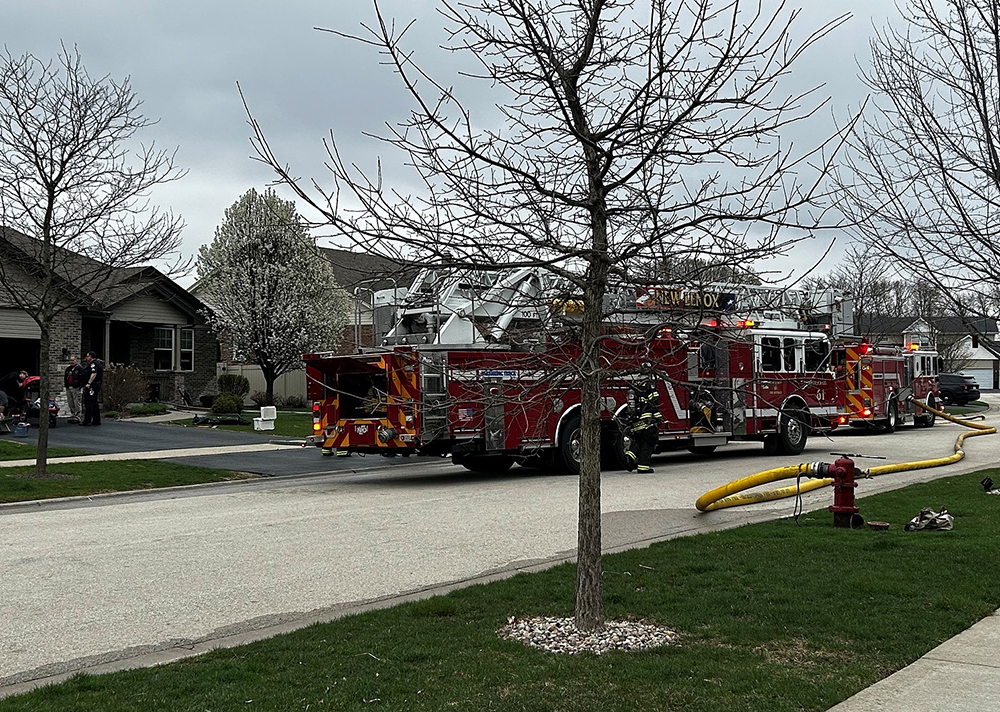
New Lenox Firefighters Extinguish Garage Fire, Rescue Pets on Somerset Court
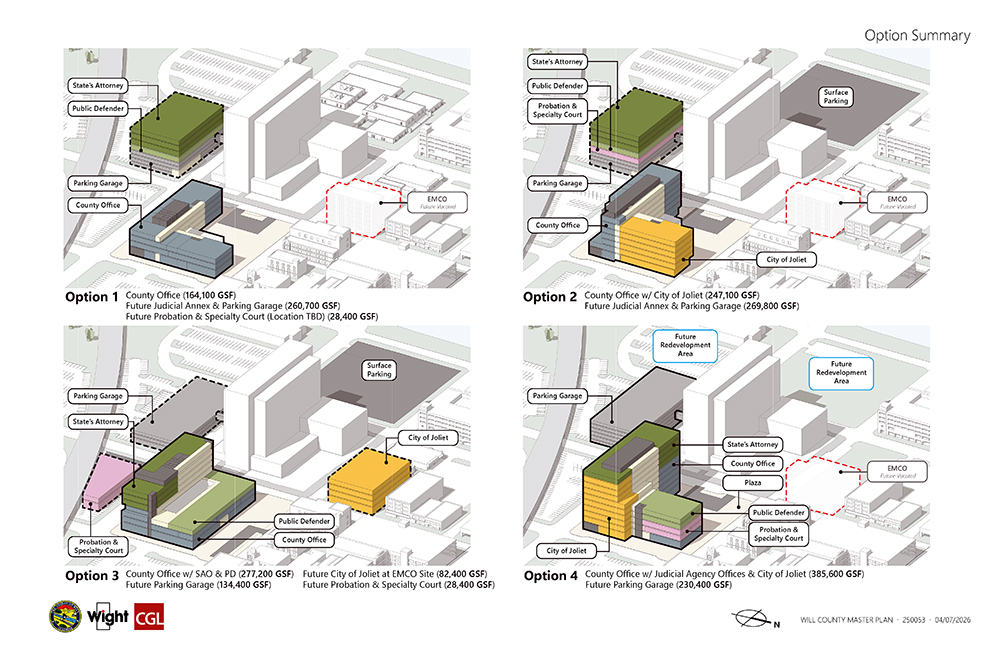
Will County Explores Multi-Million Dollar Downtown Joliet Consolidation and City Partnership